

Annapurna Circuit Trek
Highlights
- Experience two mountain regions – Manang and Mustang.
- Watch the landscape change from lush vegetation and waterfalls to high altitude passes.
- Look out for Himalayan wildlife, including the elusive snow leopard.
- Stand high over the Kali Gandaki Gorge, the deepest gorge in the world.
- Marvel at the mountains such as Annapurna I, II, III, IV, Manaslu, Dhaulagiri and Machhapuchhare.
- Cross one of the highest trekking peaks in the world – the Thorong La at 5,416 m / 17,769 ft.
- Learn something of the culture of the local communities and experience their warmth in the comfortable teahouses you will stay in.
- While most of the communities are Buddhist, visit the sacred Hindu temple at Muktinath with its 108 water spouts and eternal flame.
- Contemplate the deepest river gorge in the world – the Kali Gandaki Gorge.
- Fly from Jomsom to Pokhara, a short but mountain-filled flight.
- Visit the lake town of Pokhara, combining its cultural heritage with a modern vide ideal for trekkers to relax in.
Short Itinerary
Day 1: Arrival in Kathmandu (1,300 m / 4,265 ft)
Be collected at the airport by our representative. After checking into your hotel, be briefed on your adventure.
Day 2: Drive Kathmandu to Besisahar (760m / 2,493 ft) and Trek to Bhulbhule (840m / 2,756 ft)
After breakfast the adventure starts with a drive by private vehicle to Besisahar (approx. 8 hours) where you begin your trek (3 hours) to Bhulbhule village.
Day 3: Trek from Bhulbhule to Chamje (1,410m / 4,625 ft)
Trek today through farmlands, past waterfalls and along the Marsyangdi River. (approx. 6 hrs)
Day 4: Trek from Chamje to Dharapani (1,960m / 6,430 ft)
Get great views of Annapurna II and Lamjung Himal today as you hike around 6 hours.
Day 5: Trek from Dharapani to Chame (2,670m / 8,760 ft)
Today hike through forests, still following the Marsyangdi River.
Day 6: Trek from Chame to Upper Pisang (3,300m / 20,826 ft)
Hiking through dense forests and with the Marsyangdi River still with you, be awestruck by the huge Paungda Dada rock face.
Day 7: Trek from Pisang to Manang (3,540m / 11,614 ft)
Trek (approx. 7 – 8 hrs) under the gaze of the mountains, particularly Annapurna II, to reach the bigger village of Manang with many facilities such as shops and bakeries.
Day 8: Acclimatization Day in Manang
With the rising altitude, there is an acclimatization day in Manang. An opportunity to visit a Buddhist monastery or lake.
Day 9: Trek from Manang to Yak Kharka (4,050m / 13,287 ft)
Alpine meadows and forests are on display today as you trek 5 to 6 hrs to reach the yak grazing grounds of Yak Kharak, which means exactly that.
Day 10: Trek from Yak Kharka to Thorong Phedi (4,525m / 14,846 ft)
After ascending then descending, cross a river to again ascend to reach Thorong Phedi in approximately 5 to 6 hours.
Day 11: Cross Thorong La Pass (5,416m / 17,769 ft) then trek to Muktinath (3,760 m / 12,336 f)
Today is a long and challenging day as you hike over this high pass. Panoramic views of the mountains and landscapes are impressive as you can see both Manang and Mustang from the top of the pass. It takes 8 to 9 hours to cross the pass and trek on to the pilgrimage town of Muktinath.
Day 12: Trek from Muktinath to Kagbeni (2,804 m / 9,199 ft)
Take time this morning to explore Muktinath with its 108 waterspouts and its eternal flame. Then hike (approx. 5 hours) to the village of Kagbeni. Alternatively drive the short distance.
Day 13: Explore Kagbeni then hike to Jomsom (2,720m / 8,900 ft)
Kagbeni is famous for its covered walkways and strange effigies and many monasteries. Then hike along the river for 3 to 4 hours to reach the market town of Jomson.
Day 14: Fly from Jomsom to Pokhara (822m)
The early morning flight gives you plenty of time to explore the lake town of Pokhara with its restaurants, cafes, bars, and shops.
Day 15: Drive or Fly from Pokhara to Kathmandu
Today either drive back to Kathmandu (approximately 8 hours) or fly for 25 minutes through the mountains (extra cost).
Why the Annapurna Circuit Trek?
The Annapurna's are the most loved mountains in Nepal. This range is home to one of the highest mountains in the word, Annapurna I at 8,091m / 26,545 ft. Of course there are other majestic mountains in the Annapurna mountain range including Annapurna II, III, IV, Manaslu, Dhaulagiri and Machhapuchhare, and others.
With these astounding mountains, a landscape ranging from meadows to forests and rivers, and peoples from both Buddhist and Hindu cultures, it is no wonder this 15 day trek is so well-loved among trekkers from around the world.
With elevations ranging from 1,700 m / 5,577 ft to 5,416 m / 17,769 ft and going over the Thorong La Pass at 5,416 m / 17,769 ft this is a moderate to somewhat challenging trek. Trekkers should be in good health and fitness to undertake this trek. And of course have an interest in nature and culture.
Why Trek With Us?
At Annapurna Trekking we visualize becoming a leading Destination Management Company (DMC) for the Himalayan Region and a trusted partner for B2B travel agencies, tour operators etc. We also endeavour to inspire travellers, empower local communities and preserve the heritage of the Himalayas.
For our trekking clients we are committed to their safety and interests. We can customize itineraries to meet your needs, fitness levels and timeframes. Or you can join one of our scheduled trips with the knowledge we will provide the best service on all tours, treks and adventures. Rest assured we are also committed to the environment and the preservation and care of the local communities we trek through.
What Does a Day on the Trek Look Like?
On this trek you will have breakfast early in the morning and be out on the trail not long after sunrise. Yes, that sounds like a chore rather than a holiday but trust us, you will get used to it!
Before breakfast we would ask you to pack up your gear – particularly if you are hiring your own porter as they will leave before you do.
The terrain of the day will definitely include some ups and downs, but whether you are walking over rough trails, or through forests and pastures will depend on the day and location. Regardless of the terrain, the mountains will surround you and air will be fresh and clean.
You will stop at a small teahouse or teashop on the trail for lunch and a break. If you are lucky there may be a chance for morning tea on the trail as well. Nothing beats a hot cup of tea when trekking.
On arrival at your overnight teahouse you can have another cup of tea, coffee, or a cold drink while you order dinner. Then there is time for a shower (should you want it) before joining other trekkers in the communal dining room for dinner around a warm stove. Your guide will give you an idea of what to expect on the trail the following day before your head off to sleep – early. Bedtimes are always early on a trek.
How Difficult is the Annapurna Circuit Trek?
Yes, it is a tough trek but with the right preparations and mindset most fit and healthy trekkers can make this trip.
The trail:
expect stone staircases, steep climbs, river valleys, suspension bridges over rivers, and areas which are prone to landslides.
Hours on the trail:
you will be walking around 5 to 8 hours a day. Roughly 8 to 17 km / 5 to 10.5 miles). Yes there are breaks along the way and plenty of chances to stop for photographs, but it is important to keep pace in order to reach the overnight accommodation.
Altitude:
altitude is always the real challenging part of trekking in Nepal. What takes you an hour on the flat in your hometown may take you several hours and a lot of heavy breathing in the high Himalayas. Hydration and a steady pace will get you through. On this trek the increase in altitude comes slowly giving your body time to adjust. There is also an acclimatization day at Manang before the day with the highest altitude – crossing the Thorong La Pass (5,416 m / 17,769 ft).
Equipment:
having the correct gear helps reduce the chances of being cold, wet and overly tired. See our packing list for details. Walking poles are extremely helpful in taking off some of the strain as are the all-important (worn in) trekking boots.
The weather:
snow, rain and cold days can make your trek miserable. Pick the right season for you. The best seasons for this trek are in the spring (March – May) and in the autumn (September to November) But we never know what the weather is going to do, particularly at the top of the pass – regardless of season.
Preparation:
up your gym, hiking, swimming – whatever exercise routine you have – several months before you come. The stronger your muscles and the more fit you are overall the easier the trek will seem.
Preparations Before You Come
If you are considering this trek we can assume you are of good health and fitness. But it never hurts to increase your stamina and muscles before arriving in this mountainous country. The fitter you are, the more you will enjoy your trek. As mentioned in the section 'how difficult is this trek', do increase the time you spend in the gym or doing your usual exercise routine. We suggest hiking in your area – with a day pack to simulate being on the trek. If there are hills in your area, so much the better. Otherwise, set the equipment in the gym to mimic climbing.
Be mentally prepared before you come also. Make sure you have the right gear with you, so you don't have to worry about being cold or being burnt by the high altitude sun. Get into the mindset that maybe there will be delays or things out with your control that you will face on the trek. But also be prepared for the most wonderful scenery and experience of your life!
Safety
The most important thing to us is your safety on our tours. And of course that you have a wonderful time!
Here are a few tips from our guides:
- Acclimatization is extremely important to avoid altitude related illnesses.
- Staying hydrated may seem like a straightforward request but on the trail it is easy to forget to drink enough water.
- The right gear is crucial – see our packing list. What you are wearing in Pokhara lounging in the sun, is not what you want to wear in the strong sunlight and chill at altitude.
- Listen to your guide! You may be an expert trekker in other areas or countries, but your guide is the expert and last word in the Himalayas! He has to also take care of others in the group, so please cooperate with him.
- Those early mornings. After a long day on the trek you might not want to be getting up at 5am. But if it's going to be another long day on the trek or if the weather is uncertain, getting up and out early is the best idea. Going to bed early is also the norm.
- Don't drink on the trail – it reduces overall oxygen and energy. Safe that to the final night.
- Bring your own warm sleeping bag. Not just warmer than the provided blanket but cleaner too.
- Don't forget your first aid kit with all the things you may need (see packing list) including your regular medicines. Carry spares in your day pack if you are hiring a porter to carry your main pack.
- Watch out for animals. We don't just mean the wildlife who will be doing its best to stay away from you but the yaks that are being herded along the same trail. Always pass them on the inside, never on the outside of the trail. Or let them go past you before you attempt a narrow section of the trail.
- Be flexible. Keep a couple of days spare in case of delays in any form. You don't want to miss your international flight because there was bad weather on the trail or you had a minor accident.
- Be insured. For the minor to the major accidents and upsets.
Is the Annapurna Circuit a High Altitude Trek?
Yes. Any trek that goes about 3,000 m / 9,842 ft can be considered a high altitude trek.
From day 6 onwards when you reach Upper Pisang (3,300m / 10,826 ft) until you reach Kagbeni on day 12 in Mustang you will be trekking and sleeping at high altitude. The highest point is the Thorong La Pass at 5,416m / 17,769 ft. But you will be well acclimatized before reaching the pass. Additionally, there is an acclimatization day in Manang to accustom your body to the altitude before attempting to cross the pass.
What Happens if I Get Altitude Sickness?
Our main aim is for you to AVOID getting altitude sickness on this trek. We, and your guide, will repeat over and over that staying hydrated is half the battle. This circuit starts at a low altitude and gradually builds up to the higher altitudes. Acclimatizing slowly this way goes a long way to mitigate altitude related problems.
Should someone become sick, but not seriously so, the procedure is to go down to a lower altitude and stay the night. If everything is fine the next day, the person can continue on up. Should they not be well, it is time to consider the next steps. Should they stay where they are? Go down further? Call for evacuation? It very much depends on the symptoms, and your guide is trained in recognising different levels of illness.
Signs and Symptoms of Altitude Sickness
There are a few different types of altitude illnesses. And science does not yet know who is more likely to suffer from the effects of altitude and who is not. Therefore it is important to be able to recognise symptoms. Symptoms can appear like a cold or flu. We should not ignore any sign such as headaches, unusual fatigue, dizziness, feeling nauseous and/ or vomiting, and having difficulty sleeping.
Everyone is likely to experience some changes in their body when they are in the thin air, it is important to recognise what is merely tiredness due to long days on the trail, or being out of breath (a little) due to altitude and what could potentially be more serious.
High Altitude Pulmonary Edema (HAPE) and High Altitude Cerebral Edema (HACE) can be life threatening. In particular HACE can cause confusion and hallucinations making the sufferer believe he is perfectly fit to continue on when he is not. Keep monitoring your body for signs and let you guide know immediately you feel unwell, even it is just a little unwell. As we have said, if someone is suffering from HACE they can think they are perfectly fine.
Accommodation – Teahouses - Our Nepali Guest Houses in the Mountains
As in many of the treks in Nepal, accommodation on the Annapurna Circuit Trek ranges from comfortable to basic depending on the altitude. The higher the altitude the harder to 'import' luxury from downhill.
Basically accommodation consists of twin bed sleeping rooms with some very basic furniture, like a chair. Shared showers and toilet facilities, usually outside the main building. A warm dining room for communal eating and a kitchen for food preparation. The owners usually stay in the teahouse themselves and cook, serve and organise everything on a daily basis.
There is no heating in the sleeping rooms. Hence a good sleeping bag is essential.
Wi-Fi and electricity will be available in most areas but there will be a charge for this. Somewhere around USD2-3 per charge.
Hot showers are also chargeable for around the same price.
Food on the Trek
Food in the teahouses will reflect the area you are trekking in and the people who are running that particular establishment.
The Annapurnas have many well established trekking routes with long established teahouses and supply routes. There are even cake shops in some locations!
Overall, most teahouses serve very similar fare. For example:
Breakfast:
porridge / Tibetan bread / pancakes / muesli / eggs in different formats / tea and coffee.
Dinner:
vegetable soups / dal bhat / fried rice / noodles / momos / pastas / a variety of potato dishes / pizza / tea / coffee / hot lemon.
Lunch:
you will take your lunch in smaller teahouses or teashops on the trail. They will serve much the same, but with less variety. Dal bhat, momos and noodles will be available.
Certainly at the lower altitudes you will be able to buy cold drinks, beer (we do not recommend drinking at altitude), and snacks in the teahouses.
What Should I Pack for this Trip?
Here is a list of what you should pack, with some variations depending on the time of year and expected weather. Obviously, pack light – give consideration to the length of your trek, in this case 15 days. It is highly likely you will not be able to wash anything on the trek so also take that into consideration when planning your inner clothes.
Clothing
- Trekking boots. If you need to buy new ones, wear them in well before coming.
- Trekking trousers x 2. Lightweight and easy to dry.
- Trekking shirts and/ or tee-shirts x 3. Lightweight and easy to dry.
- Heavy sweaters x 2. Wool or similar warm material.
- Thermal underwear - long pants and tops.
- Woollen socks x 2 or 3.
- Cotton socks x 2 or 3.
- Underwear x the number of days on the trail.
- Woollen hat for cold weather.
- Sun hat for during the sunny days.
- Scarf / buff
- Gloves. Woollen ones with waterproof / thicker ones.
- Sandals. For inside the teahouse.
- Down jacket.
- Fleece jacket.
Sleeping & Personal Items
- Sleeping bag - a warm four seasons one is best.
- Cotton sleeping bag lining.
- Small towel
- Water bottle. Two is better.
- Sunglasses
- Trekking poles
- Headlight and extra batteries
- Phone charger and power pack
- Some snacks. Power bars, dried nuts and fruit etc.
Medical Kit & Toiletries
- Sunblock
- Lipsalve
- Purifying water tablets / drops
- Medicines you regularly take, plus extra
- Diarrhoea medicine
- Throat lozenges
- Cough drops
- Eye drops
- Blister pads
- Headache tablets
- Antiseptic cream or liquid
- Bandages
- Elastoplast
- Safety pins
- Body / hair soap
- Body / face lotion
- Sanitary items
- Toilet paper
- Plastic bags
Extra items for the monsoon and winter seasons
- Long rain coat or poncho
- Rain hat
- Waterproof trousers
- Waterproof gloves
Day Pack Items
- Sun block
- Lip salve
- Water bottle and purifying liquid / drops
- Camera
- Phone
- Swiss army knife
- Whistle
- Sun / warm hat
- Medicines you need on a daily basis
- Headache tablets
- Sanitary wear (if necessary)
- Snacks
Don't forget to pack light – for your sake, or the sake of the porter's back! Also, flights restrict baggage to 10 – 15 kg / 22 – 33 lbs per person. Since you will be carrying your own day pack, even if you hire a porter, keep that light as well.
The Culture and People of the Annapurnas
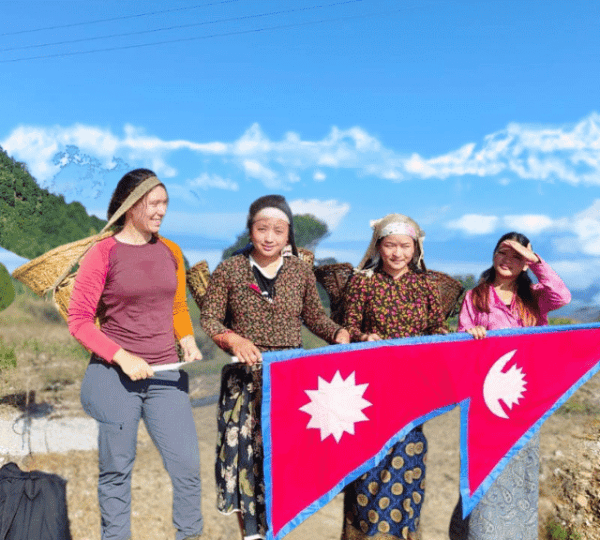
When you trek in the Annapurna Region you will be astounded by the diversity of the communities – both in terms of ethnicity and in religion. The Annapurna Circuit Trek passes through villages made up of different groups of people with their own language and cultural practices. As you travel, your guide will be able to explain which villages are homes to which ethnic groups. But let us give you some background information here.
Brahmins and Chhetris:
they are found throughout Nepal and are considered to be 'high caste' and have played an important role in the founding of modern day Nepal. In the Annapurna Region, they are mostly found at low altitudes, for example in Bhulbhule village. They are Hindu by tradition.
Gurungs:
living at higher altitude Gurungs have a Tibetan influenced culture and look. Known for their outgoing and warm hospitality they are also known as tough people. Hence many Gurungs are recruited into the Gurkha regiments of the British and Indian armies. They are Buddhist by tradition.
Thakalis:
they are Tibeto-Burman, and to the visitor's eye may look like Gurungs (ask your guide!). The largest number of them live in Mustang (over 20%) with the next highest at around 1% living in Manang. Although not a large ethnic group, they are renowned for their unique and delicious cuisine. They are also Buddhist.
Magars:
are another group you are likely to see on your trek in the Annapurnas. Another strong group, traditional warriors, and the third largest ethnolinguistic group in the country. Living in the central hills there are different dialects to their language. They believe in both Hinduism and Buddhism.
Agriculture
All these groups practice agriculture. Although in more recent times they have shifted from pastoral to agricultural practices they still have sheep and cattle. In the higher areas you will also see yaks.
Architecture Designs
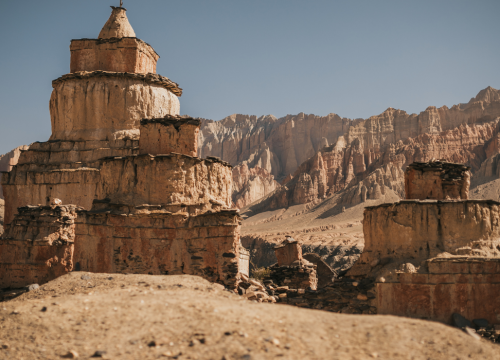
You will notice a blend of Hindu and Buddhist designs in the Annapurnas. At lower levels you will come across Hindu temples (you will be visiting Muktinath – a much revered temple on this trek), while as you rise in altitude Buddhist stupas, chortens, and monasteries dominate.
Homes in this region are built from stone and wood. Most roofs are flat.
The architecture in the Annapurna region is a unique blend of Hindu and Buddhist designs, with Tibetan influences as you move higher up into the mountains.
Festivals
Like the rest of Nepal, the Annapurna Region has many festivals! Some are shared with the rest of the country such as Dashain, the biggest Hindu festival, and Tihar which is also a Hindu festival celebrated throughout the country. If you are at Muktinath during Maha Shivaratri, a Hindu festival held in February/ March, you will witness a lot of Hindu holy men gathered there.
Tibetan New Year or Lhosar as it is called, is celebrated around February by the Tibetan Buddhists while Gurungs have their own new year usually at the end of December.
Annapurna – Hindu Goddess of Food and Nourishment
The Annapurna mountain range gets its name from a Hindu goddess who lives among the mountains there. She is the Goddess of Food and Nourishment or of 'everlasting food'. Perhaps the name comes from the fact streams and rivers coming off the Annapurna Massif provide the water for the fields and pastures lower down.
The Annapurna mountain range is certainly one of the most fascinating in the world. Home to one of the 14 peaks in the world over 8,000 metres (26,247 ft), namely Annapurna I, it is also home to thirteen peaks over 7,000 m / 22,966 ft, and sixteen over 6,000 m / 19,685 ft. No wonder it attracts so many mountaineers of different levels and thousands of trekkers every year.
The entire range sits within a 7,629 square km / 2,946 square miles conservation area known as the Annapurna Conservation Area. This is the largest conservation area in Nepal.
Manang is the highest permanent settlement in the Annapurnas, at 3,540m / 11,614 ft. Villagers carry out traditional agriculture and animal husbandry but have also turned to tourism, now most likely their biggest income source. There are other high, but temporary or seasonal settlements such as Thorong Phedi at 4,540 m / 14,895 ft – which is the 'stop' before crossing the Thorong La Pass, and Yak Kharka (4,050m / 13,287 ft) which is a seasonal grazing ground for yaks.
Mountaineering and trekking in this region started as far back as to when Nepal first opened to foreigners. In 1950 Maurice Herzog summitted Annapurna I. The international attention that he drew put the Annapurnas on the map – so to speak! Commercial trekking began in the 60s and by the 1980s this region became a world famous trekking region. You could say Herzog did for the Annapurna Region what Hillary did for the Everest Region.
Today the Annapurna Region has trekking routes that suits everyone – from beginners to experienced trekkers. And in more recent times, for adventure seeking cyclists and motorcyclists.
Responsible Eco Conscious Trekking
We at Annapurna Trekking Agency take great pride in being eco conscious on our treks. We ensure nothing is left behind in the way of garbage on the trails. We ask our clients to also take care regarding garbage and avoid damaging stupas, chortens and other items on the trail. Do not start fires to keep warm or pull down branches, flowers etc. Do not remove prayer flags – they are readily available to buy at various large villages. Do not bargain too much if you are buying anything. What is a fun interaction, a lovely souvenir and a low price for you is income for the family for the seller. Rs150 (USD1) may not be much from your daily budget but can buy the produce for several meals for a family.
Overall, remember you are a visitor so set a good example and be polite and friendly to those you meet. And enjoy the warm and hospitality of the local community in return!
Sustainable Trekking
At Annapurna Trekking, sustainability is at the heart of our operations. We believe in creating travel experiences that benefit the environment, local communities, and future generations while preserving the unique beauty and heritage of the Himalayas.
We do this by:
- Supporting Local Communities
- Being Environmental Responsible
- Cultural Preservation
- Sustainable MICE and Partnerships
- Education and Advocacy
Best Time for the Annapurna Circuit Trek
Each season has its own beauty and difficulties.
We would recommend this trek for the spring or autumn seasons, and this is why:
Spring (March to May)
The forests are in bloom with rhododendrons making the hike through the trees even more colourful. Photographers will not only get great shots of the mountains in the clear blue sky but also of these flowers in bloom. Temperatures are good - not too hot and not too cold at the higher altitudes. Cold, but not TOO cold! On the down side, the trails will be busy as it is a very popular time to come.
Autumn (September to November)
It is ideal weather for this trek. The air is fresh after the monsoon rains and the days are comfortable for hiking. Again, it is quite busy on the trails as it is, like spring, a popular time to trek in Nepal.
Monsoon (June to September)
You can expect the lower altitude valleys to have rain, possible landslides, leeches and clouds over the mountains. On the plus side, less trekkers!
Winter (December to February)
Can be challenging. One of the main challenges is the possibility that the Thorong La Pass will be closed – and perhaps with not much warning. Teahouses at the higher altitudes may also be closed as locals go down hill for the winter months. But on the plus side, the skies will be clear, the mountains shining at their best and very few trekkers will be on the trail. However, unless you are experienced, adventurous and have plenty of time for unforeseen changes (and a pair of micro crampons) we do not recommend winter for this trek.
Transport Options
You will travel by public transport between Kathmandu and Besisahar, but should you wish to hire your own private vehicle (with driver!) there is an extra charge for that. Please discuss with us.
Similarly, the drive from Pokhara to Kathmandu is by tourist bus but if you wish to fly back (cutting travel from around 8 hours to 25 minutes) there is the normal flight ticket price to pay. Please also discuss this option with us.
What is Included in the Price
- Public transport
- Flight from Jomsom to Pokhara
- Accommodation on trek for 13 nights
- Accommodation in Kathmandu for 1 night (breakfast only)
- Accommodation in Pokhara for 1 night (breakfast only)
- All meals - breakfast, lunch, dinner during the trek
- English speaking guide
- Applicable government taxes
- Trekking permits
- Trekking staff accommodation, meals, salary, insurance, transportation
What is Not Included in the Price
- International flights
- Optional private vehicle to Besisahar and/ or private vehicle or flight from Pokhara to Kathmandu
- Nepal visa
- Tips for guide and porters
- Personal expenses such as soft drinks, beer, phone calls, electronics recharge, drinking water, hot showers
- Insurance
- Emergency medical fees
- Emergency rescue
Should I Tip the Guide?
While tipping is not mandatory, it is a great way to show how much you appreciate all the hard work your guide did on the trek. If you hire a porter it is also very much appreciated if you tip him also.
As a suggested amount, you should tip your guide 10% of your total trip cost. That amount is divided by the number of trekkers in your group. For example if there are four of you, that 10% is divided by four. Similar applies for the porter.
You can of course pay more if you had great service!
You can tip the guide in USD or other currencies, but it would be helpful to tip the porter in Nepali rupees.
Permits Required
You are required to have the following permit to enter this area:
- Annapurna Conservation Area Permit (ACAP) – Nrs3,000 (USD22)
- TIMS – Trekkers' Information Management System Nrs3,000 (USD22)
Extending Your Trip
You may wish to extend your trip in either Pokhara or Kathmandu. We can help you with arranging accommodation and activities. Alternatively you can arrange this yourself. Please do ask us.
Included/Exclude
- Airport transfers in Kathmandu.
- Accommodation in Kathmandu and Pokhara (bed and breakfast).
- All transportation as per the itinerary.
- Trekking permits (ACAP, TIMS).
- Experienced English-speaking trekking guide and porters.
- Three meals a day during the trek (breakfast, lunch, dinner).
- Teahouse accommodation during the trek.
- First aid kit and emergency support.
- International flights and Nepal entry visa fees.
- Meals in Kathmandu and Pokhara (except breakfast).
- Travel insurance (mandatory).
- Personal expenses (laundry, hot showers, Wi-Fi, etc.).
- Tips for guide, porters, and drivers.
Tour Amenities
 Accommodation
 Food
Food Government Taxes
 Guide
Guide Hotel
Hotel Permits
 Porter
 SeightSeeing
 Staff Expenses
Itinerary
Be collected at the airport by our representative. After checking into your hotel, be briefed on your adventure.
Drive time: 8 hours
Drive distance: 175 km / 108 miles
Trek time: 3 hours
Trek distance: approx. 8 km / 5 miles
Meals: breakfast, lunch and dinner
After a very early breakfast your guide will come and collect you and the adventure begins. Drive by bus to Besisahar along the highway that takes you out of the Kathmandu Valley and on to the road towards Pokhara. Follow the Rapti River – see if you can spot any rafters floating by – and watch the mountains get closer as you travel. On arrival in Besisahar, start your trek among the waterfalls and mountains.
Overnight: guest house in Bhulbhule
Trek time: 6 hours
Trek distance: 22 km / 13.5 miles
Meals: breakfast, lunch and dinner
Trek today through farmlands, passed waterfalls and along the Marsyangdi River to reach Chamje.
Overnight: guest house in Chamje
Trek time: 5 to 6 hours
Trek distance: 15.7 km / 9.76 miles
Meals: breakfast, lunch and dinner
The wonderful mountains continue to amaze today including Lamjung Himal and Annapurna II as you make your way through the landscape to your overnight stop at Dharapani.
Overnight: teahouse in Dharapani
Trek Distance: 15.7 km / 9.76 miles
Trek Duration: 5-6 hrs
Meals: breakfast, lunch and dinner
More of the stunning mountains and waterfalls today as you ascent through forests and villages following the Marsyangdi River to reach Chame, the district headquarters of Manang.
Overnight: teahouse in Chame
Trekking time: 6-7 hrs
Trekking Distance: 16.2 km / 10.07 miles
Meals: breakfast, lunch and dinner
Passing through dense forests we continue to follow the Marsyangdi River with views of mountains, pastures and meadows. We also get to see the huge Paungda Dada rock face, which seems to curve into a bowl shape. The views of Annapurna II are particularly stunning at Upper Pisang.
Overnight: teahouse at Upper Pisang
Trek time: 6 to 8 hours
Trek distance: 17 km / 10.6 miles
Meals: breakfast, lunch and dinner
It’s a longer day today, but the views of the mountains, stone houses, and prayer flags make it all worthwhile. There may be yaks in the meadows around the villages. There may also be tasty cakes and cookies in the bakeries in the larger village of Manang!
Overnight: teahouse in Manang
Meals: breakfast, lunch and dinner
There is an acclimatization day here as the altitude is getting higher and you will need to be prepared to cross over the high pass. But there is plenty to do in Manang. You can trek up to Gangapurna Lake or take a hike to Braga Monastery. If you are feeling very energetic you can hike up a challenging hill to the ice lake – Kicho Tal. From here you can view and photography two alpine lakes with the Annapurnas reflected in their waters and as their backdrops.
Overnight: teahouse in Manang
Trek time: 3 – 5 hrs
Trek distance: 10 km / 6 miles
Meals: breakfast, lunch and dinner
Today it’s a steady but gradual climb up to Yak Kharka through alpine meadows and forests. You may see yaks grazing – which is exactly what Yak Kharak is known for! Now you have left the Marsyangdi River Valley and are in the Jarsang Khola Valley.
Overnight: teahouse in Yak Kharka
Trek distance: 6.5 km / 4.04 miles
Trek time: 5-6 hrs trek
Meals: breakfast, lunch and dinner
Stunning peaks and panoramic views are what you will remember from today’s trek. After the first two hours, cross a river and ascend gradually to Thorong Phedi.
Overnight: Thorong Phedi
Trek time: 8 – 9 hours
Trek distance: 16.5 km / 19 miles
Meals: breakfast, lunch and dinner
This is perhaps the most exciting day of the trek. It is certainly the most challenging! Hike over the famous Thorong La Pass with its out of this world views of the mountains and surrounding landscapes. You can see both Manang and Mustang at the top. As you descent you are now in Mustang district. Continue on to Muktinath, a pilgrimage town for Hindus.
Overnight: guest house in Muktinath
Trek time: 5 hours
Trek Distance: 12 km / 7.5 miles
Meals: breakfast, lunch and dinner
Take time this morning to explore Muktinath with its 108 waterspouts and its eternal flame. Observe the many Hindu pilgrims taking a shower under the waterspouts. Then hike to the village of Kagbeni. Alternatively drive the short distance in a local jeep.
Overnight: guest house in Kagbeni
Trek time: 3 to 4 hours
Trek distance: 10 km / 6 miles
Meals: breakfast, lunch and dinner
After breakfast, take some time to explore the amazing small village of Kagbeni, famous for its covered walkways and strange effigies and many monasteries. Gaze up the Kali Gandaki into Upper Mustang. Then hike along the river for 3 to 4 hours to reach the market town of Jomson. In Jomsom you can relax with a drink or two or do some shopping in this small market town.
Overnight: guest house in Jomsom
Meals: breakfast
The early morning flight gives you plenty of time to explore the lake town of Pokhara with its restaurants, cafes, bars, and shops. And its huge range of souvenirs to take home. You are free to explore Lake Side and enjoy dinner at the restaurant of your choice.
Overnight: hotel in Pokhara
Drive time: 8 hours
Fly time: 25 minutes
Meals: breakfast
Today either drive back to Kathmandu or fly for 25 minutes through the mountains (extra cost). Once back in Kathmandu you are free to enjoy the sights and sounds of the capital city. Ask us about culture tours or explore yourself.
Location
Find a route from your location
Related Tours

- Quality5
- Location5
- Amenities4
- Services5
- Price5
Everest Base Camp Trek
Review Scores
Last Minute Deals