Fourteen days is the standard Annapurna Circuit. It starts with a jeep to Chame and finishes over Ghorepani and Poon Hill before Pokhara. There's a 12-day version that drops the Poon Hill detour, and a 16-day plan that adds Tilicho Lake at 4,919 metres. All three cross Thorong La at 5,416 metres, and that one day shapes the whole schedule.
Changing the length changes which days you lose. The acclimatisation rules stay fixed. Above 3,000 metres no version raises your sleeping altitude by more than about 500 metres a night, and every version keeps a full rest day at Manang (3,540 metres) before the pass. Independent trekkers who cut that rest day to save time are the ones we see turned back at High Camp with pounding headaches.
How does a 14-day standard itinerary break down?
On day 2 we drive from Kathmandu through Besisahar to Chame (2,710 metres), which skips the hot, dusty lower valley and saves two walking days. From Chame the trail climbs through Pisang to Manang, rests a day, crosses Thorong La on day 7, then spends the second week heading down through Muktinath, Kagbeni, Tatopani and Ghorepani.
| Day | Route | Altitude |
|---|---|---|
| 1 | Arrive Kathmandu | 1,400m |
| 2 | Drive to Chame (via Besisahar) | 2,710m |
| 3 | Chame to Pisang | 3,300m |
| 4 | Pisang to Manang (Upper Circuit route) | 3,540m |
| 5 | Acclimatisation day, Manang | 3,540m |
| 6 | Manang to High Camp / Thorong Phedi | 4,500m |
| 7 | Cross Thorong La to Muktinath | 5,416m to 3,800m |
| 8 | Muktinath to Kagbeni | 2,810m |
| 9 | Kagbeni to Tatopani (via Marpha, Jomsom) | 1,190m |
| 10 | Tatopani to Ghorepani | 2,874m |
| 11 | Poon Hill sunrise, trek to Tadapani | 3,210m to 2,630m |
| 12 | Tadapani to Chhomrong | 2,170m |
| 13 | Drive to Pokhara via Nayapul | 820m |
| 14 | Pokhara, rest day or fly to Kathmandu | 820m |
What does each stage of the trail feel like on foot?
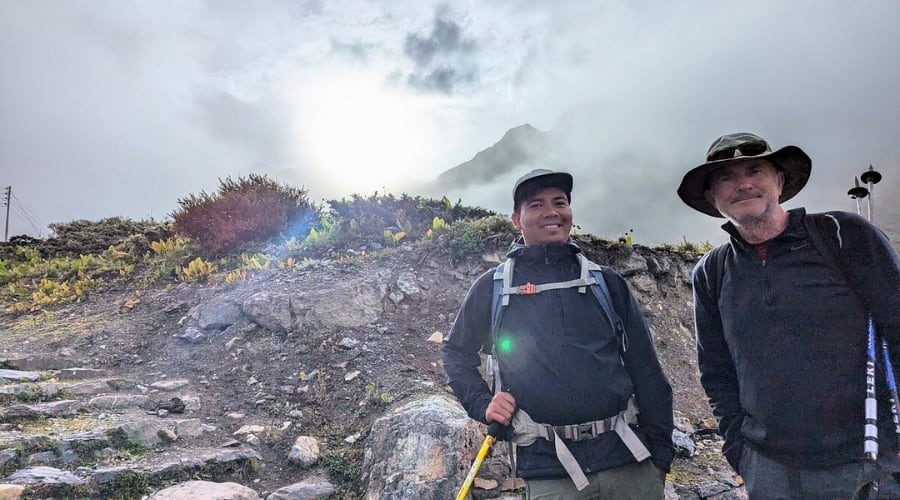
Days 3 and 4 follow the Marsyangdi gorge. Past the apple orchards at Bhratang the trail slips beneath Paungda Danda, a curved slab of rock over a kilometre high, and this is where most people first notice the altitude in their breathing. From Pisang we take the upper route through Ghyaru and Ngawal. It's longer and steeper than the valley floor, but the stone villages sit right opposite Annapurna II and III, and the extra climbing doubles as acclimatisation.
Day 7 starts in the dark. We leave High Camp between 4:30 and 5 a.m., because the wind on Thorong La usually picks up by late morning. The climb to the pass takes four to five hours in cold, thin air. Then comes the knee-grinding part, roughly 1,600 metres down loose scree to Muktinath. Eight to ten hours in all. Every other day in the plan exists to get you to this one rested.
The far side changes fast. Days 8 to 10 drop into the Kali Gandaki valley, dry and wind-carved and Tibetan in feel around Kagbeni, then green again by Tatopani. Day 9 covers a long stretch of the valley through Marpha and Tukuche, and on that day the road does a lot of the work. The air thickens with every hundred metres you lose, so most people find the walking easier after Muktinath even when the hours stay the same.

What does the 12-day version cut, and is it a good idea?
The 12-day plan skips the Poon Hill loop. After the Kali Gandaki you drive from Ghasa to Pokhara instead of walking two more days over Ghorepani. The cut comes after the pass, so the Manang and Thorong La schedule stays exactly as it is. That makes it the sensible way to shorten the trek. Trimming days before the pass is what gets people into trouble.
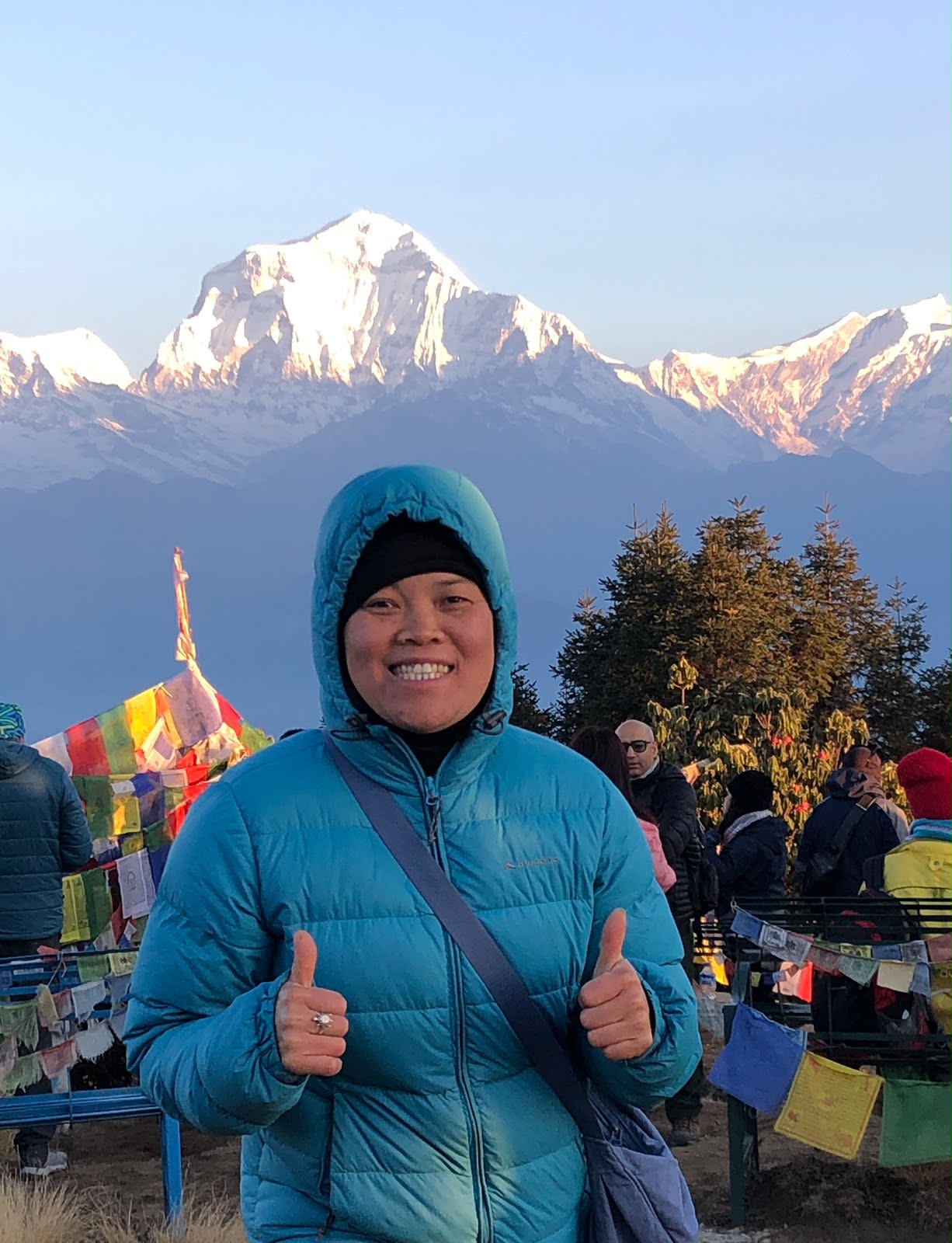
You do lose Poon Hill's dawn view across Dhaulagiri and the Annapurna range, one of the most photographed sunrises in Nepal. People who've stood on Poon Hill before, or who simply don't have the holiday, usually pick the 12-day version on purpose.
What does the 16-day Tilicho Lake extension add?
The 16-day plan slots two days for Tilicho Lake (4,919 metres) between Manang and the pass. You walk from Manang to Shree Kharka, sleep at Tilicho Base Camp, climb to the lake, then cut back across to Yak Kharka and rejoin the main trail to High Camp. Those extra nights above 4,000 metres give your body more time to adjust before Thorong La, so the detour helps.
One warning. Above Shree Kharka the path crosses a run of unstable scree that sheds rocks, especially in the afternoon. Guides look at that slope every morning before deciding to cross, and it's no place to walk without someone who knows how it behaved yesterday.
How physically demanding is each version, day by day?
Most days mean four to six hours of walking. The pass day runs eight to ten hours on every version. On the 14-day route, the climb from Tatopani up to Ghorepani gains about 1,700 metres, much of it on stone stairs through rhododendron forest, and plenty of trekkers rate it harder in the moment than anything near the pass.
You need good cardio fitness, not climbing skill. None of the three versions uses ropes or crampons, and in a normal October or April that includes Thorong La. Snow can change that from December to February, when microspikes earn their place in your pack.

Which itinerary should you choose?
Pressed for time, or seen Poon Hill already? Take the 12-day version. First time on the Circuit and want all of it? The 14-day route. If you can spare two more days and want the highest big lake on the route, go for the 16-day Tilicho extension, laid out day by day in our Tilicho Lake cost and itinerary breakdown.
Whatever the length, Manang and Thorong La set the plan. The day count follows from them. The Annapurna Circuit cost guide prices all three versions, and the Annapurna Circuit difficulty guide compares the trek with other Nepal routes. Dates for 2026 and 2027 are on the Annapurna Circuit Trek page.
Common questions about the itinerary
Can the itinerary be shortened further than 12 days?
Below 12 days you start cutting acclimatisation, not scenery. Our 10-day short Circuit keeps the Manang rest day and a night at Yak Kharka by flying out of Jomsom straight after the pass, and we won't go shorter than that.
What happens if bad weather closes Thorong La on your scheduled day?
The group waits at High Camp or Thorong Phedi until the wind and visibility allow a safe crossing. Every version has at least one spare day for this, so a weather delay never forces a skipped rest day later.
Do all three itinerary lengths use the same guide-to-trekker ratio?
Yes. Group size changes the price, and the guiding stays the same. Every departure has a TAAN-certified lead guide and porter support on the 12, 14 and 16-day versions alike.
Related guides

Founder & Lead Guide, Annapurna Trekking
AJ founded Annapurna Trekking in 2016 and has personally guided treks across Nepal ever since. More about our team →