
Nepal, Bhutan & Tibet Tour
Few journeys on earth cover as much cultural, spiritual, and geographic ground as a combined Nepal, Bhutan, and Tibet tour. In 21 days you move from the Hindu temples of the Kathmandu Valley to the Buddhist dzongs of the Thunder Dragon Kingdom to the sacred plateau of Tibet, three civilisations that share the Himalayan spine but express themselves in profoundly different ways.
Nepal gives you the Himalayan view from the south, the classic panorama of Annapurna and Dhaulagiri from Sarangkot at 1,592m, and the temple-layered culture of the Kathmandu Valley with its five UNESCO World Heritage Sites. Bhutan adds the most preserved traditional Buddhist kingdom in the world: Tiger's Nest Monastery clings to a 900m cliff above Paro, Punakha Dzong sits at a river confluence that has hosted royal coronations for 400 years, and Dochula Pass reveals a panorama of 108 memorial chortens framed by eastern Himalayan peaks.
Tibet reveals the plateau itself. The Potala Palace, 13 storeys, 1,000 rooms, 200,000 statues. Jokhang Temple at dawn, with pilgrims from across the plateau arriving on their knees. The Friendship Highway crossing Yamdrok Lake (turquoise, sacred, 72km long) before reaching Old Tingri, where the Everest North Face fills the southern horizon, a view no trekker approaching from Nepal ever sees.
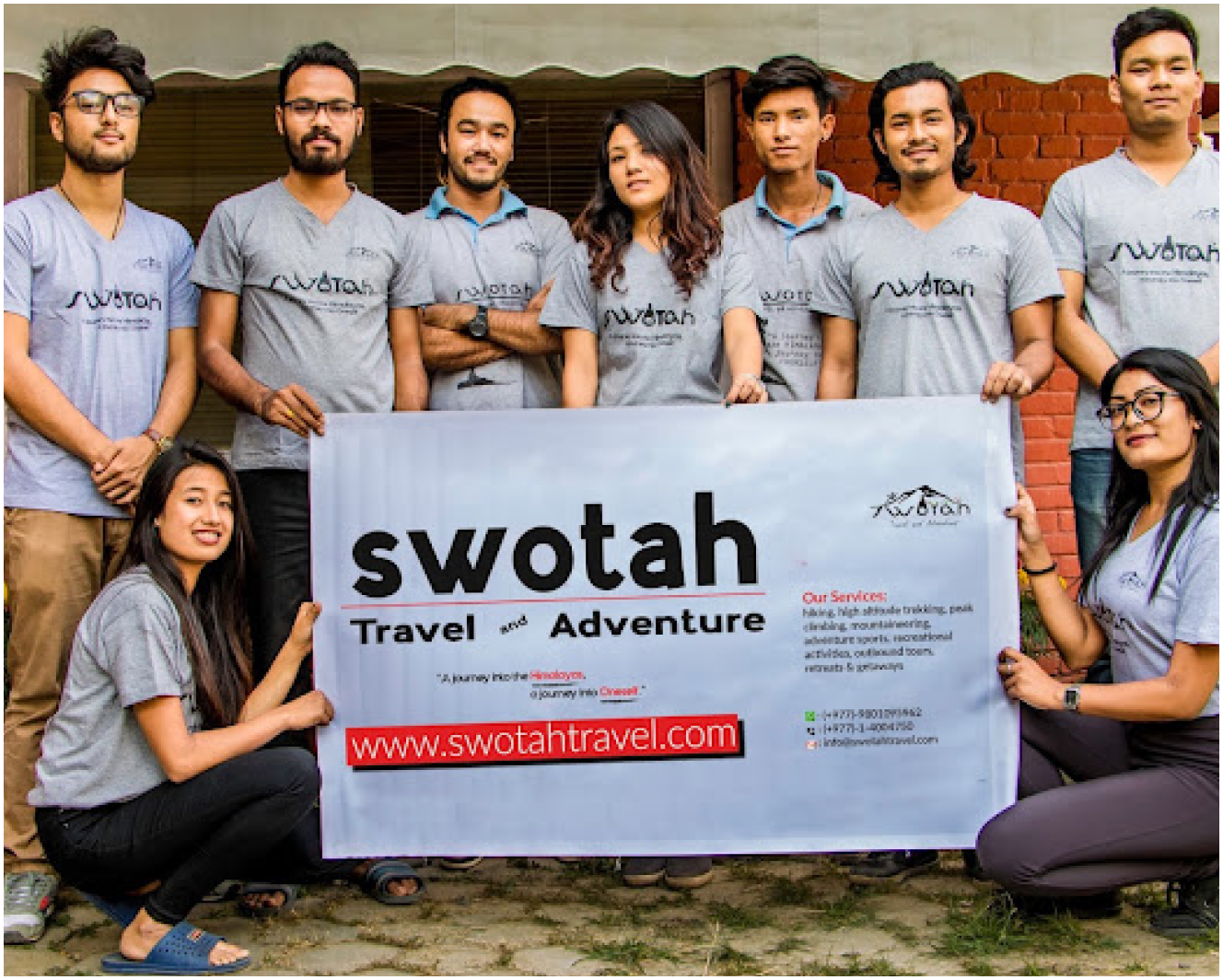
This tour is operated by Annapurna Trekking as part of the Swotah Travel & Adventure family, with specialist licensed guides in each country and all permit logistics, including the notoriously complex Tibet Travel Permit and Bhutan e-visa, handled entirely by our team.
Upcoming departures.
| Start Date | End Date | Price / Person | Availability | |
|---|---|---|---|---|
| No departures match this filter. | ||||
Trek highlights.
Kathmandu Valley UNESCO sites, Boudhanath, Pashupatinath, Swayambhunath, Bhaktapur, Patan
Sarangkot sunrise, 200km panorama of Dhaulagiri, Annapurna & Manaslu
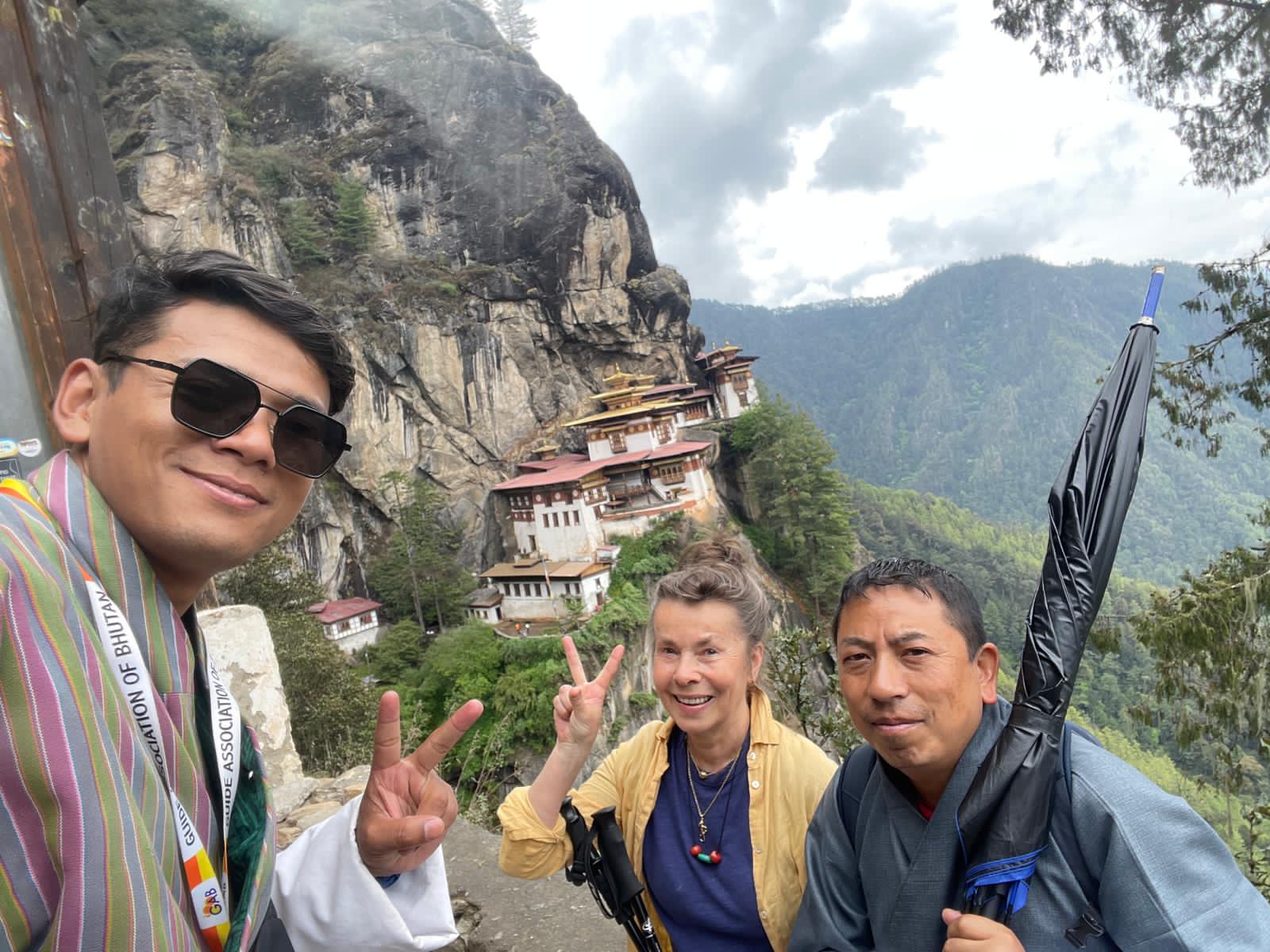
Tiger's Nest Monastery (Taktsang), Bhutan's most sacred site on a 900m cliff
Punakha Dzong, the most beautiful dzong in Bhutan, at the river confluence
Dochula Pass, 108 memorial chortens with Himalayan panorama
Potala Palace, Lhasa, winter palace of the Dalai Lamas, 13 storeys & 1,000 rooms
Jokhang Temple, Tibet's holiest site, with morning pilgrims from across the plateau
Yamdrok Lake, sacred turquoise lake from the 4,794m Kamba La pass
Tashilunpo Monastery, Shigatse, seat of the Panchen Lama
Everest North Face viewpoint from Old Tingri (4,390m), a view Nepal trekkers never see
Trek in pictures.
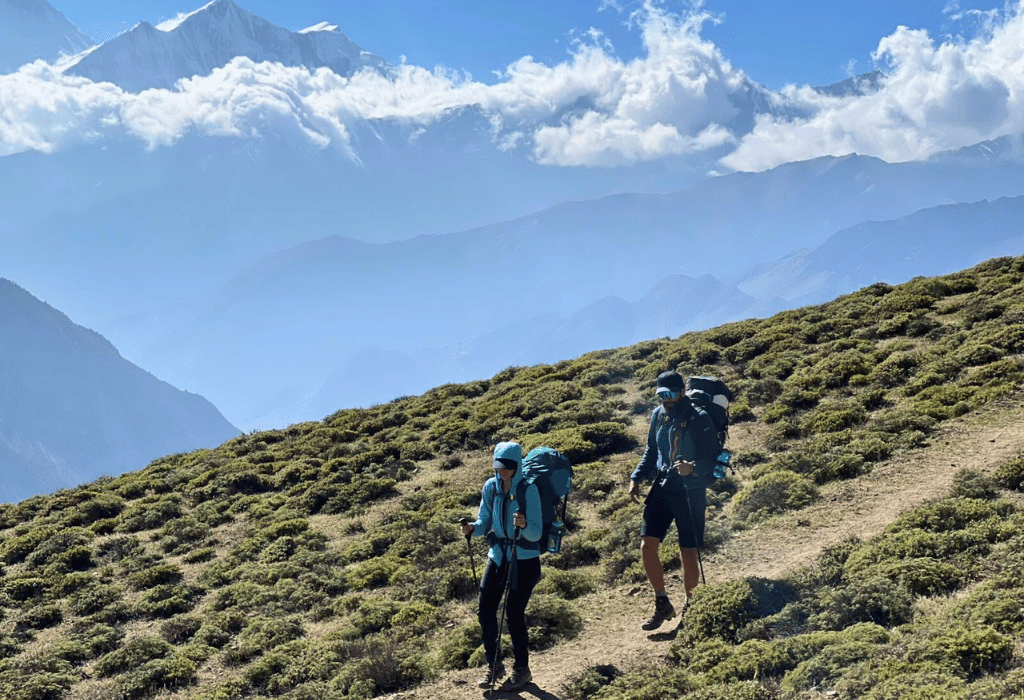
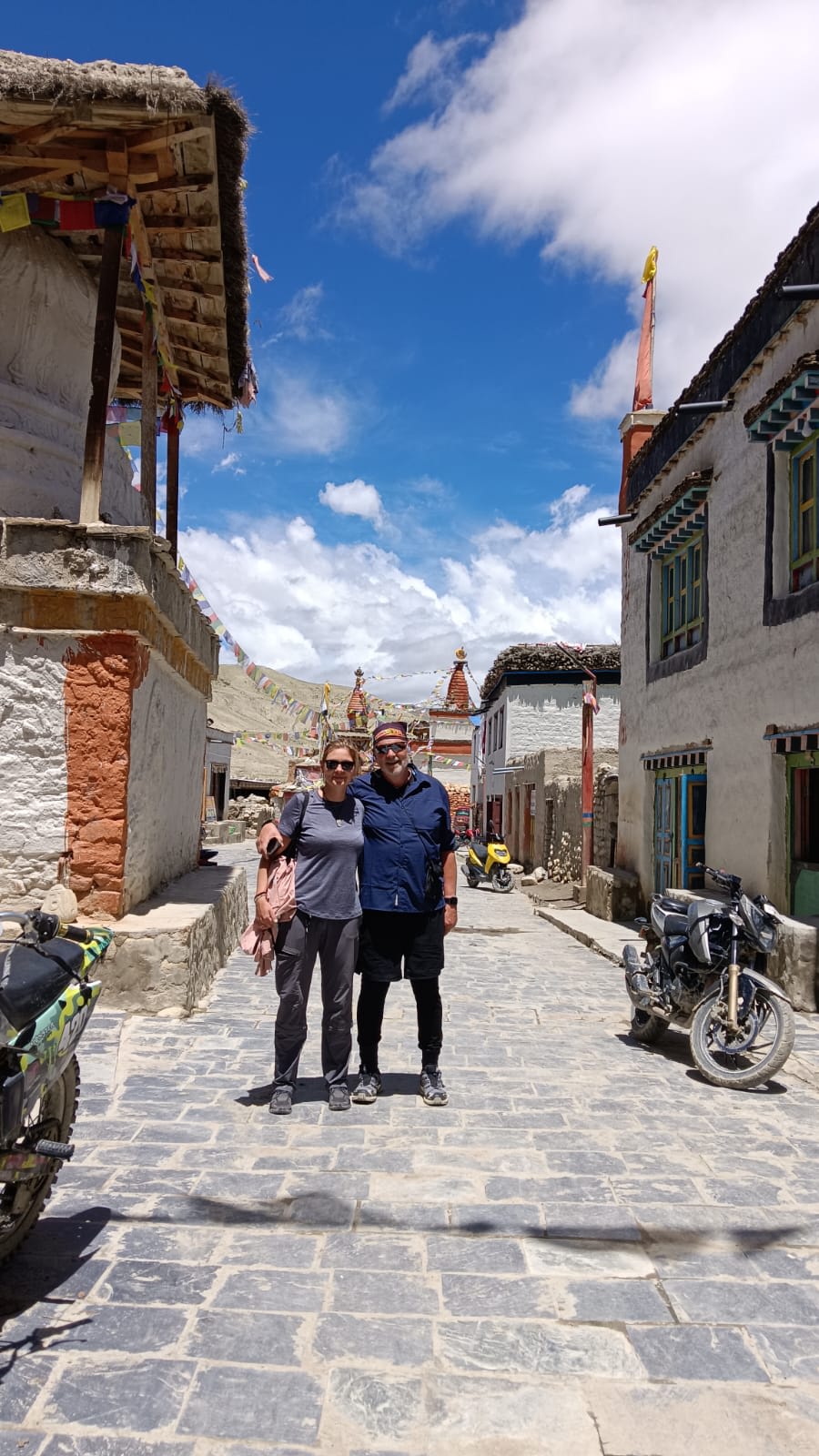
Interactive circuit map.
The full 21-day circuit on a topographic map. Click any marker for details. Switch between Topo, Satellite, and Standard views using the layer control.
21 Days. Every detail planned.
Transparent, all-in pricing.
Included in your price
Not included
Trek altitude at a glance.
How hard is this trek?
Best time for the Nepal, Bhutan & Tibet Tour.
Weather on the Nepal, Bhutan & Tibet Tour.
Everything you need to know.
Open any card for in-depth notes on accommodation, food, altitude, permits, money and the small print that matters on the trail.
Your safety, planned in detail.
Altitude is the main risk on this trek. Here is exactly what we carry, who we call, and where the nearest help is at every stage of the route.
Common health risks
- •Altitude sickness in Lhasa (3,656m) and Friendship Highway (up to 4,794m), rest on arrival day is mandatory
- •Sunburn on Tibet plateau, UV intensity at altitude is extreme even in winter
- •Dehydration, dry plateau air requires 3+ litres of water daily in Tibet
- •Mild AMS symptoms (headache, nausea) common in first 24 hours in Lhasa
- •Tiger's Nest hike, stone steps for 3–4 hours; knee and ankle care required
- •Cold nights in Tibet and Bhutan highlands even in October (0–5°C)
Emergency protocols
This tour crosses three countries with different emergency response capabilities. In Nepal: helicopter evacuation available from most locations within 60 minutes. In Bhutan: helicopter emergency service available in Paro and Thimphu. In Tibet: helicopter and ground evacuation available but more complex, your guide carries satellite communication. We monitor group health daily throughout the Tibet section.
From your front door to the trailhead.
Every leg of the journey, the mode of transport, the time it takes, and what's included. The complete picture from international arrival to trek start and back again.
Kathmandu → Pokhara
IncludedIncluded
Pokhara → Kathmandu
IncludedIncluded
Kathmandu → Paro, Bhutan
IncludedIncluded: one of the world's most scenic approaches
Paro → Kathmandu → Lhasa
IncludedIncluded: connection via Kathmandu typically
Lhasa → Kathmandu
IncludedIncluded
All ground transport
IncludedIncluded in all three countries
What to pack.
Plan Your Trek
Planning guides for the Nepal, Bhutan & Tibet Tour
Written by our guides, these cover the permits, altitude, timing, and kit you need before you go.
Common questions.
Do I need a visa for Bhutan?+
Yes. Bhutan does not issue visas on arrival. You must obtain a Tourist Visa in advance through a registered Bhutanese tour operator, which we are. The visa costs USD 40 and is processed digitally. You also pay the Sustainable Development Fee (SDF) of USD 100 per person per night in Bhutan, which is included in our package price. We handle the entire process. You need only your passport scan and four passport photos, submitted at least 21 days before departure.
How do I get a Tibet Travel Permit?+
Individual travel to Tibet is not permitted for foreigners. You must travel as part of a group with a licensed Tibetan tour operator and hold a Tibet Travel Permit. We arrange everything through our Tibet partner agency. You need your passport copy and a valid Chinese tourist visa (L visa) at least 21 days before departure. The permit process is strict and last-minute applications are not possible. Plan at least 4 weeks ahead.
Do I need a Chinese visa for Tibet?+
Yes. Tibet is an autonomous region of China and requires both a standard Chinese tourist visa (L visa) plus a Tibet Travel Permit. Chinese visas must be obtained from a Chinese consulate or embassy in your home country before travel and cannot be obtained on arrival. Processing typically takes 4–7 business days. We provide a support letter for your visa application. If you have previously visited Israel or certain other countries, obtaining a Chinese visa may require additional steps, contact us early for guidance.
Is altitude sickness a concern on this tour?+
Yes, primarily on the Tibet section. Lhasa sits at 3,656m and the Friendship Highway crosses passes above 4,794m. We build acclimatisation into the itinerary (mandatory rest on Day 11 in Lhasa, gradual ascent on the Friendship Highway). We recommend consulting your doctor about acetazolamide (Diamox) for the Tibet leg. The Bhutan section (Paro at 2,280m, Tiger's Nest approach to 3,120m) may cause mild headaches but is not a serious altitude concern. Travel insurance must cover medical evacuation.
What is the best time of year for this tour?+
March to May (spring) and September to November (autumn) are best. Spring brings rhododendron bloom in Bhutan and Nepal, clear skies in Tibet, and comfortable temperatures throughout. Autumn offers the most stable weather across all three countries with exceptional Himalayan visibility. Summer (June–August) brings monsoon to Nepal and Bhutan, wet and lush, possible but not ideal. Winter (December–February) is cold but clear, particularly in Tibet where Lhasa is sunny even in January. October is peak season across the board.
Can I add a Nepal trek to this tour?+
Absolutely. This is a private tour and every element is customisable. Popular additions: Poon Hill trek (adds 4 days, moderate difficulty, Annapurna sunrise), Annapurna Base Camp (adds 7 days), Everest Base Camp (adds 12 days). You can also extend Bhutan to include the Phobjikha Valley and Black-necked Crane Sanctuary, or extend Tibet to include Kailash Mansarovar (adds 12 days, requires separate permit). Tell us your interests and timeframe and we will build the right itinerary.
How physically demanding is this tour?+
Moderate. The most demanding activity is the Tiger's Nest hike in Bhutan, a 3–4 hour return walk with 500m ascent on stone steps (similar difficulty to a challenging day walk). The Sarangkot predawn walk in Pokhara is gentle. The Tibet section is entirely by vehicle with short walks at each site (500m–2km maximum). Overall fitness needed: comfortable walking 2–4 hours per day on uneven terrain. No trekking experience required. Suitable for reasonably fit travellers from age 14 upward.
How many guides will we have?+
Three country-specialist guides: a Nepal guide for Days 1–6 and 18–21 (from Annapurna Trekking's own team), a Bhutanese licensed guide for Days 7–11 (mandatory under Bhutanese law, no foreign visitor may travel without one), and a Tibetan licensed guide for Days 11–17 (mandatory under Chinese regulations). All are English-speaking, certified, and experienced on this specific route. For private departures, AJ (our founder) often leads the Nepal section personally.
What currency do I need in each country?+
Nepal: Nepali Rupee (NPR), exchange in Thamel for the best rate. USD widely accepted in tourist areas. Bhutan: Bhutanese Ngultrum (pegged 1:1 to Indian Rupee), USD accepted at hotels, ATMs in Paro and Thimphu. Tibet/China: Chinese Yuan (CNY/RMB), exchange before entering Tibet as foreign cards are unreliable in Chinese ATMs. We recommend carrying USD 600–800 personal spending money for the full 21 days and exchanging to local currency as needed. We brief you on exact amounts before departure.
What is included in the Bhutan Sustainable Development Fee?+
The Bhutan SDF (USD 100 per person per night) replaced the previous minimum daily package rate in 2022. It is a government levy that contributes to Bhutan's free healthcare and education system, conservation of forests (Bhutan is carbon negative), and the infrastructure that supports sustainable tourism. It is not a service charge, your accommodation, meals, and guide are paid separately within the tour package. We include the SDF in our all-in price so there are no surprise additions.
Is this tour suitable for families with children?+
Yes, with appropriate age. We recommend a minimum age of 14 for the Tibet section due to altitude concerns (Lhasa at 3,656m). The Nepal and Bhutan sections are suitable for teenagers and reasonably fit children. The Tiger's Nest hike is achievable for fit children aged 12+ with encouragement. The tour is culturally rich and visually spectacular, teenagers who enjoy history, photography, or adventure typically love it. Contact us and we will advise on the specific sections based on your children's ages and fitness.
Built different. On purpose.
Named guide before you book
Name, photo, licence number and WhatsApp. The same guide meets you at the airport and finishes the trek with you.
100% private, zero strangers
Your group, your pace, your schedule. We have never placed strangers together on a private trek. Not once.
Transparent all-in pricing
Permits, guide, porter, accommodation and all meals included. What you see is what you pay — no upsells on the trail.
60-day free cancellation
No deposit to hold your date. Full refund up to 60 days before departure, no questions asked.