A Nepal trekking permit is an entry authorisation from the Nepal Tourism Board, the National Trust for Nature Conservation or a national park office that lets a named foreigner walk a protected route for set dates. Two rule changes reshaped them in the past year. On 22 December 2025 the Upper Mustang restricted-area fee changed from a flat USD 500 to USD 50 per person per day, and on 22 March 2026 the Department of Immigration dropped the two-trekker minimum for restricted-area permits nationwide. Plenty of older guides still quote the pre-December prices. The figures below are current as of October 2026.
Annapurna, Everest, Langtang and the restricted valleys each use a different system, so what you need depends on the valley more than the length of the trek. Annapurna and Langtang use a conservation or park fee plus a TIMS card. Everest skips TIMS and uses two local fees. Mustang, Manaslu and Nar Phu add their own daily or weekly charges on top of a conservation fee.
How many permits does your route need?
Every foreign trekker carries at least two documents. One is a park or conservation fee for the route, the other a TIMS card or a restricted-area permit in its place. This table sorts the permits by region so you can see which pair applies before you book flights.
| Permit | Region | 2026 fee (foreigner) | Notes |
|---|---|---|---|
| TIMS (Blue, via agency) | Annapurna, Langtang | NPR 1,000 | Group rate on TAAN's published tiers; many agencies now charge NPR 2,000 |
| TIMS (Green, independent) | Annapurna, Langtang | NPR 2,000 | Individual rate; a licensed guide is still required |
| ACAP | Annapurna | NPR 3,000 (~USD 23-25) | Covers Annapurna Circuit, Base Camp, Poon Hill, Mardi Himal, Tilicho |
| Sagarmatha National Park | Everest | NPR 3,000, billed NPR 3,390 with VAT | Paid in Kathmandu or at Monjo |
| Khumbu Pasang Lhamu municipality fee | Everest | NPR 3,000 (NPR 2,000 SAARC) | Paid at Lukla or Monjo |
| Langtang National Park entry | Langtang, Gosaikunda | NPR 3,000 (NPR 1,500 SAARC) | Paid at Dhunche |
| Upper Mustang RAP | Mustang | USD 50 per person per day | Solo applications allowed since 22 March 2026; ACAP still required on top |
| Manaslu RAP | Manaslu | USD 100/week (Sep-Nov), USD 75/week (Dec-Aug) | Stacks with MCAP and ACAP; solo applications allowed since March 2026 |
Add them up by region and three price bands appear. Annapurna and Langtang trekkers pay NPR 4,000 to 5,000, about USD 30 to 38, for the conservation fee and TIMS. Everest comes to about NPR 6,400, roughly USD 47, for the park fee with VAT and the Khumbu municipality fee. Mustang and Manaslu cost more and grow with your time on the trail. Ten days in Upper Mustang now means about USD 500 in permits, and a two-week Manaslu Circuit adds roughly USD 160 in restricted and conservation fees before any guide or lodging costs.
TIMS and ACAP: the everyday pair
TIMS, the Trekkers' Information Management System card, records your route, emergency contact and insurance so rescuers can find you if you miss a checkpoint. TAAN's published rates are NPR 1,000 for a group (blue) card through an agency and NPR 2,000 for an individual (green) card, with SAARC nationals paying NPR 300 or 600. Since 2023 every foreigner goes through an agency anyway, and in practice many agencies, ourselves included, budget the NPR 2,000 rate. Ask your operator which one appears on your invoice.

ACAP, the Annapurna Conservation Area Permit, costs NPR 3,000 and covers every Annapurna-region trail. The Circuit, Base Camp, Poon Hill, Mardi Himal and Tilicho Lake all use the same card. The National Trust for Nature Conservation collects the fee and spends it on trails, micro-hydro power and drinking-water stations. For the step-by-step on buying both cards in Kathmandu or Pokhara, see our ACAP and TIMS permit guide.
Enforcement varies. Annapurna posts at Dharapani, Chame and Manang still list it as required, but through 2026 several operators report that those gates mostly check the ACAP card and the guide's licence. Langtang's are stricter. Treat the lighter Annapurna checks as a gap, not a loophole. TIMS is still the record rescuers look up first when someone goes missing.
Everest treks skip TIMS for two local fees
Khumbu treks don't use TIMS. On the Everest Base Camp trail you pay the Sagarmatha National Park fee, NPR 3,000 plus 13 percent VAT, so NPR 3,390, and the Khumbu Pasang Lhamu Rural Municipality fee. The municipality raised its fee for foreigners to NPR 3,000, with SAARC nationals paying NPR 2,000, though a few counters and agencies still quote the old NPR 2,000 for everyone. Both are cash only. The park fee can be paid in Kathmandu or at Monjo, the municipality fee at Lukla or Monjo.
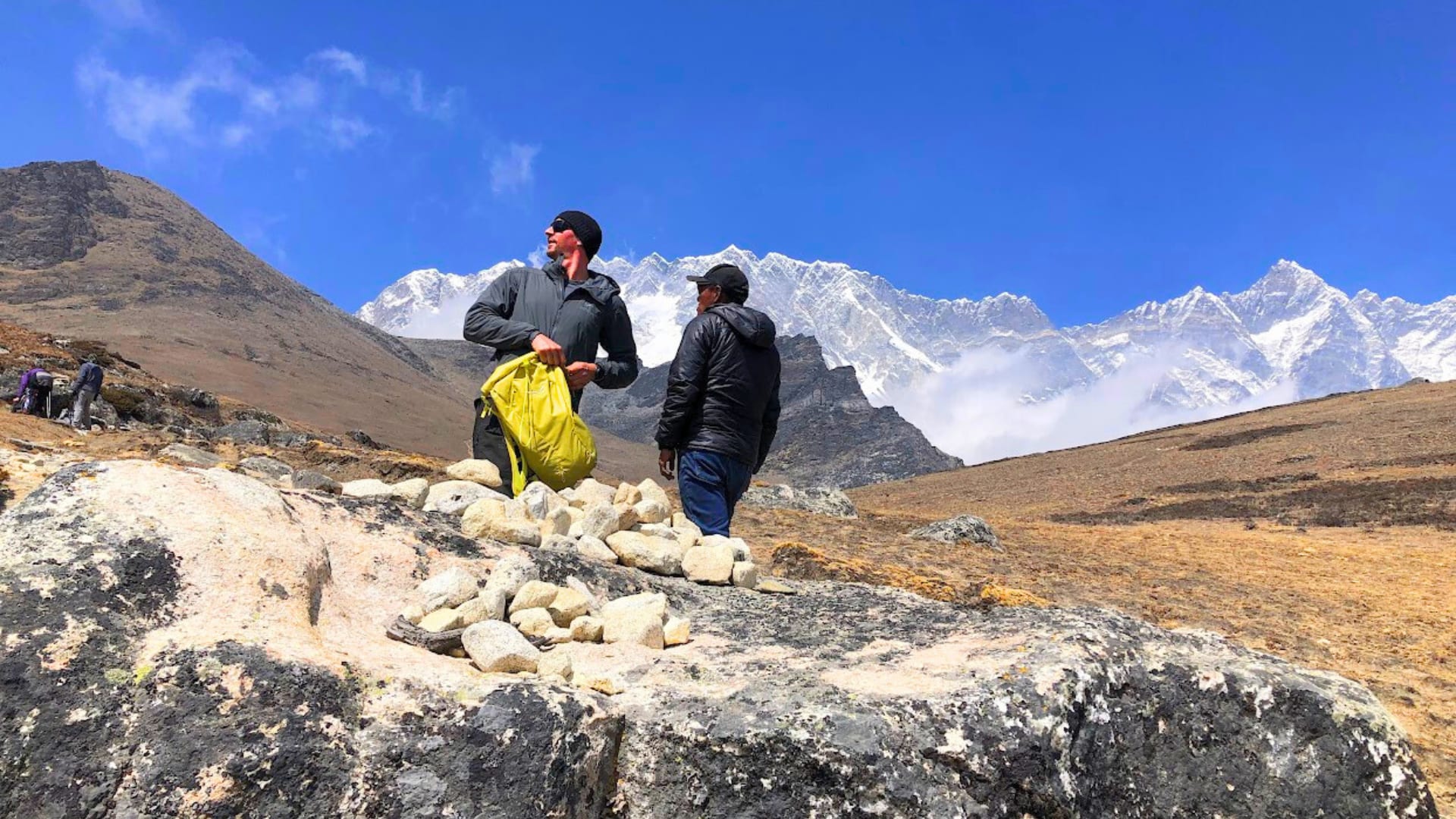
Together the two Everest fees come to about NPR 6,400. Neither checkpoint takes cards, so bring rupees before you fly to Lukla.
What changed in Mustang and Manaslu since December 2025
Mustang first. On 22 December 2025 its old flat charge of USD 500 for the first ten days went. Everyone now pays USD 50 per person per day inside the restricted zone. A five-day jeep trip to Lo Manthang costs USD 250 where it used to cost USD 500, while a trek longer than ten days costs more than before. If you're booking the Upper Mustang Trek, budget the permit by days on the trail. ACAP still applies on top, since Mustang lies inside the Annapurna Conservation Area.
Then, on 22 March 2026, a second change. The Department of Immigration dropped the old rule that a restricted-area permit needed at least two foreign trekkers. A solo traveller can now get a Manaslu or Upper Mustang permit in their own name, at the same per-person rate a pair would each pay. The Manaslu permit price didn't change, USD 100 for the first week from September to November and USD 75 from December to August. It stacks with the Manaslu Conservation Area Permit and ACAP, because the Manaslu Circuit Trek leaves through Dharapani on the Annapurna side.
The guide rule did not change with it. A licensed guide from a registered agency is still compulsory in every restricted district and gets checked along the trail. One client can now apply alone. Nobody can walk in unguided. Nar Phu, a smaller restricted valley off the Annapurna Circuit, follows the same solo rule, and our Nar Phu Valley itinerary and permit guide covers its fees.
Langtang and Gosaikunda
Langtang trekkers pay the national park fee of NPR 3,000 (NPR 1,500 for SAARC nationals) at Dhunche on the drive north, plus a TIMS card. One ticket covers the whole park, Gosaikunda lakes and the Helambu extension included, so a single fee works for long, multi-stage plans on the Langtang Valley trek. The 2026 floods cut the road to Syabrubesi, and the trek currently starts at Thulo Syabru. Check our 2026 floods update before booking.
The 2023 guide mandate that now touches every permit
Since 1 April 2023, foreign trekkers have had to hire a licensed guide or porter-guide from a registered agency before entering any national park, conservation area or restricted region. The Nepal Tourism Board introduced the rule after a string of trekkers went missing on unmonitored routes. It ended the old free independent trekker category. The green TIMS card no longer lets a foreigner register and walk without local supervision, and a guide's licence number is now a required field on every TIMS or restricted-area application.
Checks have tightened at the busiest gates, Dharapani among them, where officers check the guide's card against the trekker's records before waving a group through. The Khumbu has been patchier. A guide is a real cost on top of the permits, billed by the day, and you can't skip it on any route here. In return, someone else carries your paperwork through every checkpoint, which removes the most common cause of a delayed start, a missing or mismatched permit.
Documents to bring
Every application draws on the same paperwork, so gather it before you land and save yourself a day at the counter. You need a passport valid for at least six months beyond your trek, two passport photos for standard permits and four for restricted areas, and the number of a travel insurance policy that covers high-altitude trekking and helicopter evacuation. Your agency adds the guide's licence number. Bring Nepali rupees in cash, because permit counters and checkpoints don't take cards.
Restricted-area applications go through the Department of Immigration, a different office from the Nepal Tourism Board counters, and they need a little lead time. Ask your agency how long, since the December 2025 and March 2026 changes are recent enough that processing times are still settling.
Where the fees go
ACAP money funds the National Trust for Nature Conservation's work across the Annapurna region, from trail bridges and micro-hydro power to drinking-water stations and community lodges. The Khumbu municipality fee pays for similar work in the Everest valleys, and restricted-area revenue from Mustang and Manaslu is split between the central government and local municipalities. Think of the permit as a conservation levy. That's partly why the fees have moved more than once in two years.
Book your trek with permits handled
Annapurna Trekking, the trekking arm of Swotah Travel and Adventure, files every permit on this page as part of an all-inclusive package, so your paperwork is under way before you land. Message us on WhatsApp at +977 984 159 5962 or use our contact page to confirm what your route needs.
Frequently asked questions
What permits do you need to trek in Nepal?
Most treks need a conservation-area or national-park permit plus a TIMS card, arranged through a registered agency. Everest uses two local fees in place of TIMS. Restricted areas like Mustang and Manaslu need an extra special permit.
How much do Nepal trekking permits cost?
Conservation and park permits such as ACAP are NPR 3,000 (about USD 23), and TIMS costs NPR 1,000 to 2,000. Restricted-area permits start at USD 50 a day in Mustang or USD 75 a week in Manaslu.
Do you need a guide to get a trekking permit?
Yes. Since 1 April 2023 a licensed guide from a registered agency is required in national parks, conservation areas and restricted regions, and the agency arranges your permits.
Related guides

Founder & Lead Guide, Annapurna Trekking
AJ founded Annapurna Trekking in 2016 and has personally guided treks across Nepal ever since. More about our team →