Everest Base Camp Trek with Helicopter Return
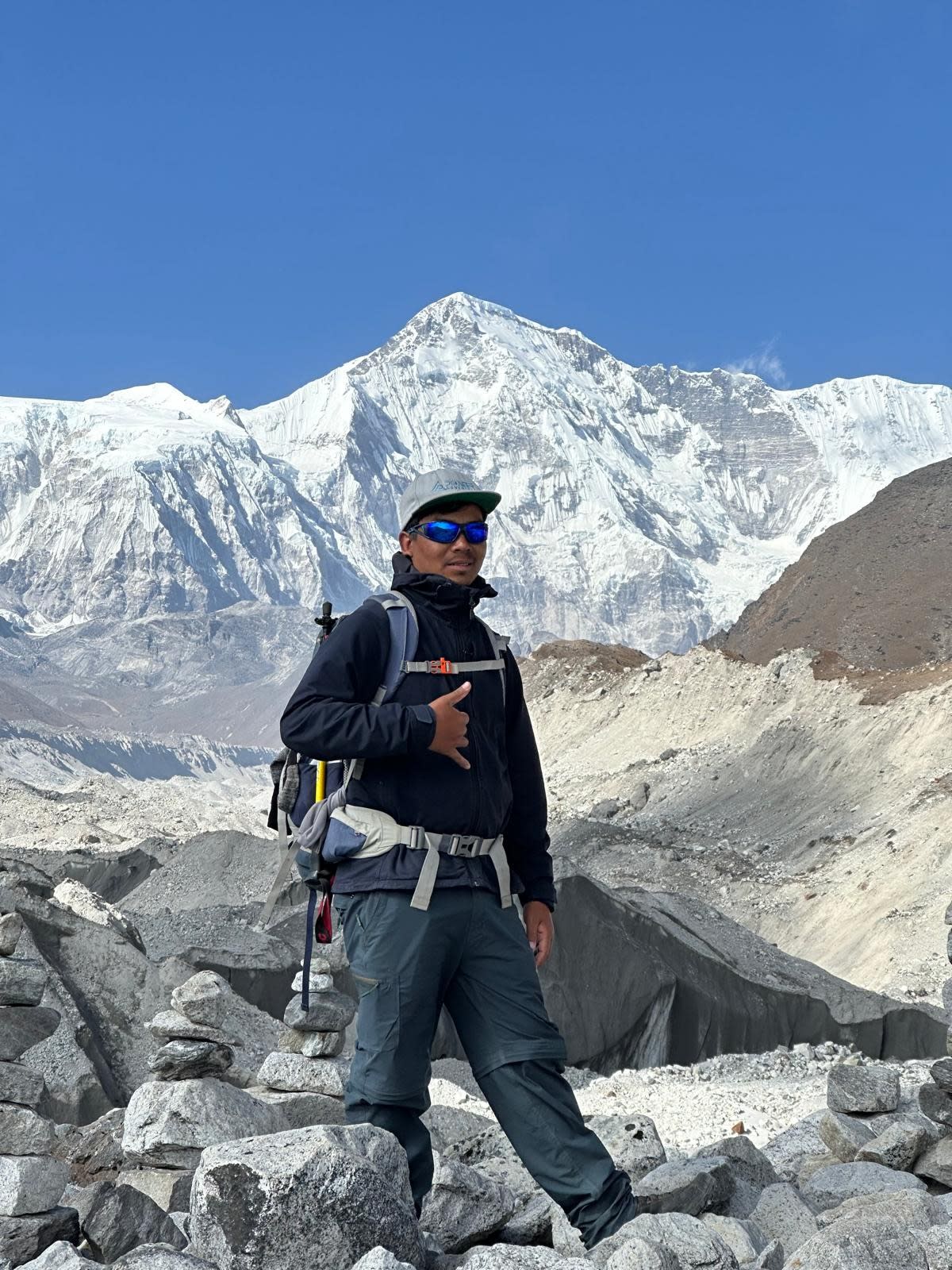
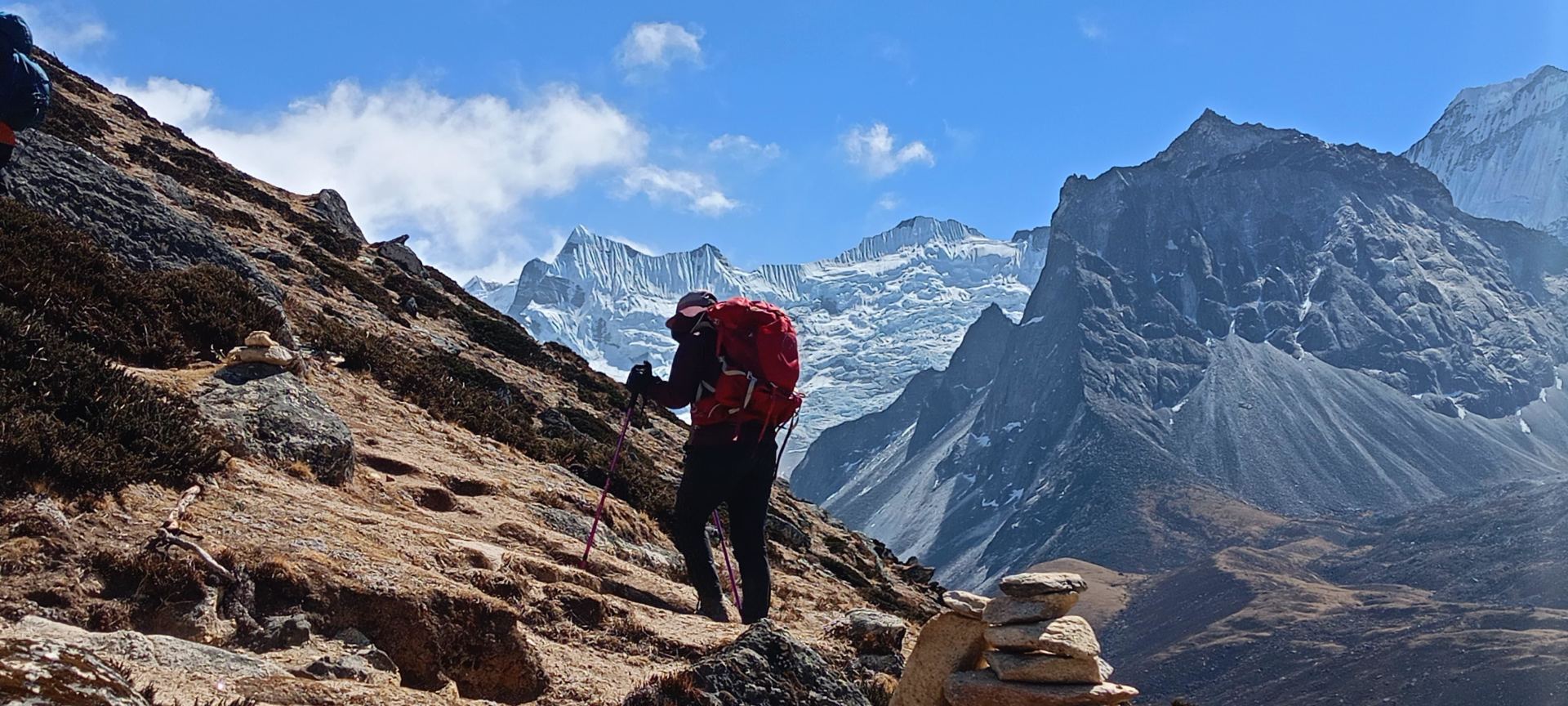
The Everest Base Camp Trek with Helicopter Return is the most popular Everest variant for time-constrained trekkers. You walk in through the full Khumbu valley experience, reach Kala Patthar (5,545m) and Everest Base Camp (5,364m), then fly out by helicopter from Gorak Shep to Kathmandu in 45 minutes, saving 3–4 days of descent.
The trek outbound is identical to the standard EBC route, Lukla, Namche, Tengboche, Dingboche, Lobuche, Gorak Shep, Kala Patthar sunrise, Base Camp. The difference is the return: rather than retracing the 4-day descent to Lukla, you take a 45-minute scenic helicopter flight that crosses the entire Khumbu at altitude, giving aerial views of Everest, Lhotse, Ama Dablam, and the Khumbu Icefall.
The helicopter return saves time and knees, two strong arguments when you have a flight to catch. It is also a spectacular journey in its own right: the aerial perspective of the Khumbu reveals the full scale of the landscape in a way that walking cannot. For many trekkers, the helicopter moment is the highlight of the trip.
Upcoming departures.
| Start Date | End Date | Price / Person | Availability | Book |
|---|---|---|---|---|
| No departures match this filter. | ||||
Trek highlights.
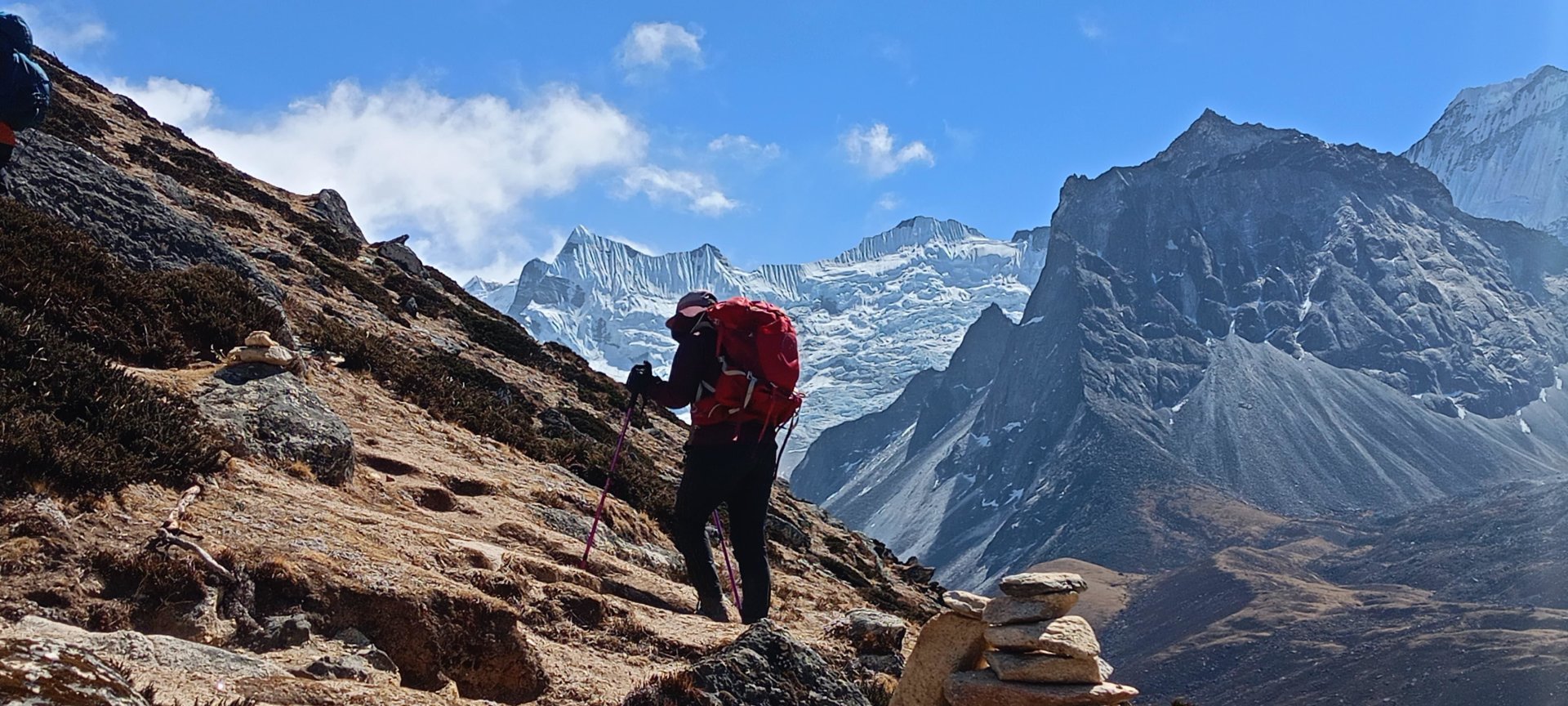
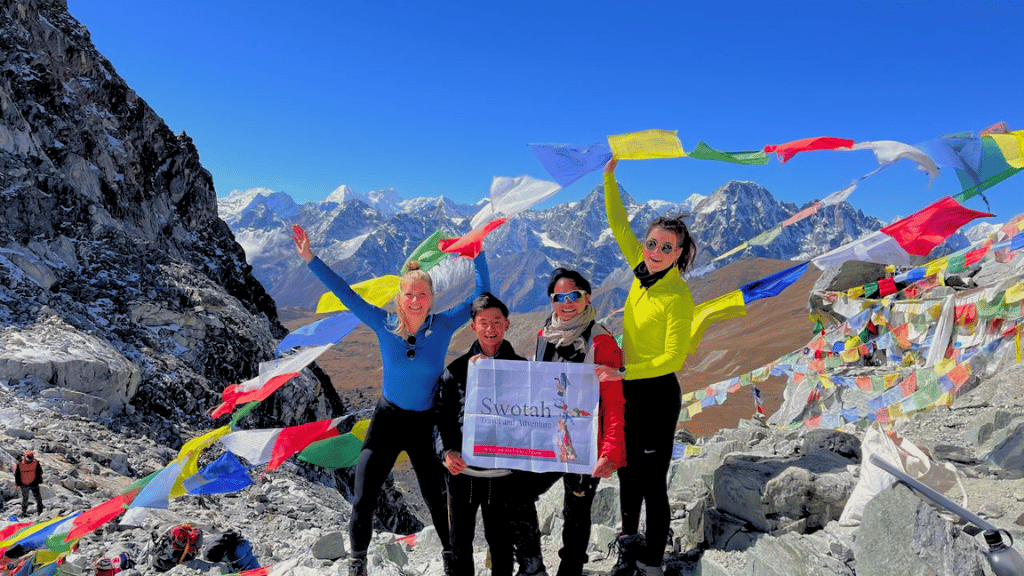
Trek in pictures.

Interactive circuit map.
The full 12-day circuit on a topographic map. Click any marker for details. Switch between Topo, Satellite, and Standard views using the layer control.
12 Days. Every detail planned.
Hotel transfer, gear check, trek briefing. Lukla flight confirmed.
Morning flight to Lukla (2,860m). Afternoon trek to Phakding along the Dudh Koshi river.
Climb through the Hillary Suspension Bridge and rhododendron forest to Namche, the Sherpa capital of the Khumbu.
Mandatory acclimatisation day. Morning hike to Everest View Hotel for first Everest sighting. Afternoon explore Namche.
Pass through Sanasa and Kyangjuma with Ama Dablam dominating the skyline. Tengboche Monastery at sunset.
Cross the Imja Khola and climb into the high valley. Dingboche is a turning point, views of Lhotse, Island Peak, and Ama Dablam from the village.
Second acclimatisation day. Morning hike above Dingboche to 5,100m with spectacular views. Afternoon rest and oxygen saturation monitoring.
Cross the Thukla pass, the Everest memorial cairns line the ridge above. Lobuche is austere at this altitude but the scenery is extraordinary.
Morning walk to Gorak Shep (5,140m). Drop bags at lodge and continue to Everest Base Camp (5,364m), the foot of the Khumbu Icefall with prayer flags and expedition tents. Return to Gorak Shep for the night.
Pre-dawn (04:30) climb to Kala Patthar (5,545m) for the iconic Everest south face sunrise. Return to Gorak Shep for breakfast. Board helicopter at Gorak Shep, 45-minute scenic flight over Namche, the Khumbu valley, and the Himalayan range to Kathmandu. Arrival Kathmandu midday. Debrief lunch.
Free day for shopping, spa, rest, or sightseeing. We build this buffer for helicopter weather delays, if Day 10 helicopter operates, this is a bonus free day.
Airport transfer. All international departures.
Transparent, all-in pricing.
Included in your price
Not included
Trek altitude at a glance.
How hard is this trek?
Best time for the Everest Base Camp Trek with Helicopter Return.
Weather on the Everest Base Camp Trek with Helicopter Return.
Everything you need to know.
Open any card for in-depth notes on accommodation, food, altitude, permits, money and the small print that matters on the trail.
Your safety, planned in detail.
Altitude is the main risk on this trek. Here is exactly what we carry, who we call, and where the nearest help is at every stage of the route.
Common health risks
- •Altitude sickness above Namche, and particularly above Dingboche
- •Cold nights and thin air at Gorak Shep and Kala Patthar (5,545m)
- •Delays from weather, because both the Lukla flight and the return helicopter depend on clear skies
Travel insurance — required
- ✓Must cover trekking to at least 6000 metres
- ✓Must include helicopter evacuation and emergency medical care
Emergency protocols
Our guides carry a pulse oximeter and first-aid kit and check oxygen levels daily at altitude. Anyone with signs of HACE or HAPE goes down at once. Helicopter evacuation is possible in clear weather, but storms can stop flights, so a guide may have to help you down on foot. The planned return flight does not replace proper acclimatisation on the way up.
What to pack.
Plan Your Trek
Planning guides for the Everest Base Camp Trek with Helicopter Return
Written by our guides, these cover the permits, altitude, timing, and kit you need before you go.
Common questions.
GeneralHow does the helicopter return work?+
After reaching Kala Patthar (5,545m) at sunrise and visiting Everest Base Camp, we return to Gorak Shep for breakfast. A pre-arranged helicopter picks the group up from Gorak Shep (5,140m) and flies directly to Kathmandu (approximately 45 minutes). The helicopter flies at altitude over the Khumbu, providing aerial views of Everest, Lhotse, Ama Dablam, and the full Himalayan range. We arrange the helicopter with our partner operators, the flight is included in the package price.
GeneralIs the helicopter return guaranteed?+
Helicopter flights from Gorak Shep are weather-dependent. If weather prevents flying on your scheduled day, we descend to a lower camp and attempt the following day. We build one buffer day (Day 11) into the itinerary specifically for this contingency. In worst-case extended weather windows, we arrange a ground descent to Lukla and standard flight back to Kathmandu, the cost difference is covered by us. Our flight cancellation rate due to weather is very low in October and spring.
GeneralHow much does the helicopter return add to the cost?+
The helicopter is included in our EBC with Helicopter Return pricing. There is no additional charge on the day. The price difference between our standard EBC (14 days) and this package (12 days with helicopter) reflects the helicopter cost (approximately USD 600–800 per person in a shared helicopter of 4–5 people) minus the 2 saved descent nights of accommodation and meals. For most trekkers, the time saving and the aerial experience justify the cost difference.
GeneralWhat is the helicopter flight like?+
The 45-minute flight from Gorak Shep to Kathmandu is spectacular. You fly at altitude over the entire Khumbu, Everest, Lhotse, and Ama Dablam visible from the window, before descending through the Dudh Koshi valley. The aerial perspective reveals the full scale of the mountain range in a way that days of walking cannot. Most passengers rate it among the highlights of the trip. Bring your camera.
GeneralCan I upgrade from the standard EBC trek to helicopter return?+
Yes, if you have booked the standard EBC trek and decide on the trail that you would like to fly back, contact us via WhatsApp and we will arrange the helicopter. This is subject to availability and costs are confirmed at the time of request. We recommend booking the helicopter return option before departure to guarantee the best rates and scheduling.
Built different. On purpose.
Named guide before you book
Name, photo, licence number and WhatsApp. The same guide meets you at the airport and finishes the trek with you.
100% private, zero strangers
Your group, your pace, your schedule. We have never placed strangers together on a private trek. Not once.
Transparent all-in pricing
Permits, guide, porter, accommodation and all meals included. What you see is what you pay — no upsells on the trail.
Deposits from 10%
The earlier you book, the lower your deposit. The balance is due 15 days before departure, and our booking terms list every refund tier.