Upper Mustang Trek
The Upper Mustang Trek is a 14-day restricted-area trek into the former Kingdom of Lo, a high-altitude desert plateau that remained closed to foreign trekkers until 1992. Mustang borders Tibet to the north and sits at elevations between 2,700 m and 4,200 m above sea level. Because the Annapurna and Dhaulagiri massifs block monsoon clouds, the region receives fewer than 300 mm of rainfall per year. You can trek here in June, July, and August, months when rain shuts down most of Nepal, and still walk in dry, clear skies.
The trek starts from Jomsom (2,720 m), reached by a 25-minute flight from Pokhara. From Jomsom, the route follows the Kali Gandaki River north through Kagbeni (2,810 m), the gateway village where the restricted zone begins and trekking permits are checked. Above Kagbeni the landscape transforms immediately: the Kali Gandaki gorge opens into a wide, wind-carved plateau of red and ochre cliffs, ancient cave dwellings cut into cliff faces, and whitewashed villages that look unchanged over centuries.
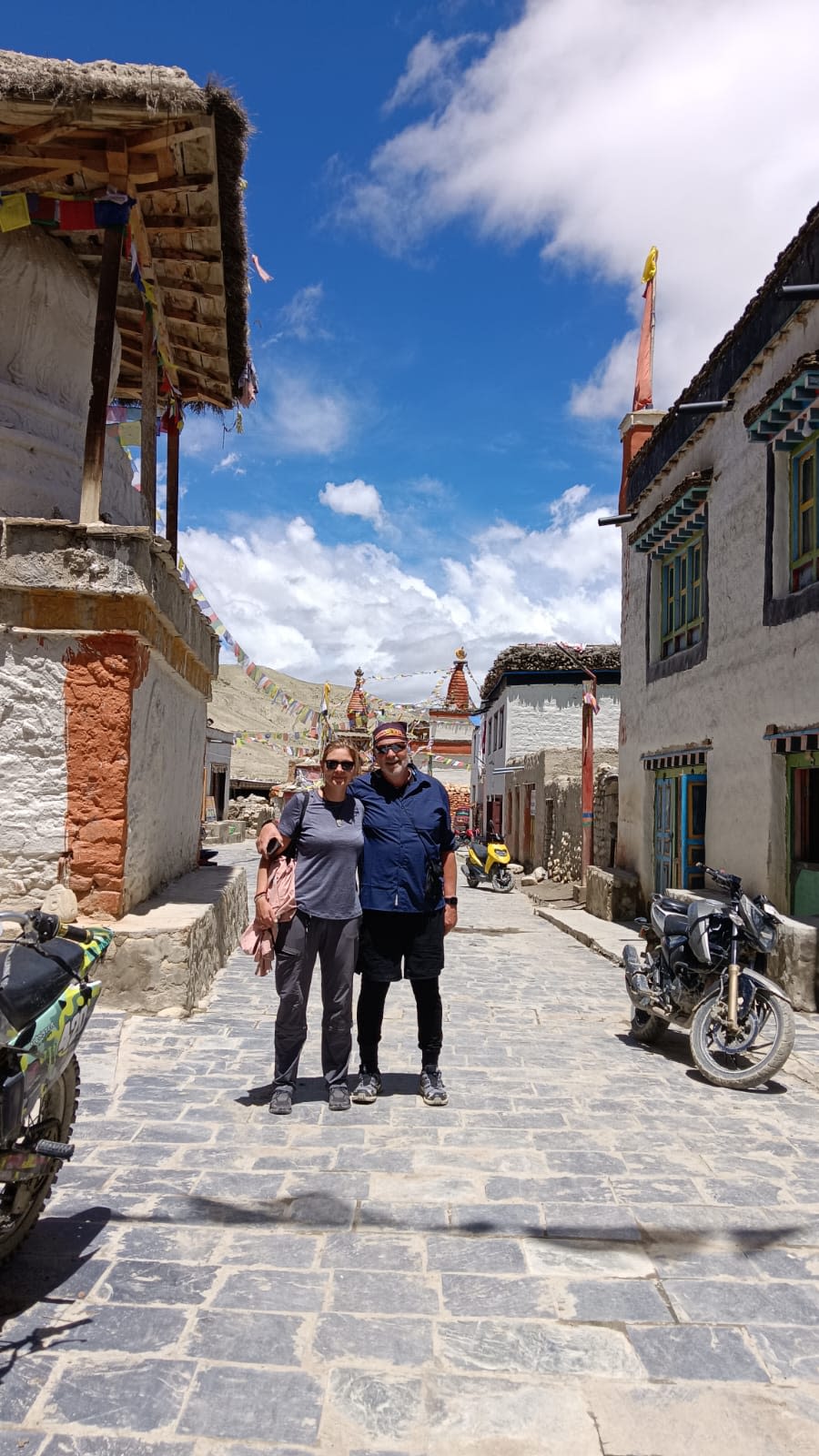
The walled city of Lo Manthang (3,840 m), the medieval capital of the Mustang Kingdom, is the focal point of the trek. The city's whitewashed perimeter wall encloses the royal palace, four Buddhist monasteries, and around 200 households. The 24th Raja (king) of Mustang, Jigme Dorje Palbar Bista, lived here until Nepal formally ended the kingdom's special status in 2008, though he continued residing in Lo Manthang. The monastery complex of Jampa Lhakhang, Thubchen Lhakhang, Chodé Gompa, and the Namgyal Gompa contain 15th-century murals that art historians compare to contemporary Tibetan and Italian Renaissance works. Access to these monasteries is included in the standard restricted-area permit.
Above Lo Manthang the trek extends north to the Tibetan border at Nyi La (4,010 m), where on a clear day you see the brown, treeless expanse of the Tibetan plateau below. The area around Lo Gekar is one of Mustang's oldest monastery sites, predating Tibetan Buddhism's second transmission by several decades.
The trail south from Lo Manthang offers two route options: the main valley return or the longer alternative through Yara and Tange villages via the Narshing and Ghami monasteries. Both routes pass the Ghar Gompa (3,950 m) cliff monastery and the Luri Gompa cave complex (3,650 m), where cave-cut chapels contain 14th-century murals and an enormous stone chorten. These sites receive almost no visitors compared to the Kathmandu Valley temples and their historical value is equivalent.
This trek requires a special Restricted Area Permit (USD 50 per person per day, effective under a December 2025 regulation change), an ACAP permit (NPR 3,000), and mandatory travel with a licensed guide. There is no minimum group size, Nepal dropped that requirement for restricted areas in March 2026. The permit cost is real, but it is what keeps Upper Mustang visitor numbers low, roughly 2,000 to 3,000 trekkers per year enter the restricted zone. Lhasa in Tibet draws millions. The Mustang plateau you walk through in October could have fewer than 50 other trekkers.
The best months are March through November. Summer (June–August) is unusual for Nepal trekking in that it remains viable here. October and November offer the clearest skies. Winds in Mustang, especially in the Kali Gandaki valley, are strong in the afternoon, typically 40 to 60 km/h from the south between 11:00 and 18:00. Plan to cover ground in the morning.
Upcoming departures.
| Start Date | End Date | Price / Person | Availability | |
|---|---|---|---|---|
| Nov 1, 2026 | Nov 14, 2026 | USD 1,990 | 6 spots left | |
| Apr 4, 2027 | Apr 17, 2027 | USD 2,090 | 10 spots left | |
| Oct 10, 2027 | Oct 23, 2027 | USD 2,090 | 10 spots left |
6 moments you won't forget.
Lo Manthang: Medieval Capital
Restricted Area: Controlled Access
Trek in Monsoon Season
Kali Gandaki Gorge
Luri Gompa Cave Monastery
Ochre Cliffs and Tibetan Plateau Terrain
Interactive circuit map.
The full 14-day circuit on a topographic map. Click any marker for details. Switch between Topo, Satellite, and Standard views using the layer control.
14 days. Every detail planned.
Transparent, all-in pricing.
Included in your price
Not included
Trek altitude at a glance.
How hard is this trek?
Best time for the Upper Mustang Trek.
Weather on the Upper Mustang Trek.
Everything you need to know.
Open any card for in-depth notes on accommodation, food, altitude, permits, money and the small print that matters on the trail.
Your safety, planned in detail.
Altitude is the main risk on this trek. Here is exactly what we carry, who we call, and where the nearest help is at every stage of the route.
Common health risks
- •Sunburn, UV at altitude + reflection from arid landscape is fierce
- •Wind chill on the trans-Himalayan plateau
- •Mild AMS possible above 3,800m (Lo Manthang at 3,840m)
- •Dehydration: dry air at altitude is brutal
- •Dust inhalation on the trail (face buff essential)
- •Cold nights even in May (-5°C+ common)
Our medical kit
- •Pulse oximeter (carried by guide, checks oxygen saturation)
- •Emergency oxygen cylinder (lead guide carries one above 4,000m)
- •Diamox (acetazolamide) for acute mountain sickness
- •Dexamethasone (HACE emergency use)
- •Nifedipine (HAPE emergency use)
- •Broad-spectrum antibiotics
- •Anti-diarrhoeal medication
- •Antihistamines
- •Strong painkillers (ibuprofen + paracetamol)
- •Wound dressings, blister kit, bandages
- + 1 more items carried by the lead guide
Travel insurance — required
- ✓Must cover trekking up to 4,200m (Lo Manthang region max)
- ✓Must include helicopter evacuation (USD 5,000+ coverage minimum)
- ✓Must include medical and emergency repatriation
- ✓We recommend World Nomads, True Traveller (UK), or Safety Wing, all cover Nepal trekking at altitude
- ✓Bring policy printout + emergency phone number to the pre-trek briefing
Nearest medical facilities
- •Lo Manthang: Tibetan Medical Centre, traditional medicine + basic first aid
- •Jomsom: District hospital with X-ray and basic surgery
- •Pokhara: Manipal Teaching Hospital
- •Kathmandu: CIWEC Travel Medicine Centre
Emergency protocols
Mustang is geographically isolated. Helicopter evacuation from Lo Manthang: USD 4,500–6,000, response 60–90 minutes from Pokhara. We carry satellite communicator and pulse oximeter. Daily oxygen checks from Tsarang onward.
Helicopter evacuation
Helicopter from Lo Manthang to Pokhara: USD 4,500–6,000, covered by insurance. Mustang has dedicated helicopter operators familiar with the routes.
Nepal visa on arrival
Tourist visa-on-arrival at Kathmandu (Tribhuvan International) airport. USD 30 / 15 days, USD 50 / 30 days, USD 125 / 90 days. Bring 2 passport photos and USD cash. The arrival kiosk takes credit cards but with a 4–5% surcharge. Process takes 15–30 minutes on arrival depending on flight load.
From your front door to the trailhead.
Every leg of the journey, the mode of transport, the time it takes, and what's included. The complete picture from international arrival to trek start and back again.
Kathmandu → Pokhara
IncludedIncluded
Pokhara → Jomsom
IncludedIncluded: subject to weather
Jomsom → Pokhara (return)
IncludedIncluded
Pokhara → Kathmandu
IncludedIncluded
What to pack.
Plan Your Trek
Planning guides for the Upper Mustang Trek
Written by our guides, these cover the permits, altitude, timing, and kit you need before you go.
Common questions.
FitnessHow fit do I need to be for Upper Mustang?+
Upper Mustang is classified as moderate difficulty. You need a reasonable base fitness level — walking 5 to 6 hours a day with a daypack for 12 consecutive days. Unlike Annapurna Base Camp or the Three Passes trek, there are no long, steep climbs. The terrain is mostly plateau walking and valley trails. The primary challenge is altitude: you spend 6 nights above 3,500 m. If you exercise 3 to 4 times per week (running, cycling, hiking), you'll be comfortable. No technical climbing skills are needed.
FitnessIs Upper Mustang suitable for beginners to high-altitude trekking?+
It's a reasonable first high-altitude trek for moderately fit people, provided you allow proper acclimatisation time. The itinerary includes a rest day in Lo Manthang (Day 7) and the daily elevation gain is gradual. The maximum altitude (Nyi La, 4,010 m) is lower than Everest Base Camp (5,364 m) or Thorong La (5,416 m). The main risk is ascending from 2,720 m (Jomsom) to 3,840 m (Lo Manthang) within 6 days — follow the 'pole pole' principle (go slowly), drink 3 to 4 litres of water per day, and tell your guide immediately if you develop headache, nausea, or unusual fatigue.
HealthWhat altitude sickness risk does Upper Mustang carry?+
The risk is moderate — lower than EBC or the Three Passes, higher than Poon Hill or Mardi Himal. You'll sleep at 3,840 m for 3 nights in Lo Manthang. Acute Mountain Sickness (AMS) symptoms — headache, fatigue, loss of appetite, poor sleep — are possible. Severe AMS (HACE or HAPE) is rare at this altitude but not unknown. We always carry a pulse oximeter to monitor blood oxygen levels. If your SpO2 drops below 75% or you show severe symptoms, the protocol is descent to Kagbeni (2,810 m) — a half-day walk or emergency jeep ride. Acetazolamide (Diamox) at 125 mg twice daily from Day 1 is a common preventive measure and is available in Pokhara pharmacies.
HealthCan I drink the water along the route?+
Tap water and stream water in Upper Mustang are not safe to drink without treatment. All lodges provide boiled water or you can buy bottled water (cost: NPR 100–200 per litre, more expensive at higher villages). Bring a SteriPen or water purification tablets as a backup and cost-saving measure — you'll drink 3 to 4 litres per day. Avoid ice in drinks. Hot tea and coffee are safe. The altitude causes rapid dehydration even when you don't feel thirsty — monitor your urine colour (should be pale yellow, not dark).
PlanningWhat is the Upper Mustang Restricted Area Permit and how much does it cost?+
The Upper Mustang Restricted Area Permit (URAI) is a government-issued permit required for all foreign nationals trekking north of Kagbeni. It costs USD 500 per person for the first 10 days and USD 50 per additional day. This was set by the Nepal government when the Kingdom of Lo was opened to foreign visitors in 1992. The permit is issued in Kathmandu through a government permit office and must be arranged before you enter the restricted zone — it cannot be obtained in Mustang itself. Additionally, all trekkers need the Annapurna Conservation Area Permit (ACAP) at NPR 3,000. Both permits are included in our package price. You must carry copies during the trek — there are multiple checkpoint posts on the trail.
PlanningDo I really need a licensed guide? Can I trek independently?+
No. Independent trekking in Upper Mustang is illegal under Nepal government regulations. All trekkers in the restricted zone must travel with a government-licensed guide and permits must list the guide's registration number. There are checkpoint posts at Kagbeni, Chele, Lo Manthang, and on the return route that verify this. Attempting to enter without a guide results in permit cancellation and possible removal from the zone. Our guides are all licensed and most are from Mustang itself — they provide context about monastery history, local customs, and Tibetan Buddhist practice that you can't get from a guidebook.
PlanningWhen is the best time to trek Upper Mustang?+
March to November. The critical difference from other Nepal treks: Upper Mustang is viable in June, July, and August. The Himalayan barrier blocks monsoon moisture, and precipitation in Lo Manthang during July averages just 28 mm. When the Annapurna Circuit, EBC, and Manaslu routes close to most trekkers due to rain, Mustang stays dry. October and November are optimal — clear skies, no wind issues in the mornings, and temperatures between -1°C and 17°C at Lo Manthang. March and April are beautiful with wildflowers on the lower trail. Avoid December, January, and February — temperatures drop below -15°C at night and the route becomes genuinely harsh.
PlanningWhat flights do I need and how reliable are they?+
You need two flights: Pokhara → Jomsom (outbound) and Jomsom → Pokhara (return). Tara Air and Summit Air both operate this route in Twin Otter propeller aircraft. The flight takes 20–25 minutes and costs approximately USD 120–140 one way. Flights operate only in the early morning (06:00–09:00) before afternoon winds. Cancellations due to cloud or wind are common — roughly 30% of Jomsom flights are delayed or cancelled on any given day. We always build a 1-day buffer into our itinerary at the Pokhara end. If you have a tight international flight connection, allow 2 buffer days in Pokhara before your international departure. In the event of repeated cancellations, the overland alternative is a jeep from Pokhara to Jomsom via Beni (8–10 hours on a rough road).
PlanningIs Upper Mustang appropriate for solo women trekkers?+
Upper Mustang is considered safe for women trekkers. The mandatory guide requirement means you always travel with a local, removing the common vulnerability of solitary trail walking. The local Mustangi population — largely Tibetan Buddhist — has a cultural tradition of women in prominent social and economic roles. Harassment is rare and the communities are used to international visitors. Women trekkers have rated Upper Mustang consistently high for comfort and safety in group and independent feedback. We've run many departures with all-women groups and solo women joining mixed groups.
FoodWhat food is available in Upper Mustang?+
The food in Upper Mustang is a mix of Nepali teahouse standards and Tibetan-influenced dishes that you won't find on other Nepal trek routes. In Lo Manthang, lodges serve Mustangi specialties: buckwheat pancakes (dhero), tsampa (roasted barley flour porridge), thukpa (Tibetan noodle soup), yak butter tea (doja — an acquired taste), and locally produced apples and dried apricots. Dal bhat (lentil soup with rice), noodles, and vegetable fried rice are available everywhere. Meat (yak, chicken) is available but quality varies — stick to vegetarian options in the smaller villages. The apples from Marpha (a village between Jomsom and Kagbeni) are famous across Nepal and available from October. Breakfast and dinner are included in your package.
SafetyWhat are the main safety considerations?+
Three specific risks in Upper Mustang: (1) Altitude — gradual ascent profile keeps HAPE/HACE risk low, but monitor SpO2 and symptoms daily. We carry a pulse oximeter. (2) Afternoon winds — the Kali Gandaki valley funnels 40–60 km/h wind from south to north from about 11:00. Plan to finish each day's walking by noon. A trekker knocked over by wind in exposed terrain can be injured. (3) Flight delays — Jomsom airport is frequently affected. This is an inconvenience issue, not a safety issue, but it requires flexible international connections. There is no road ambulance access above Kagbeni. In a serious medical emergency, helicopter evacuation is required and costs USD 2,000–5,000 — this is why travel insurance with emergency evacuation cover is mandatory.
SafetyWhat happens if there's a medical emergency on the trail?+
Below Kagbeni, jeep evacuation to Pokhara is possible on a rough road (8–10 hours). Above Kagbeni in the restricted zone, the only fast evacuation is helicopter. Nepal's rescue helicopters operate out of Pokhara and Kathmandu and can reach Lo Manthang in under 2 hours in good weather. Our guides carry a satellite communicator for emergency use where mobile coverage fails. We require all trekkers to purchase travel insurance with a minimum USD 100,000 emergency medical evacuation cover before departure — you must provide your policy details when booking. A good contact for helicopter rescue coordination is Himalayan Rescue Association Nepal (himalayan-rescue.org).
InsuranceWhat travel insurance do I need?+
Travel insurance covering emergency medical evacuation to USD 100,000 minimum and high-altitude trekking up to 5,000 m is required for booking. Check that your policy explicitly covers helicopter rescue — some standard travel policies exclude this. Reputable providers used frequently by Nepal trekkers include World Nomads, Safety Wing, and Battleface. Send your policy number and insurer contact to us before the trek departure day. In an emergency, we call your insurer directly to arrange helicopter billing where possible, avoiding out-of-pocket payment.