The 200-kilometre road between Kathmandu and Pokhara runs along the Prithvi Highway, Nepal's busiest inter-city route, and three options cover it: a 25-minute flight from around USD 70, a tourist bus taking 6 to 9 hours from about USD 12, or a private jeep in 5 to 7 hours. Nearly every trekker heading to the Annapurna region passes through this corridor at least once, usually twice, and the right choice depends more on your schedule and tolerance for winding mountain roads than on price alone.
What does each option actually involve?
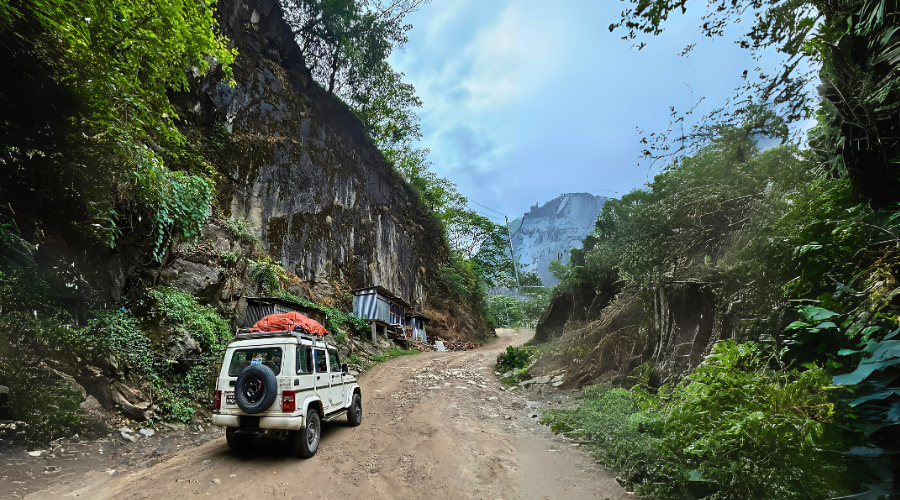
The Prithvi Highway follows the Trishuli and Marsyangdi river valleys through Naubise, Malekhu, Mugling, and Damauli before reaching Pokhara. It's a genuinely scenic drive, with the road tracing river gorges and terraced hillsides most of the way, but it's also a two-lane highway shared with trucks, local buses, and ongoing construction in several stretches, which is the main reason travel times vary so much between trips.
Flight: fastest, weather-dependent
Domestic flights between Kathmandu and Pokhara take just 25 minutes in the air, with total door-to-door time closer to 2 hours once airport check-in and transfers are factored in. Fares run USD 70 to 130 one-way depending on the airline and how far ahead you book, with morning flights generally more reliable than afternoon ones because Himalayan cloud cover tends to build later in the day. This is the right choice if you're short on time or want to avoid the highway entirely.
Tourist bus: the trekker standard
Tourist buses are the default choice for most independent trekkers, purpose-built for foreign visitors with reserved seating, luggage space, and a single stop for lunch en route. Journey time is 6 to 8 hours under normal conditions, though festival traffic, monsoon landslides, or ongoing road widening work can push it to 9 hours or more. Three comfort tiers exist: Deluxe buses run USD 12 to 15, Super Deluxe USD 15 to 20, and VIP tourist coaches USD 20 to 25, with the pricier tiers offering more legroom and air conditioning rather than a meaningfully different route or speed.
Private jeep or car: flexible, faster than the bus
A private vehicle covers the same route in 5 to 7 hours, mainly because it skips the multiple pickup and drop-off stops a shared tourist bus makes along the way. This is the option we arrange for guided package transfers, since it lets us set a specific departure time and avoid the bus terminal wait entirely. It costs more than a shared tourist bus seat but is often worth it for groups of three or more, where the per-person cost comes close to the bus fare anyway.
| Option | Time | Price (one-way) |
|---|---|---|
| Flight | 25 min (2 hrs door-to-door) | USD 70-130 |
| Tourist bus | 6-9 hours | USD 12-25 |
| Private jeep/car | 5-7 hours | USD 80-150 (per vehicle) |
Where do tourist buses actually depart from?
Tourist buses to Pokhara leave from the Kathmandu tourist bus park near Thamel rather than the chaotic main Gongabu bus station used by local services, which matters because it's a calmer, easier pickup point if you're managing trekking gear. In Pokhara, tourist buses arrive at the Tourist Bus Park in Baidam, close to Lakeside, putting you within easy walking distance of most hotels. Departure times cluster in the early morning, typically 6:30am to 8am, since arriving before dark matters more on this route than on shorter journeys.
Is the Prithvi Highway safe, and does the season matter?
The Prithvi Highway is a functioning, regularly maintained national highway, not a remote mountain track, and tourist bus operators on this route have an established safety record built on decades of daily service. That said, monsoon season (June to August) brings a genuine, well-documented landslide risk on several stretches near Mugling, occasionally closing the road for hours at a time, which is the main reason journey-time estimates widen so much in the wet months. Outside monsoon, the main hazards are the ordinary ones of any two-lane highway: overtaking trucks and variable road surface quality where widening work is still underway.
Which one should you actually book?
If you're on a tight itinerary or connecting straight into a trek start date, fly: the Prithvi Highway's variability makes bus travel a real scheduling risk when a missed connection means losing a trekking day. If you have a spare day and want to see the country at ground level, the tourist bus is genuinely enjoyable and the standard choice for budget travellers. If you're travelling as a small group and value control over your departure time, a private jeep splits the difference well.
Every guided package we run includes this transfer in the direction and mode that best fits your specific itinerary, arranged before you arrive so it's one less thing to book separately. See the Annapurna Circuit Trek or Annapurna Base Camp Trek pages for how this transfer fits into a full itinerary.
What should you bring for the journey itself?
A daypack with your camera, water, and any medication is worth keeping accessible regardless of which option you choose, since checked luggage on flights and stowed bags on buses aren't reachable mid-journey. On the tourist bus specifically, a light jacket is useful even in warmer months, since the lunch stop and early-morning departure both run cooler than the midday highway heat. Motion sickness tablets are worth carrying for the bus or jeep options, given the number of curves through the Mugling stretch, even for travellers who don't normally get carsick.
Common questions about this route
Can you fly one direction and take the bus the other?
Yes, and many trekkers do exactly this: flying to Pokhara to save time at the start of a trip, then taking the tourist bus back to Kathmandu at a more relaxed pace once the trek is finished, or vice versa.
Do flights get cancelled often?
Less frequently than the more weather-exposed mountain airstrips like Lukla, since Pokhara's airport sits at a lower, more stable altitude, but morning departures still carry better reliability odds than afternoon ones during the shoulder seasons.
Is there a direct train or alternative route?
Nepal has no passenger rail network, so road and air are the only two options between these cities. A longer, more southerly road route exists via the Tribhuvan Highway, but it's slower and used mainly by cargo traffic rather than passenger services.
How does this transfer fit into your overall trek itinerary?
Most guided Annapurna packages build the Kathmandu-Pokhara leg into day 1 or 2 of the itinerary, arriving in Pokhara the evening before the trek proper begins so there's a buffer if the flight is delayed or the highway runs slow. This matters more than it might seem: a trekker who tries to fly into Pokhara and start walking the same afternoon has no slack left if weather grounds the morning flight, whereas building in an overnight in Pokhara first absorbs that risk entirely. On the return leg, the same logic applies in reverse, with most itineraries scheduling a Pokhara buffer night before the Kathmandu transfer rather than a same-day connection to an international flight.
Independent trekkers planning their own schedule should apply the same principle: book this transfer with at least one full day of buffer either side of a flight home, since the Prithvi Highway's own variability and Pokhara airport's weather-dependent schedule can both eat into a tight connection without warning.
Related guides

Founder & Lead Guide, Annapurna Trekking
AJ founded Annapurna Trekking in 2016 and has personally guided treks across Nepal ever since. More about our team →