ACAP costs foreigners NPR 3,000, and TIMS costs NPR 2,000 at most agencies. That's NPR 5,000, about USD 38, for any Annapurna trek in 2026. Checkpoint officers can still ask for both at posts like Birethanti and Chhomrong, but by mid-2026 the documents checked every time are the ACAP card and your guide's licence. TIMS checks have been patchy since the rules changed in April 2023. Below is what that means for your paperwork, where to buy each permit, which checkpoints you'll pass, and what happens if you skip one.
ACAP, the Annapurna Conservation Area Permit, is issued by the National Trust for Nature Conservation and lets a named trekker into the 7,629-square-kilometre Annapurna Conservation Area, Nepal's largest protected area. TIMS, the Trekkers' Information Management System card, is a separate safety registration that logs your route and emergency contacts. It was designed to sit alongside ACAP. Both are still officially required. Only one gets checked at every gate.
How do ACAP and TIMS work together on an Annapurna trek?
The two were built as a pair. One pays for and controls entry to the conservation area, the other tracks who is walking inside it. In 2026 the balance has tipped. Staff at Birethanti, Ghorepani, Chhomrong, Besisahar, Chame and Manang check ACAP every time and ask for TIMS far less often than when the rule was new.
The safety job TIMS was meant to do has moved onto the guide. Since April 2023 every foreign trekker in the conservation area must have a licensed guide, and officers now log the guide's licence number against your name at each post. Our guides find TIMS gets checked at some gates and skipped at others, depending on the season and the officer, while ACAP gets checked every single time. Carry TIMS anyway. Enforcement can tighten without warning, and when an agency arranges it with your ACAP it's no extra hassle.
ACAP: NPR 3,000 and what it covers
ACAP costs foreigners NPR 3,000 (about USD 23) and SAARC nationals NPR 1,000, and children under ten go free. VAT is already included, so ignore older guides that add 13 percent at the counter. The money pays for trail repairs, micro-hydro power, drinking-water stations and community lodges across an area bigger than many small countries, so it's one of the better-spent fees in Nepal. One card covers every trail in the area, the Annapurna Circuit, Annapurna Base Camp, Poon Hill, Mardi Himal and Tilicho Lake alike.

The same card works whether you start the Circuit at Besisahar or the Base Camp trek at Nayapul. It's single-entry, so a second trip into the area later in the year means buying another. Keep it handy. Officers stamp it at each post, and a card already stamped moves faster through the gates that follow.
TIMS: NPR 2,000, and why 2026 checkpoints check it less often
Most agencies now charge foreigners NPR 2,000 for TIMS. TAAN's published rates still list NPR 1,000 for trekkers in an agency group and NPR 2,000 for individuals, and since 2023 everyone goes through an agency, so ask which rate is on your invoice. The card records your nationality, route, dates, agency and guide's name, and feeds the database rescuers use when a trekker goes missing. Since the 2023 changes TIMS is issued only through a registered agency, so nobody can walk up to the counter and buy one without a guide named on the form.
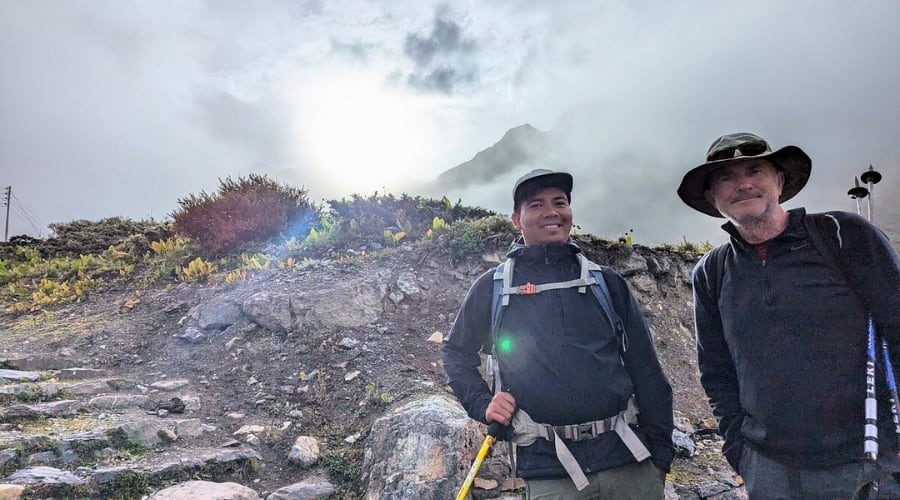
Along the main Annapurna trail, officers increasingly wave groups through on ACAP and a valid guide licence, treating TIMS as a formality. Don't take that as permission to skip it. A missing TIMS card still breaks the rules even where nobody checks, and any agency-booked trek includes it anyway.
Where and how to buy both permits
Two cities, two offices. Kathmandu's Nepal Tourism Board office, which issues both ACAP and TIMS, is at Bhrikutimandap near the Tourist Service Centre, and Pokhara's is at Damside, on the road toward the airport. Both open Sunday to Friday. Bring your passport, two passport photos per permit, your travel insurance policy number and the fees in rupees. Neither counter takes cards.
Some agencies can lodge your details in advance, but you still need the printed card. Checkpoints want to see a paper original, and staff at Birethanti and Chhomrong in particular won't accept a phone screenshot.
| Permit | Foreigner fee | SAARC fee | Issued at |
|---|---|---|---|
| ACAP | NPR 3,000 | NPR 1,000 | NTB Kathmandu / Pokhara |
| TIMS | NPR 2,000 (NPR 1,000 group rate on TAAN tiers) | NPR 300-600 | Registered agency / NTB |
With complete documents it usually takes under an hour, though in the October and April rush the queue alone can eat most of a morning. The same office handles both Annapurna permits, and other regions are covered in our Nepal trekking permits guide.
Pokhara is handier for Base Camp and Poon Hill, Kathmandu for the Circuit from Besisahar. On a guided package the agency collects both permits for you, and the counter visit disappears. You can still do the paperwork yourself, but the 2023 rule means a licensed guide walks with you whoever buys the cards.
Validity, re-entry, and trek duration
ACAP is valid for one continuous trek with no fixed expiry, so a 12-day Circuit and an 18-day Circuit cost the same NPR 3,000. You can't reuse it. Come back to the region after leaving and you buy a new one. There's no daily charge inside the conservation area, which keeps Annapurna permits much cheaper than restricted zones like Upper Mustang, now USD 50 per person per day.
TIMS works the same way and records your planned exit date, so the database can flag anyone overdue. Neither card charges by the day, so an extra rest day for acclimatisation costs nothing in permits. One less reason to rush. That fixed fee is part of why the Annapurna region is Nepal's easiest high-altitude area for a first trek.
Checkpoints along the trail
ACAP and police posts guard every way into the conservation area. On the Circuit you pass Besisahar, Chame and Manang, and on the Base Camp route Birethanti and Chhomrong. Officers log your name at each one. That log is what starts a search if you never check out at the far end.
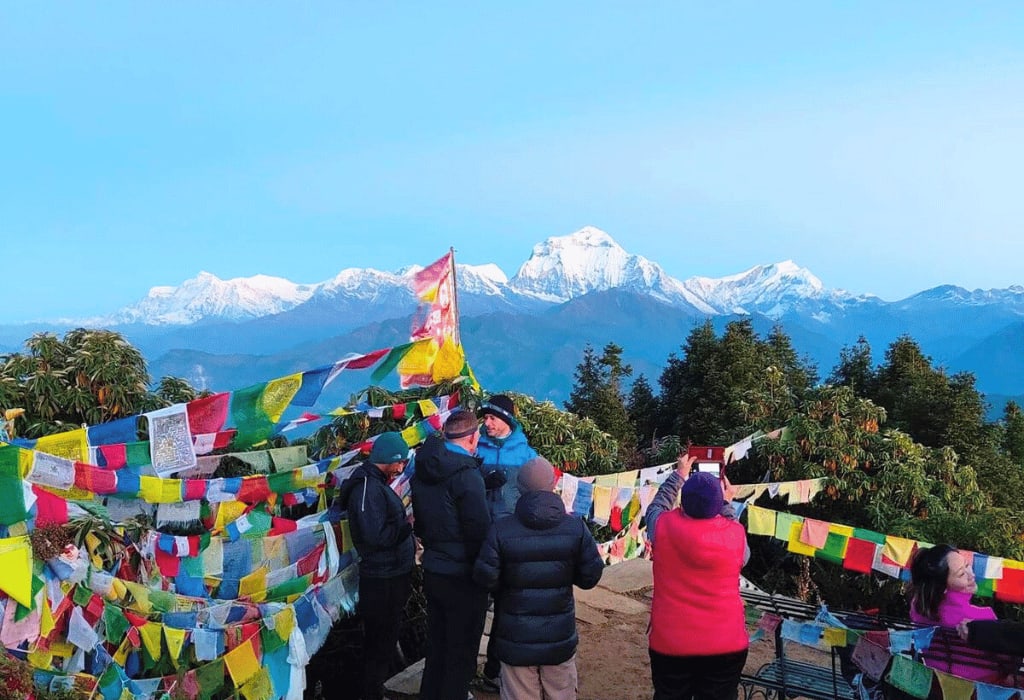
Ghorepani, at 2,860 metres, has a checkpoint too, and the Poon Hill sunrise viewpoint at 3,210 metres sits inside the same boundary. Carry the printed permit. Without the paper original you may wait while a duplicate gets sorted out. And check out properly at the end of the trail, so the database doesn't mark you as overdue.
Penalties for trekking without permits
No ACAP? You pay double at the checkpoint, NPR 6,000, and officers can also turn you back. Walking without TIMS or without a licensed guide breaks the 2023 rule and can mean a further fine and being sent back down the trail. Agencies that send clients out without proper paperwork can be fined as well.
Compared with those penalties, doing the paperwork properly is cheap, and a guided package removes the risk altogether. Sort the permits along with your departure month, which our guide to the best time to trek the Annapurna Circuit helps with.
Officers rarely accept "I didn't know". The permit offices are in plain sight in Kathmandu and Pokhara, so a missing card looks like dodging, not an honest mistake. The double fee is paid on the spot, in cash, before you go on. On a guided trek it never comes up, because the guide carries every document already stamped.
ACAP versus TIMS at a glance
People buy them together and mix them up constantly. ACAP is a conservation entry fee. It funds the protected area and lets you in, and every gate checks it. TIMS is a safety registration that tracks where you are and feeds the rescue database, and since 2023 gates check it unevenly. Both are single-trip permits issued through a registered agency under the guide rule, and both are required on every Annapurna trail. In 2026 most checkpoints treat ACAP and the guide's licence as the hard requirements.
Together they explain the NPR 5,000 bill on any Annapurna route, from a short Poon Hill loop to the full Circuit over Thorong La. The Everest region drops TIMS entirely. There, a national park fee covers conservation and a municipality fee pays for local services.
Common mistakes that cost trekkers time
Three slip-ups cost first-timers a day more often than anything else. No passport photos, which means a detour to a photo shop in Thamel. No insurance policy number, which stalls the TIMS form. And turning up on a Saturday, when the office is shut. Each costs an hour or two. Together they can push your start back a full day and wreck a tight flight plan.
A fourth is growing. People hear that TIMS often isn't checked, skip it, and then hit one of the gates that does check. On a guided booking none of this happens, because the agency handles the photos, the form and the timing, and both permits are usually ready before you land. That frees your city day for gear shopping and sleep.
What a guided trek includes
Our all-inclusive Annapurna packages bundle ACAP, TIMS and a TAAN-certified guide into one price, so you never queue at the counter or risk a penalty. Our guides carry printed permit copies through every checkpoint, from Besisahar and Chame to Birethanti and Chhomrong, and groups are capped at twelve. Good paperwork matters as much as good acclimatisation, covered in our altitude sickness prevention guide. To sort permits and dates for a Circuit or Base Camp trek, message us on WhatsApp at +977 984 159 5962 or use our contact page.
Frequently asked questions
How much is the ACAP permit?
NPR 3,000 (about USD 23) for foreign trekkers and NPR 1,000 for SAARC nationals, VAT included. Your agency arranges it before the trek, and buying it at a trail checkpoint costs double.
Do you need both TIMS and ACAP?
Yes, both are officially required in the Annapurna region. ACAP costs NPR 3,000. TIMS costs NPR 2,000 at most agencies, or NPR 1,000 where the agency applies TAAN's group rate.
Where do you get Annapurna trekking permits?
At the Nepal Tourism Board offices in Kathmandu (Bhrikutimandap) and Pokhara (Damside), arranged through a registered agency. On a guided trek you don't need to visit an office at all.
Related guides

Founder & Lead Guide, Annapurna Trekking
AJ founded Annapurna Trekking in 2016 and has personally guided treks across Nepal ever since. More about our team →