Withdraw all the rupees you need in Kathmandu or Pokhara before your trek, because you should not count on an ATM or a card on the trail. On a package trek, about NPR 30,000 to 55,000 (USD 200 to 360) usually covers tips and extras. For data, buy a Ncell tourist SIM or eSIM at Kathmandu airport with your passport. Listed prices start at NPR 595 for 7 days, but expect gaps in signal at high altitude.
How much cash should you carry on a Nepal trek?
The right amount depends on what your package already covers. These are planning figures per person, converted at the Nepal Rastra Bank rate of about NPR 151.5 to USD 1 in early November 2026.
| Your trip | What cash pays for | Carry about |
|---|---|---|
| Package, 14 days | Tips, showers, wifi, charging, snacks | NPR 30,000 to 55,000 |
| Food and beds not included, 14 days | USD 30 to 45 a day, plus the above | NPR 95,000 to 150,000 |
| Short trek, 5 days | Tips and small extras | NPR 10,000 to 17,000 |
Add an emergency reserve on top. The UK Foreign Office says to carry enough cash for delays, especially in remote areas where ATMs may be unavailable and cards may not be accepted. Our tipping guide and Annapurna Base Camp cost guide show where these numbers come from.
Ask for small notes, because a high lodge may not be able to change a large one. Split your cash between your daypack and your main bag.
Are there ATMs on trekking routes?
Treat the last reliable ATM as the one in your starting city. You may hear about machines in larger trail towns, such as Namche Bazaar, but we could not confirm which machines work today, and a machine can run out of cash or lose its connection. Do not build your budget around one.
What do ATMs charge foreign cards?
Fees differ by bank, and they can change. One published example is the NIC Asia Bank schedule from February 2025, which lists NPR 500 per withdrawal for a foreign bank's Mastercard at its machines, about USD 3.30. Your home bank may add its own fee and exchange margin, so ask it before you travel. A flat fee means several small withdrawals cost more than one large one, if your limit allows it.
Withdrawal limits also differ between banks, and we could not find one official number. The ATM screen shows your limit, so you may need several withdrawals over more than one day.
Which cards work best?
Take two cards from different networks. In 2022, The Kathmandu Post reported that the single ATM then at Kathmandu airport did not accept Mastercard, which caused long waits for travellers trying to pay for visas. More machines were promised, and this may no longer apply, but the lesson remains useful. Tell your bank your travel dates, and check that your card works abroad before you leave.
Cards work poorly outside cities. A hotel association president told The Kathmandu Post in 2024 that credit cards are not accessible in most of Nepal's localities. The cross-border QR service in that report was for Indian visitors using PhonePe or BHIM UPI, so other visitors should not expect to scan and pay with a home banking app.

How much foreign cash can you bring into Nepal?
You can bring up to USD 5,000 or its equivalent without a customs declaration. Larger amounts must be declared and certified at customs. Nepal Rastra Bank reissued this rule in July 2026, and it applies to Nepali and foreign citizens.
US dollars are useful as a backup, especially for your visa on arrival. The Department of Immigration advises carrying some cash for the visa fee even though other payment methods are accepted.
Can you use Indian rupees in Nepal?
Indian notes have stricter rules. The same notice says Nepali and Indian citizens may carry Rs 200 and Rs 500 notes issued since 9 November 2016, up to INR 25,000 per person. It does not extend this permission to other foreigners, so other visitors should not plan to use Indian rupees.
News reports of the same notice disagree on older notes. B360 says old Rs 500 and Rs 1,000 notes cannot be used, while ShareSansar words this differently. Leave any old notes at home.
Which SIM card should trekkers buy?
Most visitors should buy a tourist plan from Ncell at the airport and consider a second SIM from Nepal Telecom (NT) for remote routes. The two companies split the market almost evenly, and a Kathmandu Post report from April 2026 quotes a Solukhumbu resident who keeps two SIMs because Ncell does not work in the resident's village. Which network wins depends on the valley, so ask your guide about your route before you buy.
| Ncell tourist plan | Price | Validity | Data |
|---|---|---|---|
| Sprinter | NPR 595 | 7 days | Speed drops after 10 GB |
| Explorer | NPR 995 | 14 days | Speed drops after 25 GB |
| Voyager | NPR 1,995 | 28 days | No data cap |
These prices come from NepaliTelecom in September 2025, so confirm them at the counter. The same report says you can buy these plans at Kathmandu airport, at Ncell outlets and online, and you need your original passport to activate them.
For a normal SIM, NepaliTelecom's May 2026 guide says foreigners need a passport, a visa stamp or entry page, and a photo. You give your hotel as your address. Buy your SIM in Kathmandu or Pokhara and test it before you leave.
Does an eSIM work on a Nepal trek?
An eSIM works if your phone supports it and is not locked to one carrier. Dial *#06#, and if an EID number appears, your phone supports eSIM. Ncell sells its tourist plans as eSIMs too. Nepal Telecom's eSIM process, as described in a June 2026 guide, asks for citizenship documents, so we could not confirm that it suits foreign visitors.
International eSIM apps are another option, and they are easy to set up at home. Before you pay, check which Nepali network the plan uses. Your signal on the trail can only be as good as that network.

How good is phone signal and wifi on the trail?
Expect signal in many villages and long gaps in between. The UK Foreign Office says coverage is limited in remote areas, including long stretches of the Annapurna Circuit. Complaints about slow and unreliable connections are common outside major cities, according to The Kathmandu Post. Nepal Telecom's 2024/25 annual report lists sites on trekking routes, including Annapurna Base Camp, Mardi Himal and the Everest region, and says it is extending 4G toward Tilicho Base Camp and other parts of Manang.
| Region | What to plan for |
|---|---|
| Kathmandu and Pokhara | Normal 4G and hotel wifi |
| Main trail villages | Patchy signal and paid lodge wifi |
| High camps and passes | Often nothing |
| Restricted valleys | Plan to be offline, and tell your family |
| Flood-affected routes | Check first, as damage may affect service |
Lodge wifi usually costs extra. Our Annapurna Base Camp guide lists NPR 200 to 500, and prices rise as you climb. Charging costs money too, and power can be unreliable high up, so bring a power bank. Our packing list suggests 20,000 mAh. If your route was hit by the 2026 floods, read our floods update before you rely on a local network.
What about emergency communication?
A phone is not a rescue plan. Tell your family that you may be out of contact for days, and give them your itinerary and your agency's number. The UK Foreign Office suggests considering a satellite phone for remote trips. Rules for satellite devices can change, so check the current rules before you bring one, and ask your agency. Your guide should know where the next working signal is, and our guide rule article explains who you must walk with.
When should you sort this out?
Finish your cash and SIM jobs the day before you leave the city, then test the SIM with a real call. Treks starting from a road, such as the Annapurna Base Camp trek from Nayapul, leave town quickly, and Lukla flights on the Everest Base Camp trek can leave very early. Save your agency and insurer numbers on your phone and on paper. If you are unsure how much to carry on your route, contact us before you travel.
Frequently asked questions
Should I bring US dollars or Nepali rupees?
Use rupees on the trail and keep some US dollars for your visa and emergencies. You can bring up to USD 5,000 or its equivalent without a declaration.
Which is better for trekking, Ncell or Nepal Telecom?
It depends on the valley, and sources disagree. Some trekkers carry both. Ncell has a simple tourist plan, so it is the easier first purchase. Ask your guide about signal on your route.
Will my phone work at Everest Base Camp?
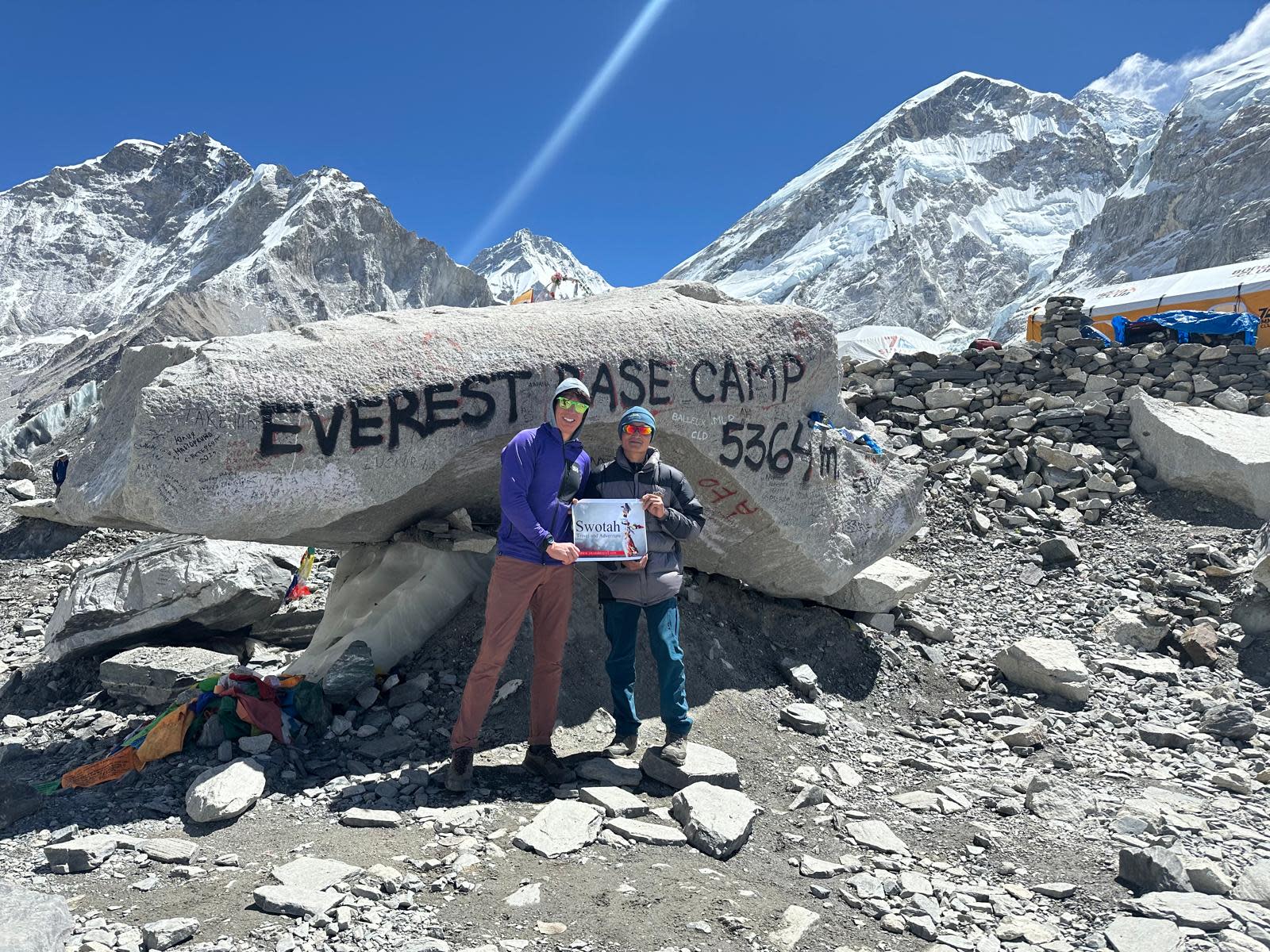
Do not count on it. We could not confirm reliable coverage at that height, and service can change from season to season. Expect to be offline for parts of the upper trail, and buy lodge wifi where you need it.

Founder & Lead Guide, Annapurna Trekking
AJ founded Annapurna Trekking in 2016 and has personally guided treks across Nepal ever since. More about our team →