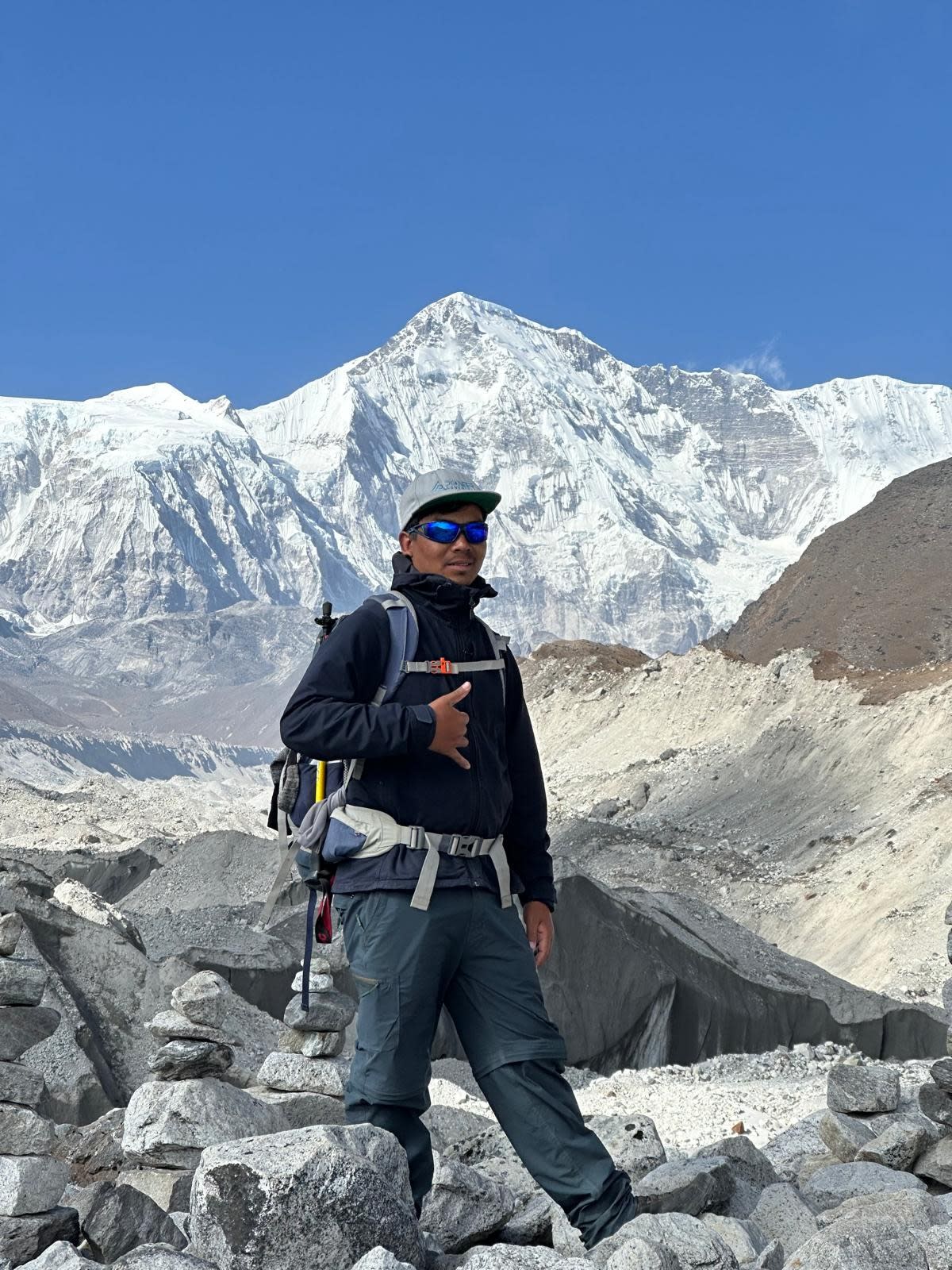
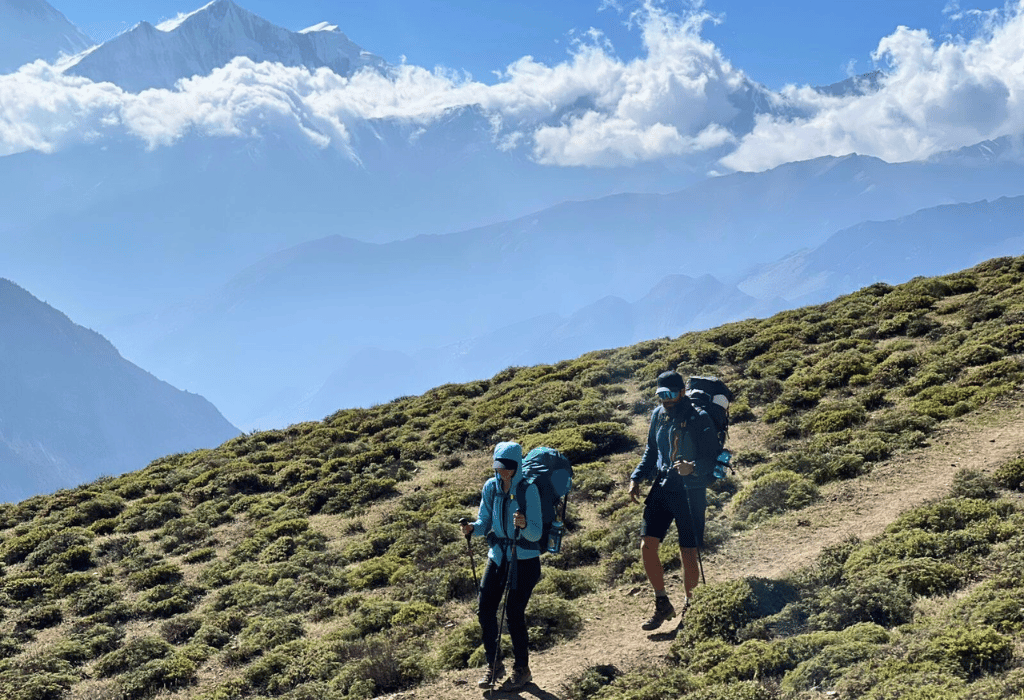
Nar Phu Valley is a restricted trekking area in Nepal's Manang district, home to the Tibetan Buddhist villages of Nar and Phu, and it opened to foreign trekkers only in 2003. A standard trip takes 9 to 13 days from Kathmandu and crosses Kang La at about 5,320 metres. You need a Restricted Area Permit costing USD 100 per person for the first seven days from September to November, or USD 75 from December to August, plus USD 15 for each extra day. When Nepal switched Upper Mustang's permit to a flat USD 50 a day on 22 December 2025, it left Nar Phu's weekly fee alone.
A second change did reach Nar Phu. On 22 March 2026 the Department of Immigration scrapped the old rule that a restricted-area permit needed at least two trekkers. A solo traveller can now hold a Nar Phu permit in their own name, though a licensed guide from a registered agency is still compulsory. ACAP and TIMS apply on top, because the valley lies inside the Annapurna Conservation Area.

Where Nar Phu Fits on the Annapurna Circuit Map
Koto is where it starts. This small village at 2,600 metres sits on the main Annapurna Circuit Trek route between Dharapani and Chame, and the checkpoint there stamps your Nar Phu permit before the trail turns north up the Nar Khola gorge. Below Koto, whether you came by jeep from Besisahar or on foot from Dharapani, it's ordinary Circuit trekking with no restricted paperwork. Above it, different rules apply.
You don't come back out at Koto. After Kang La the trail drops to Ngawal (3,660 metres), one of the upper-route villages between Pisang and Manang on the main Circuit. That's why Nar Phu works so well as an add-on. If you're already taking the jeep up the Marsyangdi, you can turn into one of Nepal's least-visited valleys and rejoin the Circuit eight or nine days later, walking into Manang from a direction almost nobody else uses.
What Makes Nar Phu Different From the Rest of Annapurna
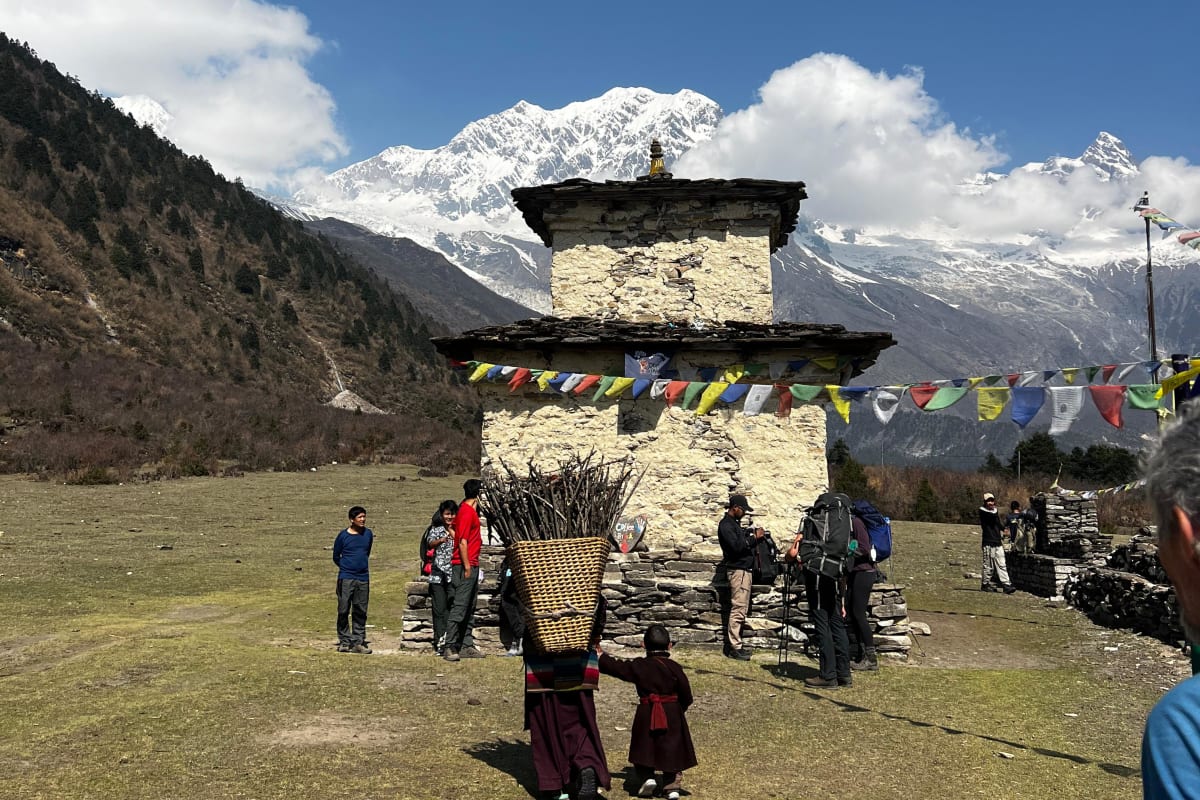
Few trekkers come. Most agencies that run Nar Phu do it as private trips, because demand is still thin more than twenty years after the valley opened. It lies in the rain shadow north of the main Himalayan crest, so the climate and the buildings are Tibetan. Flat-roofed stone houses climb the hillsides, prayer flags hang between chortens, and the terraces grow barley and buckwheat in place of rice. None of it looks like the Gurung villages further south on the Circuit.
Two Walled Villages, One Shared Culture
Phu sits at about 4,050 metres behind a defensive wall and watchtower built against raiders from the Tibetan side. Its Tashi Lhakhang gompa is one of the oldest in the region and keeps faded murals the villagers say are centuries old. Nar, at about 4,110 metres, is bigger and tighter, two and three-storey stone houses packed so close that the alleys act as windbreaks. Both villages are Tibetan Buddhist, and both still follow the seasons. Families come up for grazing and the trekking months, and many move to lower winter settlements once the passes close.
The Gorge Approach and Cliff Monasteries
Before either village you spend two or three days in the Nar Khola gorge. In places the path is cut straight into the cliff above the river. Caves dot the rock above Kyang, a ruined settlement roughly halfway from Koto to Phu, and some are still used by hermits on retreat. The country here looks more like Upper Mustang's canyons than the forested lower Annapurna trail.
Nar Phu Valley Permits and 2026 Fees
Three permits apply, and the fee math trips people up. Plenty of older posts quote pre-2026 numbers or wrongly borrow Upper Mustang's new daily rate.
The Restricted Area Permit Didn't Follow Mustang's New Rate
On 22 December 2025 Nepal changed the Upper Mustang permit from USD 500 for ten days to USD 50 per person per day. Nar Phu wasn't part of that change. Its permit kept the weekly structure, USD 100 per person for the first seven days from September to November, USD 75 for the first seven days from December to August, and USD 15 a day after that in either season.
| Season | First 7 days | Each extra day |
|---|---|---|
| September - November (peak) | USD 100 / person | USD 15 |
| December - August (off-peak) | USD 75 / person | USD 15 |
A standard 9 or 10-day trip spends about that many days in the restricted zone, so the permit comes to USD 100 to 145 per person in peak season. Some operators still quote USD 10 for off-season extra days. Restricted-area fees have changed twice in under a year, so confirm the current figure with your agency before you budget.
The March 2026 change covers every restricted area in Nepal. A solo trekker now pays the same per-person rate a pair would. The guide requirement hasn't moved. Every application still needs a licensed guide's registration attached, and walking the restricted zone without one is illegal.
ACAP and TIMS Still Apply
The valley sits entirely inside the Annapurna Conservation Area, so you need ACAP as well, NPR 3,000 (about USD 23). A few operators quote a flat USD 30 that seems to include a processing fee, so check what you're being charged. TIMS costs NPR 2,000 (about USD 15), the same as anywhere in the Annapurna region. Our ACAP and TIMS permit guide covers the checkpoints, and the Nepal trekking permits guide compares Nar Phu's fees with Manaslu, Mustang and the other restricted valleys.
All three go through a registered agency. The restricted permit is issued by the Department of Immigration, a different office from the Nepal Tourism Board counters that handle ACAP and TIMS, so allow a few extra working days if you're booking less than three weeks out.
The Standard Nar Phu Itinerary
Expect 9 to 13 days, depending on rest days and whether you go back down the gorge or carry on over Kang La to the Circuit. Below is the 12-day version we run, with two acclimatisation days. Kang La at about 5,320 metres is higher than most people expect from a valley trek, only about 100 metres lower than Thorong La.
| Day | Route | Altitude |
|---|---|---|
| 1-2 | Kathmandu to Koto via Besisahar (jeep) | 2,600m |
| 3 | Koto to Meta, entering the restricted zone | 3,560m |
| 4 | Meta to Kyang, past the gorge cave dwellings | 3,820m |
| 5 | Kyang to Phu village | 4,050m |
| 6 | Acclimatisation day in Phu, Tashi Lhakhang gompa | 4,050m |
| 7 | Phu to Nar Phedi | 3,490m |
| 8 | Nar Phedi to Nar village | 4,110m |
| 9 | Acclimatisation day in Nar | 4,110m |
| 10 | Nar to Kang La Phedi | 4,300m |
| 11 | Kang La Pass to Ngawal, rejoining the Circuit | 5,320m / 3,660m |
| 12 | Ngawal to Manang or Pisang, onward transport | 3,540m |
Shorter nine-day versions drop an acclimatisation day and the Nar Phedi night, going from Phu back toward Kang La Phedi. We only run that version from September to November, because outside those months it leaves no slack if weather shuts the pass. Longer 13 to 16-day trips add a rest day at Meta or another night in Nar for photography and the monasteries.
What a Nar Phu Trek Costs in 2026
Budget agencies advertise Nar Phu from USD 900 to 1,050 per person for 12 to 14 days. That usually assumes a big group, the most basic rooms and a shared guide. A private or small-group trip with a guide who knows the restricted areas, which is how we do it, costs about USD 1,450 to 1,900 per person for the same length.
| Item | Typical cost (USD) |
|---|---|
| Restricted Area Permit (peak season, ~10 days in zone) | 115-145 |
| ACAP + TIMS | 38 |
| Specialist guide (12 days) | 360-480 |
| Porter (10 days) | 200-250 |
| Teahouse lodging and food | 15-30/day |
| Kathmandu-Koto-Kathmandu transport | 150-220 |
Lodging catches first-timers out. Above Koto you sleep in simple homestay rooms, nothing like the developed teahouses on the main Circuit, and menus shrink fast after Meta. Carry more cash than you would on the Circuit. There's no ATM in the valley, and nobody above Koto takes cards.
Difficulty and Altitude Profile
Moderate to challenging. Harder than Poon Hill or Annapurna Base Camp, nowhere near a technical climb. Expect six to eight hours a day on uneven gorge trail with long steep pulls. The rest days matter more here than on gentler routes, because the trail gains height faster than the main Circuit does early on. Kang La is the real test. Sources put it anywhere from 5,306 to 5,322 metres, just under Thorong La's 5,416.
Altitude sickness? Mostly a pass-day risk. Nar and Phu both sit below 4,200 metres, and most of the trip is spent lower still. We check oxygen saturation every day from Meta onward and won't send anyone over Kang La who shows symptoms that morning.
Best Time to Trek Nar Phu Valley
March to May and September to November, as elsewhere in the Annapurna region. From mid-December to early March heavy snow closes Kang La and much of the trail above Phu, and most homestays in the upper villages shut for winter. Nar Phu also sits less deep in the rain shadow than Upper Mustang, which stays walkable in the monsoon. The lower gorge gets real rain from June to August, so we don't schedule departures then.
Combining Nar Phu With the Full Annapurna Circuit
A combined trip takes 20 to 24 days. You enter at Koto, leave at Ngawal, and carry on over Thorong La to Muktinath like any Circuit trekker. The permits and the guide overlap almost entirely with what a Circuit trekker already pays for, so adding Nar Phu costs mainly the extra permit days and another week of guide and porter wages.
Some people who've already walked the Circuit ask about Nar Phu on its own, in and out through Koto. It works, and it's shorter. Most who get as far as Koto, though, find that skipping Thorong La feels like leaving early.
We run Nar Phu as a private, small-group trip with a guide experienced in the restricted areas, current 2026 permit fees in the quote, and the option of adding the full Circuit. See the Annapurna Circuit Trek page for the base route, or contact us to price Nar Phu or a combined trip for your dates.
Frequently asked questions
Do you need a permit for Nar Phu Valley?
Yes. You need a Restricted Area Permit, USD 100 for the first week from September to November or USD 75 from December to August, plus ACAP and TIMS. A licensed guide is required. Since March 2026 a solo trekker can hold the permit alone.
How many days is the Nar Phu Valley trek?
Usually 9 to 13 days on its own, or 20 to 24 combined with the full Annapurna Circuit over Kang La and Thorong La. Our standard version is 12 days.
How much does the Nar Phu trek cost?
Private and small-group trips cost about USD 1,450 to 1,900 per person for 12 days, and budget shared groups from about USD 900. The restricted permit, a guide and simple homestay lodging make it pricier than a standard Annapurna trek.
Related guides

Founder & Lead Guide, Annapurna Trekking
AJ founded Annapurna Trekking in 2016 and has personally guided treks across Nepal ever since. More about our team →