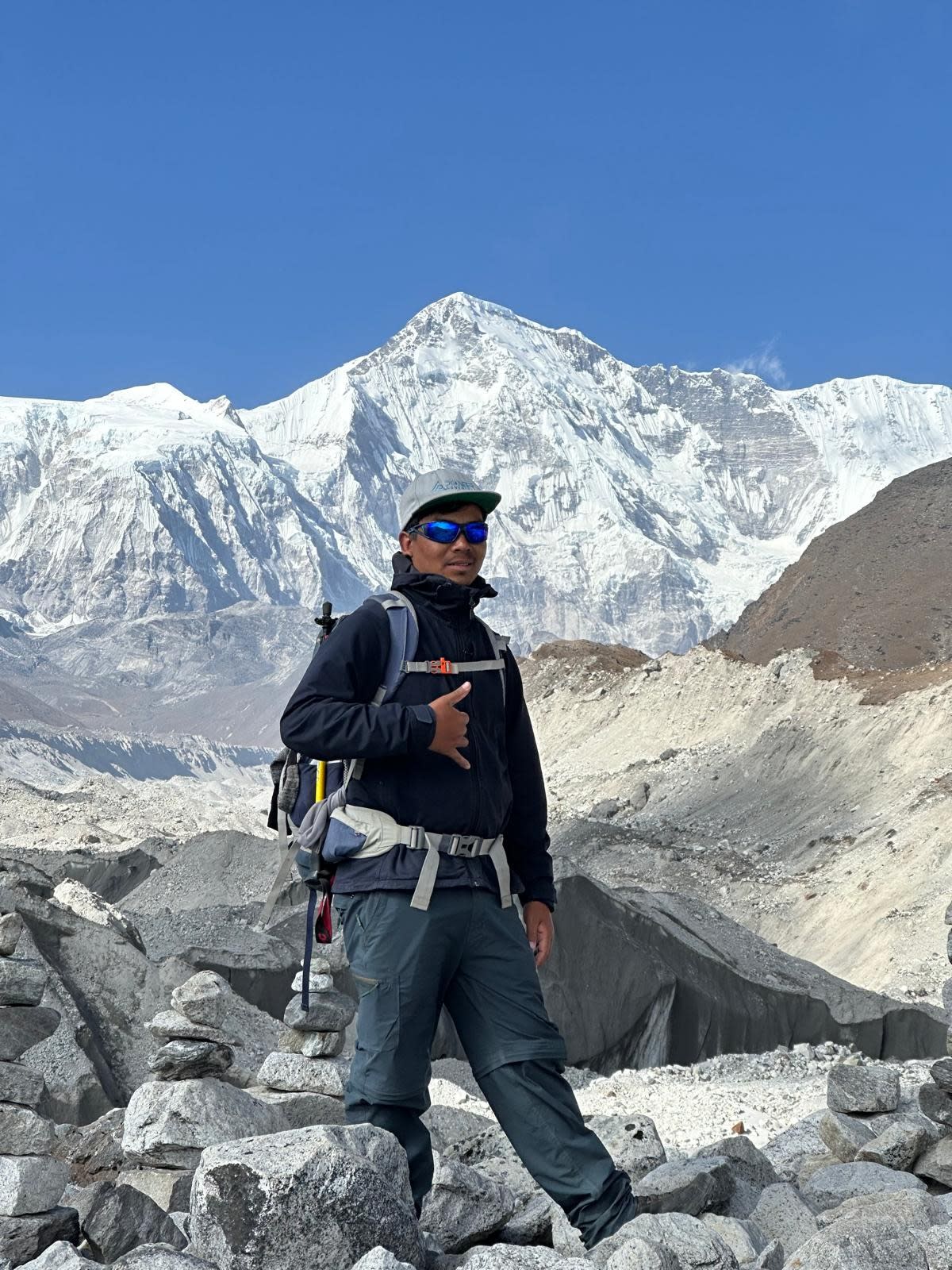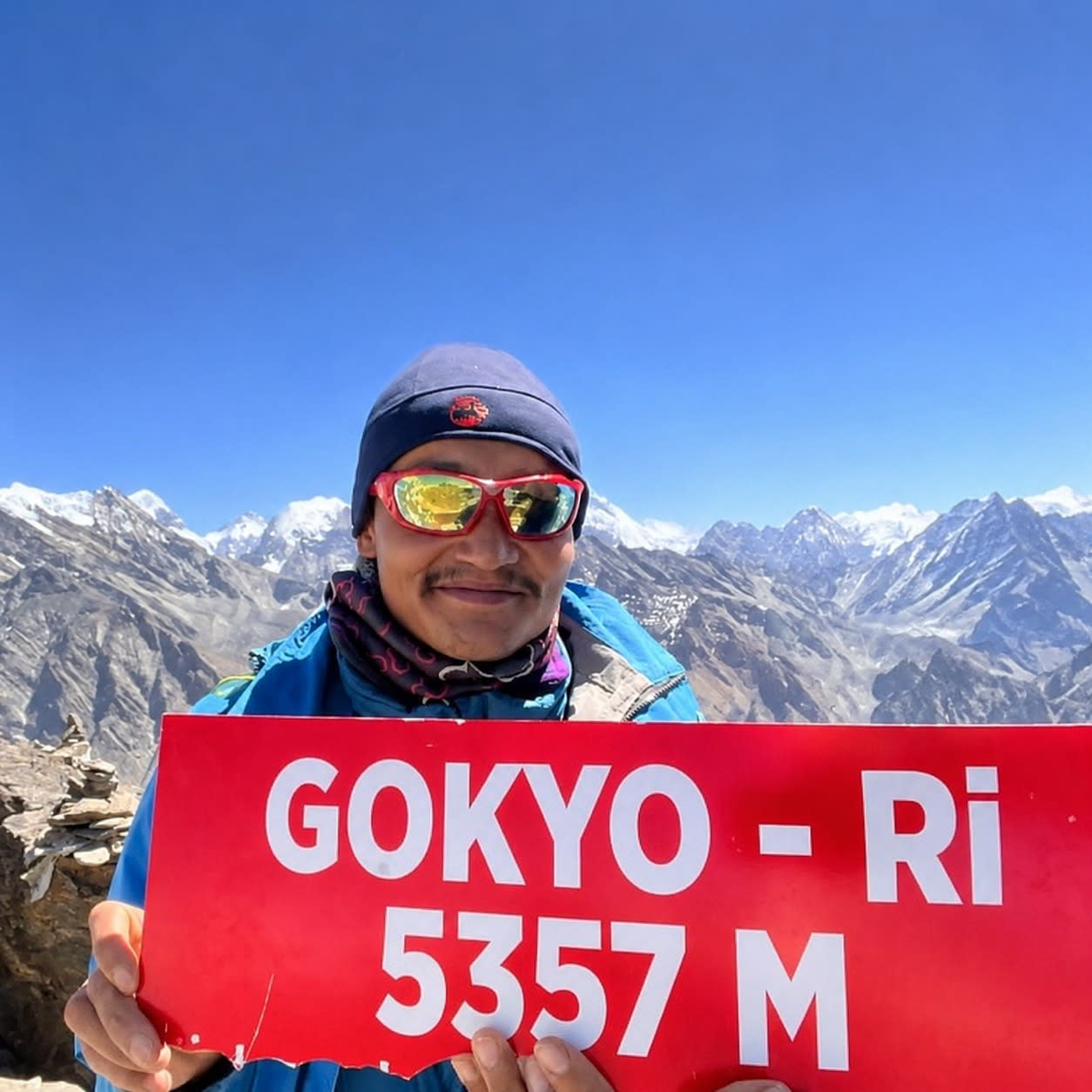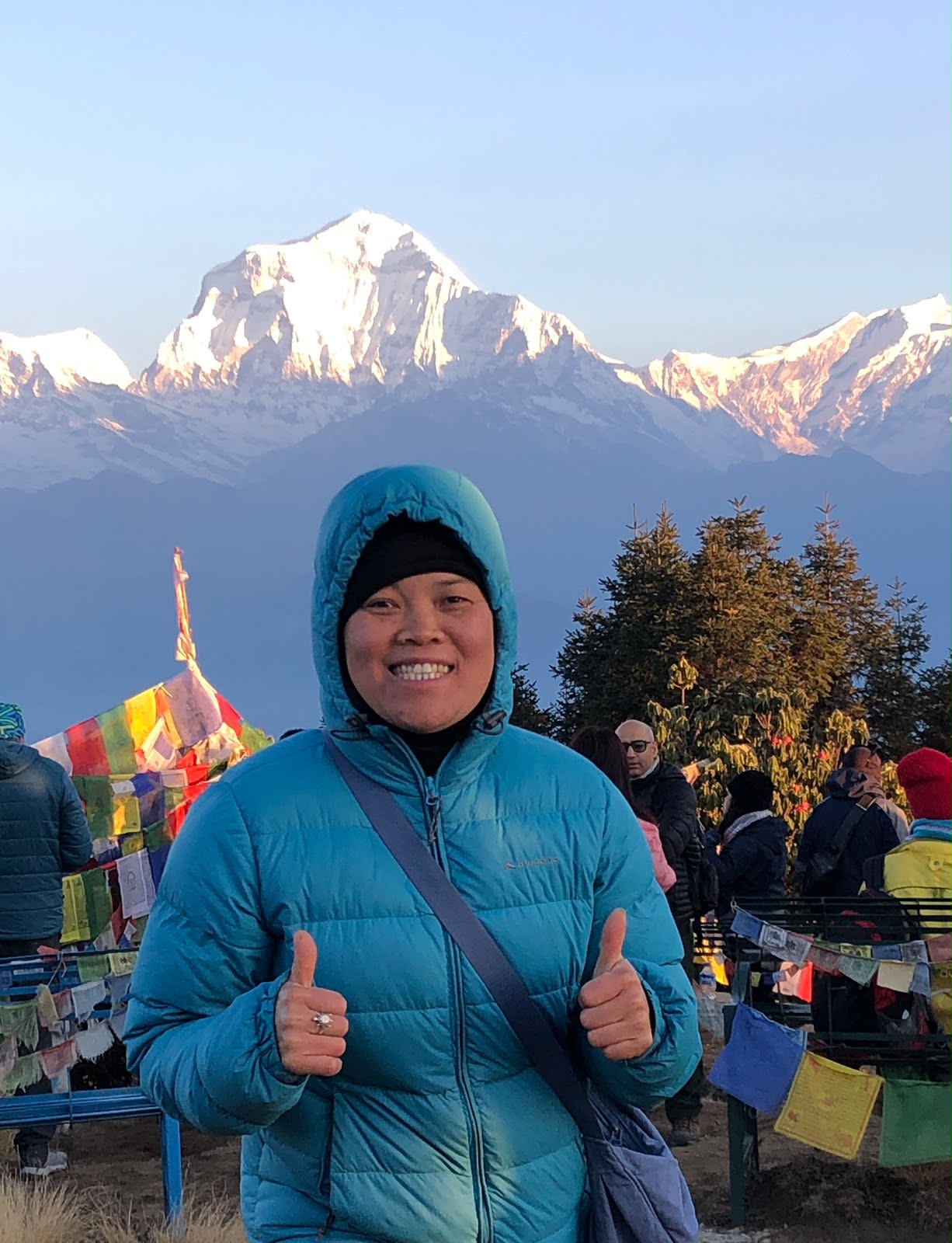
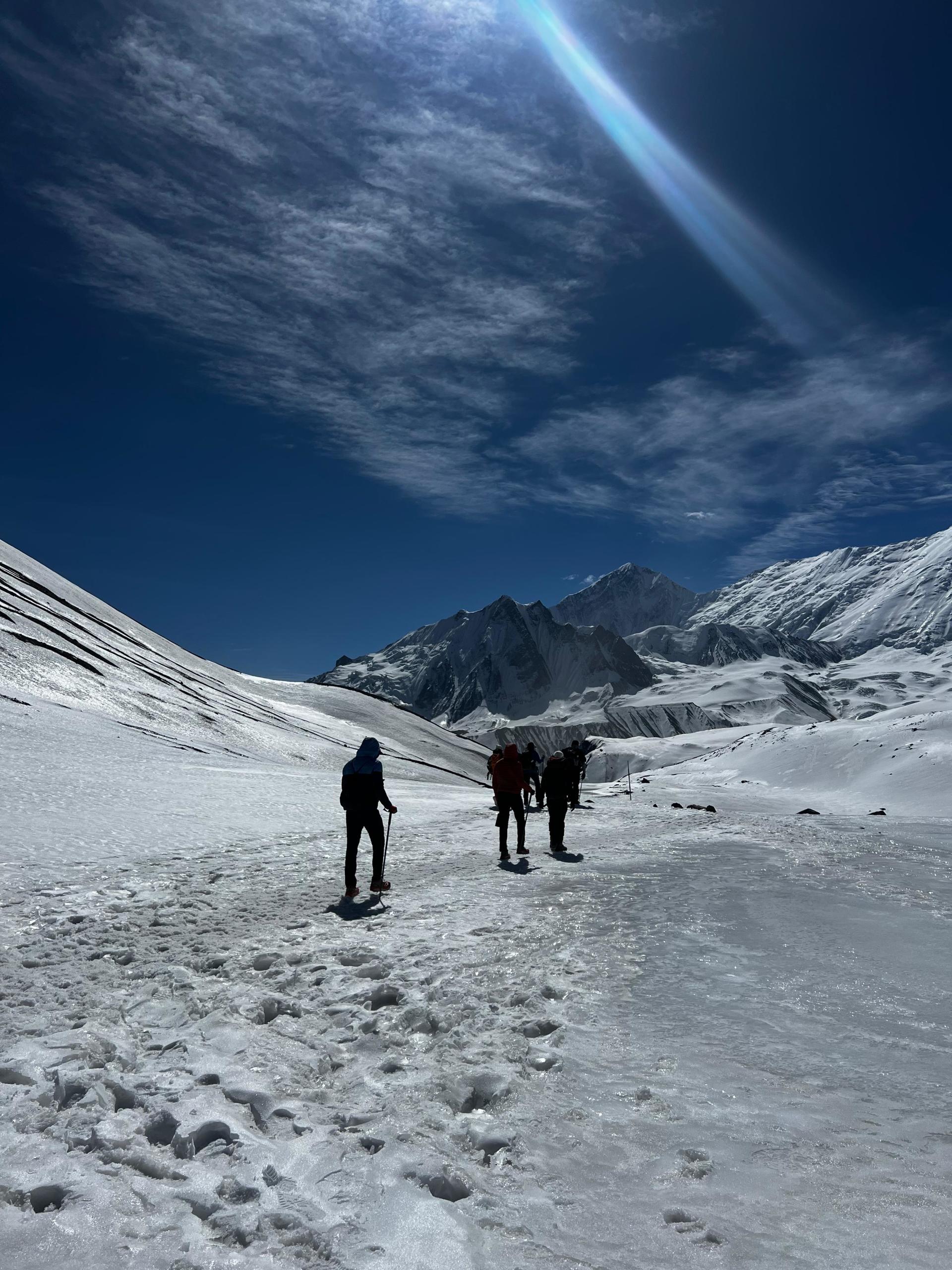
The Sherpa are an ethnic group of roughly 100,000 to 250,000 people whose home is the high Himalayan valleys of northeastern Nepal, around the base of Mount Everest. A Sherpa is a member of this Tibetan-Buddhist mountain people, whose ancestors crossed into Nepal from eastern Tibet about 500 years ago. The name itself means "people of the east." One thing worth clearing up early: "Sherpa" is the name of an ethnic group, even though the word is often used loosely to mean any mountain porter or guide.
Why Sherpa culture shapes a trek in the Everest region
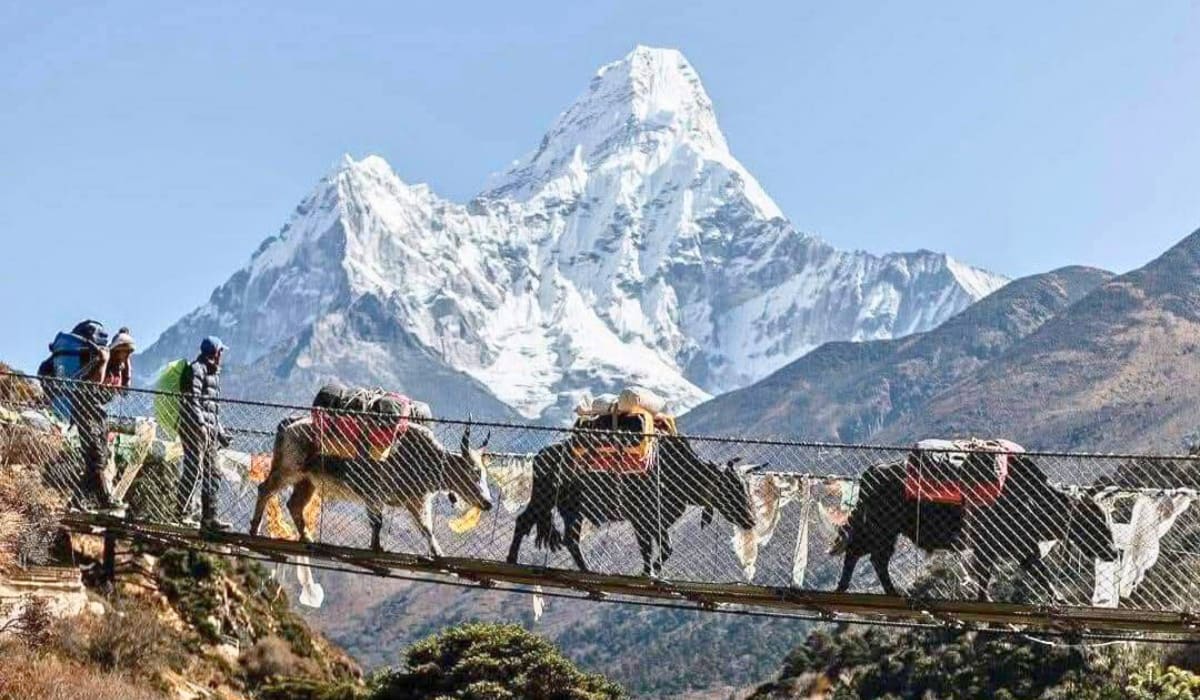
Every trekker in the Khumbu is walking through the Sherpa homeland. The teahouses you sleep in, the monasteries you pass, the prayer flags on the passes, and the guides beside you are all part of living Sherpa culture, not a display put on for visitors. Solukhumbu is where the Sherpa have farmed, herded, and prayed for centuries. Understanding who they are turns a walk into a visit with a people.
The Everest Base Camp trek runs straight through the heart of Sherpa country, past Namche Bazaar and up toward the base of Everest. Trekking here means relying on Sherpa and Gurung guides who know the trails, the weather, and the altitude, and our advice on preventing altitude sickness comes straight from that experience. If you want to meet this culture where it lives, the Everest Base Camp trek is the most direct way in.
What the name "Sherpa" means
"Sherpa" comes from two Tibetan words: "shar," meaning east, and "pa," meaning people. Put together, the word means "people of the east." It points back to where the Sherpa came from, the lands east of central Tibet, in a region called Kham. So the name is really a small piece of history, carried inside a single word.
Where the Sherpa came from
Roughly 500 years ago, the Sherpa migrated from Kham in eastern Tibet across the Himalaya into what is now Nepal. Historians place this movement around the 15th to 16th century, though estimates range from about 400 to 700 years ago. They crossed high passes and settled the valleys near Everest, bringing their language, religion, and way of life with them. Those roots are why Sherpa culture looks and sounds so close to Tibetan culture today.
The 400-to-700-year range exists because the exact date is not settled. Different sources place the migration at different points across the 15th and 16th centuries, so any single figure is an estimate rather than a record. Five hundred years is the round number most often used as a middle point. What is not in doubt is the direction of travel: from Kham in the east, across the Himalaya, into the valleys below Everest.
The Sherpa homeland
The Sherpa heartland is Solukhumbu, a district in northeastern Nepal in the modern Koshi Province. It splits into two areas: Solu, the lower and gentler valleys, and Khumbu, the higher country right at the base of Everest. Namche Bazaar, the Khumbu's main town, sits at 3,440 metres and serves as the trading and trekking hub of the whole region. These high valleys, cold, steep, and thin-aired, are the land the Sherpa have shaped their lives around.
Solu and Khumbu together make up Solukhumbu, but they feel different on the ground. Solu, the lower region, is greener and gentler, with more farmland and kinder altitude. Khumbu, higher and harsher, is the country most trekkers picture: the steep valleys and glacier-fed rivers right under Everest. Both have been Sherpa homeland for centuries, and families have long moved and traded between the two.
Religion, farming, and festivals
The Sherpa are Tibetan Buddhists, following mostly the Nyingma school, which is the oldest of the four main schools of Tibetan Buddhism. Monasteries sit at the centre of village life, and festivals through the year bring whole communities together. You see this faith all along the trails of the region, in the monasteries you pass and the quiet routines of daily life. It is woven into everyday living rather than kept aside for special days.
Traditional Sherpa life rests on a few clear pillars:
Mountain farming of hardy crops that suit the high altitude.
Yak herding for carrying loads, milk, and wool.
Tibetan Buddhism, centred on village monasteries and festivals.
Teahouse hospitality for trekkers and traders passing through.
Traditional Sherpa life runs on mountain farming and yak herding. In the high valleys, families grow hardy crops that can handle the altitude and the short growing season, and they keep yaks for carrying loads, milk, and wool. Since trekking arrived, teahouse hospitality has become a way of life too, and many Sherpa families now run the lodges that feed and shelter trekkers. Farming and herding, though, remain the backbone of village life.
Teahouse hospitality in Sherpa country is one of the first things trekkers notice. Families open their lodges to strangers, feed them, and give them a warm place to sleep at altitude, and that welcome is a big part of why the Everest region is such a rewarding place to walk. Many Sherpa households now earn their living this way, running the lodges that line the main trekking trails. It sits alongside the older work of farming and herding rather than replacing it.
Himalayan mountaineering has relied on Sherpa climbers and guides for generations. Expeditions to Everest and the other high peaks depend on their strength, skill, and knowledge of the mountains, which has brought both income and fame to Solukhumbu. It has also brought real danger. Climbing is only one part of a much older culture, one where farming, faith, and family came long before the first trekking group arrived.
"Sherpa" the people versus "sherpa" the job
"Sherpa" is first the name of an ethnic group, not a job title. It describes a people with their own language, religion, and homeland in Solukhumbu. Outsiders often use the word loosely, though, to mean any Himalayan climbing porter or guide, whatever their ethnicity. That usage is inaccurate, and it can quietly erase the identity of a whole people, so we take care to keep the two meanings apart.
Not every Sherpa is a mountaineer, and not every mountain guide is a Sherpa. Plenty of Sherpa people are farmers, teachers, monks, shopkeepers, and lodge owners who have never climbed a peak. Meanwhile, many of Nepal's finest guides and porters come from other hill peoples, including the Gurung who guide alongside Sherpas on our own team. Respecting the Sherpa means seeing them as a people, not a profession.
Because Sherpa people were central to Himalayan climbing from early on, the name attached itself to the work they did. Outsiders on expeditions began calling any porter or high-altitude worker a "sherpa," whatever their background, and that loose usage spread from there into everyday speech. Knowing the difference is a small act of respect, and it costs nothing to get right. A Sherpa is a person from a people, not a rank on a climbing team.
The Sherpa can be summed up in a handful of names and figures. The table below gathers the core facts in one place, with population given as a range rather than a single number.
Question | Answer |
|---|---|
Meaning of "Sherpa" | "People of the east" (shar + pa) |
Origin | Kham, eastern Tibet |
Arrived in Nepal | Roughly 500 years ago (about 400 to 700) |
Homeland | Solukhumbu (Solu and Khumbu), Koshi Province |
Religion | Tibetan Buddhism, mostly the Nyingma school |
Population in Nepal | About 100,000 to 250,000 |
Population counts for the Sherpa vary, so it is best to give a range. There are over 100,000 Sherpas in Nepal by older figures, while more recent census numbers put the total around 250,000. Both are reasonable, and no single figure should be treated as exact. There are also Sherpa communities beyond Nepal, in India and in Tibet.
Sherpa communities also live well beyond Solukhumbu today. Some families have moved to Kathmandu and other towns for work and schooling, and there are long-established Sherpa populations in India and across the border in Tibet. Wherever they live, the shared language, Buddhism, and ties back to the Everest valleys keep the identity strong. The homeland, though, remains Solukhumbu.
What does the word "Sherpa" mean?
"Sherpa" comes from the Tibetan words "shar," meaning east, and "pa," meaning people, so it means "people of the east." The name points to their origins east of central Tibet, in the Kham region, from where they migrated into Nepal.
Where do the Sherpa people live?
Most Sherpa live in Solukhumbu in northeastern Nepal, in the Solu and Khumbu valleys around the base of Mount Everest, in Koshi Province. There are also Sherpa communities in India and Tibet.
How many Sherpa people are there?
There are over 100,000 Sherpas in Nepal by older counts, and more recent census figures put the number around 250,000. It is best treated as a range rather than one exact figure, and it does not include Sherpa communities in India and Tibet.
Is "Sherpa" a job or an ethnic group?
"Sherpa" is the name of an ethnic group, a people with their own language, religion, and homeland in Nepal. Outsiders often use the word loosely to mean any Himalayan porter or guide, but that use is inaccurate, since not every guide is a Sherpa and not every Sherpa is a climber.
What religion do the Sherpa follow?
The Sherpa follow Tibetan Buddhism, mostly the Nyingma school, which is the oldest of the four main schools of Tibetan Buddhism. Monasteries and festivals are central to Sherpa village life, alongside mountain farming and yak herding.
Related reading
Pemba Sherpa
Trekking Guide, Annapurna Trekking
Pemba Sherpa guides treks across Nepal for Annapurna Trekking. More about our team →