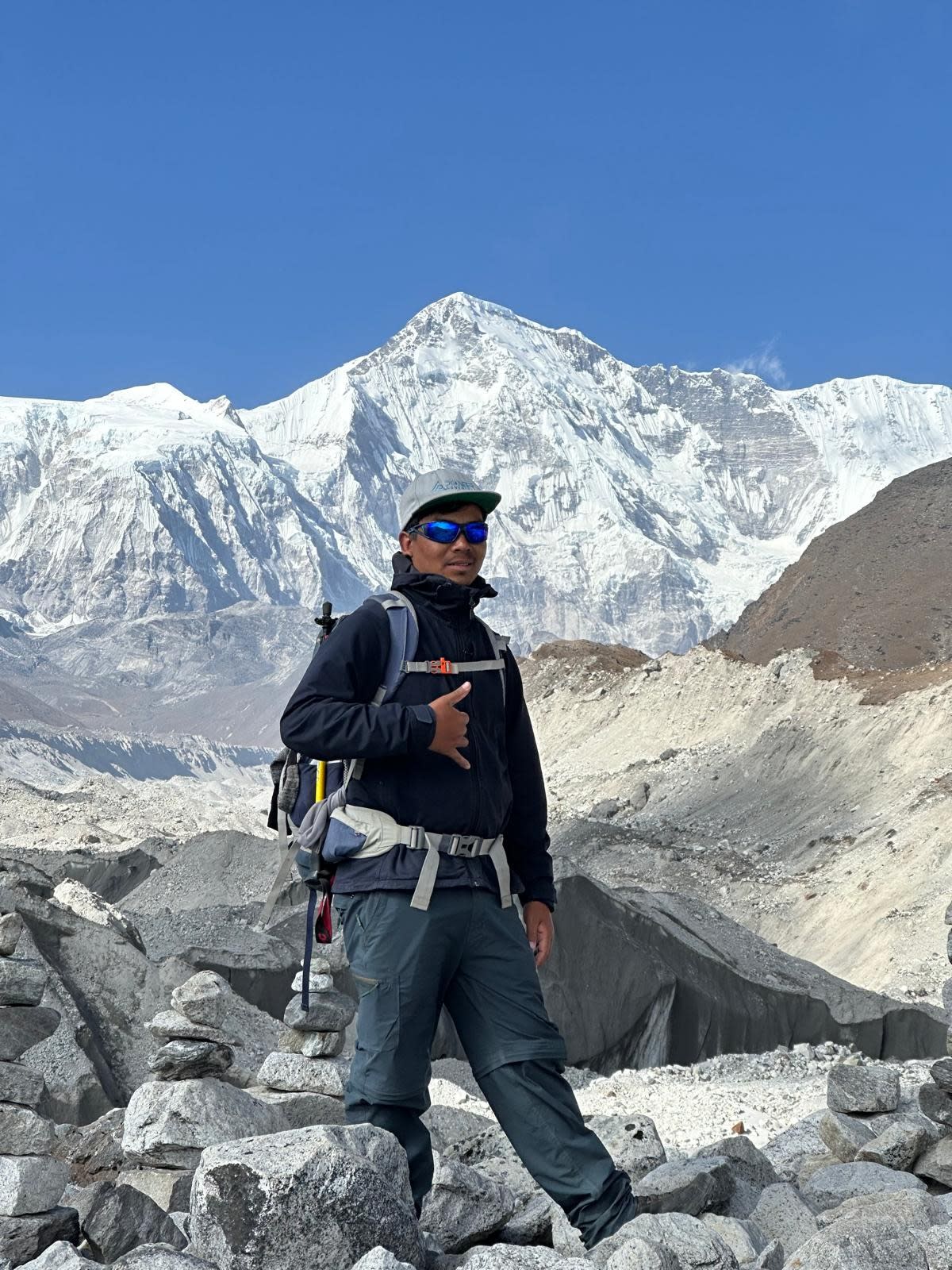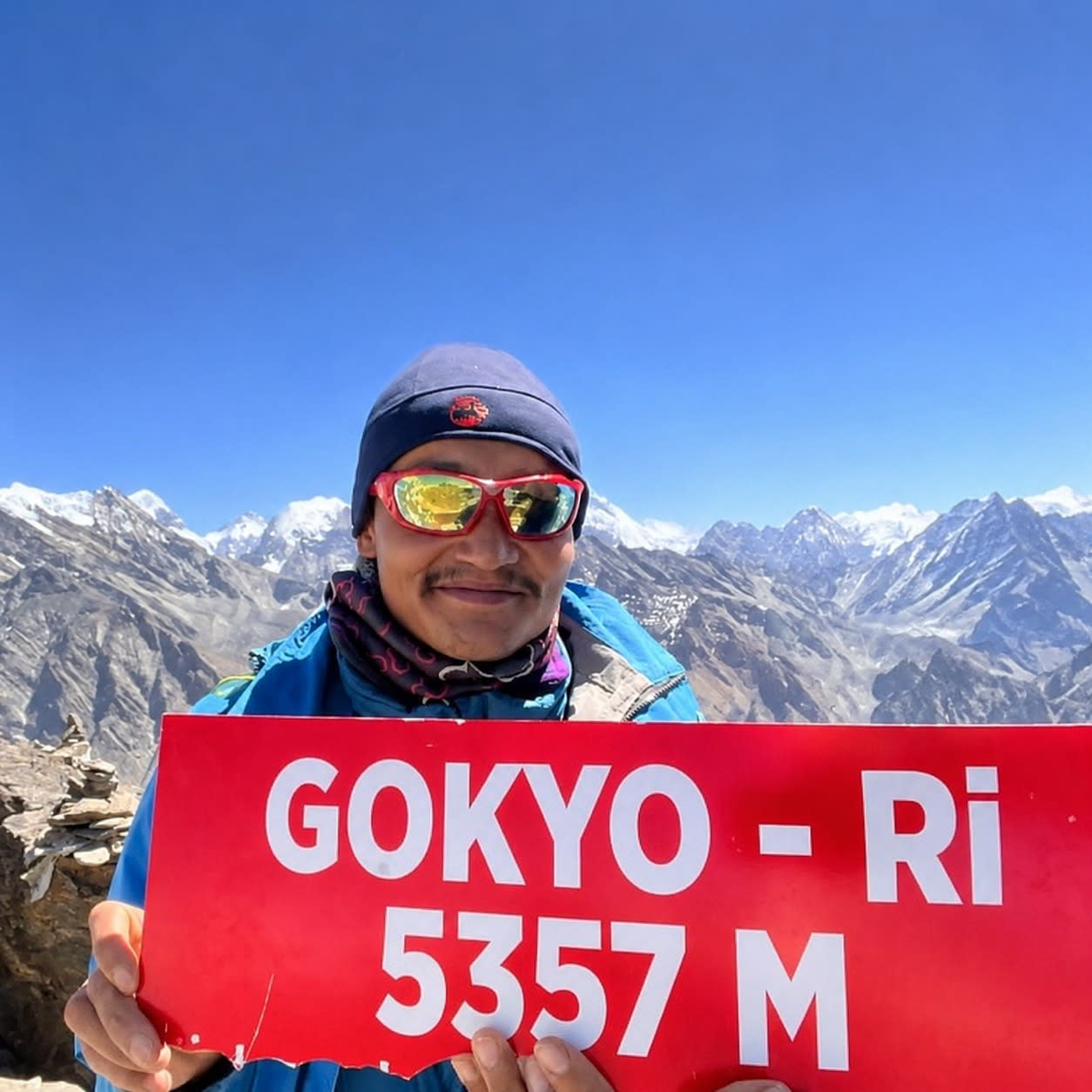
On Everest, Sherpas do the essential and dangerous work that every commercial expedition depends on, from fixing ropes and placing ladders to carrying loads and stocking the high camps. A Sherpa, in the climbing sense, is a member of a Nepali mountain people whose men and women have long worked as guides and porters on the high peaks around the Khumbu. A specialist team of about 8, known as the Icefall Doctors, builds and maintains the route through the deadly Khumbu Icefall each season, which is one of the hardest and most dangerous jobs in all of mountaineering.
From the climbers' Sherpas to your trekking guides
Sherpas are central to two very different activities in the same mountains, and it helps to keep them apart. High on Everest, Sherpas do the technical, load-bearing, life-risking work of a summit expedition. Lower down, on the trails, Sherpa and Gurung guides lead ordinary trekkers safely to viewpoints and villages, which is the work our team at Annapurna Trekking does every season. If your interest is the walk rather than the climb, the practical starting points are our advice on preventing altitude sickness, our full Everest Base Camp trek guide, and the route for the Everest Base Camp trek itself.
What do Sherpas do on an Everest expedition?
Sherpas build and hold together nearly every part of a modern Everest climb. They fix the ropes that clients clip into on steep and exposed ground, place the ladders and anchors that make crevasses and ice walls passable, and carry the food, fuel, tents, and oxygen up to the higher camps. Without that groundwork, a commercial team of paying climbers could not move up the mountain at all. The client walks a route that Sherpas have already prepared, stocked, and secured.
Fixing rope is the task that shapes the whole season, because it opens the way for everyone who follows. A team of Sherpas goes ahead to anchor a continuous line up the climbing route, which later climbers clip onto for safety and to help them ascend. Stocking the high camps is just as demanding, since every tent, stove, and oxygen bottle at Camp II and above was carried there on someone's back. This is heavy, repeated work done at altitudes where the body is already struggling.
The main jobs Sherpas do on Everest
- Fixing the ropes that climbers clip into on steep ground
- Placing ladders and anchors across crevasses and ice walls
- Carrying loads of food, fuel, tents, and oxygen up the mountain
- Stocking and maintaining the higher camps through the season
- Building and repairing the route through the Khumbu Icefall
The Icefall Doctors and the Khumbu Icefall
8 Sherpas or so make up the team known as the Icefall Doctors, and their job is to build the route through the Khumbu Icefall. They are employed by the Sagarmatha Pollution Control Committee, or SPCC, a Nepali body that has managed the icefall route since 2003. The route they create runs between Base Camp at about 5,364 metres and Camp II at about 6,400 metres, through a broken, shifting mass of glacier ice. They lay fixed ropes and set more than 30 aluminium ladders over the crevasses so that climbers can cross.
1 metre a day is roughly how far the glacier moves, which is why the Icefall Doctors have to repair the route all season long. Ice that was solid in the morning can shift, crack, or collapse within days, so ladders come loose and ropes go slack and the whole path has to be reset again and again. The Khumbu Icefall sits low on the mountain, yet it is one of its most feared sections because the danger is random and hard to predict. A block of ice the size of a house can fall without warning.
The Khumbu Icefall route at a glance
| Detail | Figure |
|---|---|
| Team building the route (Icefall Doctors) | about 8 Sherpas |
| Employer | Sagarmatha Pollution Control Committee (SPCC) |
| Managing the icefall route since | 2003 |
| Route runs between | Base Camp (about 5,364 m) and Camp II (about 6,400 m) |
| Aluminium ladders over crevasses | more than 30 |
| Glacier movement | about 1 metre a day |
Why Sherpas carry more of the risk
Sherpas make far more trips through the Khumbu Icefall than their clients ever do, which loads the danger onto them. A paying climber might pass through the icefall a handful of times across a whole expedition, moving up and down to acclimatise and then for the summit push. The Sherpas ferrying loads and maintaining the route cross it many more times than that, again and again through the season. Every extra crossing is another roll of the dice in a place where ice falls without warning.
Risk on Everest is not shared evenly, and the icefall is the clearest proof. The people most exposed to the mountain's most random hazard are the workers, not the clients who hire them. This imbalance is not a small detail of how commercial Everest works; it is close to the heart of it. Understanding the mountain honestly means seeing whose lives are most on the line.
The 2014 avalanche and what followed
18 April 2014 brought the disaster that made this imbalance impossible to ignore. An avalanche tore through the Khumbu Icefall early that morning and killed 16 Nepali workers, most of them Sherpas, as they carried loads up the mountain. It was the deadliest single incident on Everest at the time. The men who died were doing the exact work that every expedition on the mountain relied on.
16 deaths in one morning ended the 2014 climbing season. In the days that followed, Sherpas across Everest stopped work in a stoppage that closed the mountain for the year, and the tragedy opened hard disputes over how these workers were paid, insured, and recognised. Families of the dead pressed for better compensation, and workers pressed for fairer treatment given the risks they carried. The season did not restart, and the questions it raised did not go away.
Pay, insurance, and recognition
2014 forced the climbing industry to answer questions it had long avoided about the people it depends on. Sherpas argued that the money, the life insurance, and the public credit did not match the danger they accepted on behalf of others. Commercial Everest, the argument went, runs on Sherpa labour, skill, and courage, yet the rewards and the risks were badly out of line. These were fair questions, and they were asked plainly by the workers themselves.
Recognition is part of the story as much as money is. Sherpas have often been treated as background figures in accounts of famous climbs, even though the summit days that clients celebrate were built on Sherpa preparation. Naming their work clearly, and paying and protecting them properly, is the respectful response to what 2014 laid bare. The industry has moved on some of these points since, though the underlying imbalance of risk in the icefall remains.
The same skill on the trekking trail
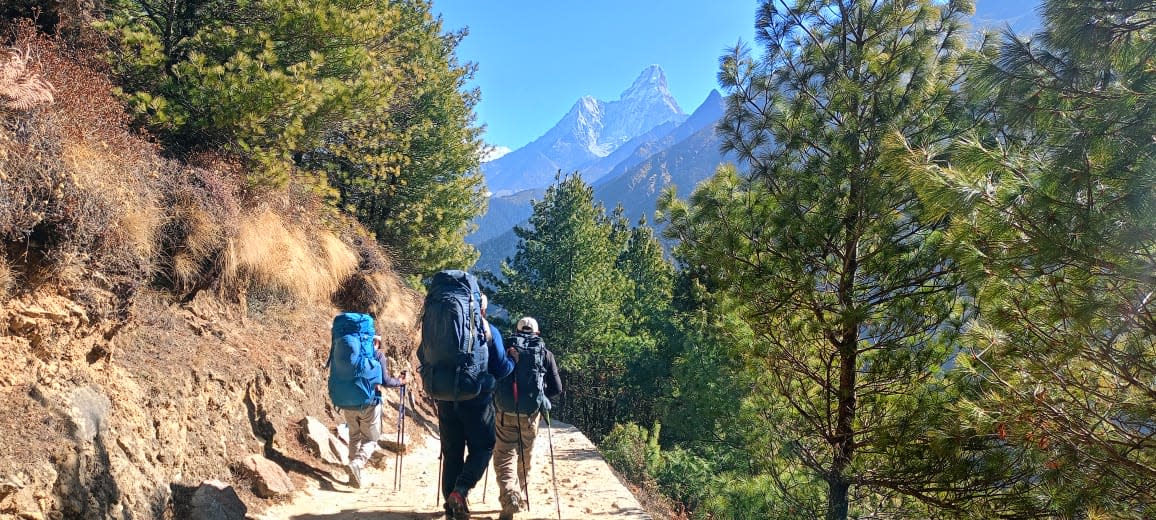
5,364 metres is where the Everest Base Camp trek ends, and it never enters the Khumbu Icefall or the ground above it. The dangerous expedition work described here belongs to mountaineering, not to trekking, and the two should not be confused. On the trekking trails, Sherpa and Gurung guides use their knowledge of the mountains, the weather, and altitude to keep ordinary walkers safe and moving at a sensible pace. It is the same deep mountain skill, applied to a far safer activity.
Guides on the Everest Base Camp trek watch for early signs of altitude sickness, set the daily pace, and know when to rest or descend. That care is why the walk to base camp is within reach of ordinary fit travellers, thousands of whom finish it each year. The high, hazardous work on Everest and the guided walk in the same valleys are linked by the people who do both, and separated by the very different risks each one carries.
What do Sherpas do on Everest expeditions?
Sherpas fix ropes, place ladders and anchors, carry loads, and stock the higher camps, doing the work that commercial expeditions depend on. A team of about 8, the Icefall Doctors, also builds and maintains the route through the Khumbu Icefall each season.
Who are the Icefall Doctors?
The Icefall Doctors are a team of about 8 Sherpas, employed by the Sagarmatha Pollution Control Committee, who build and repair the route through the Khumbu Icefall. They have managed that route since 2003, laying fixed ropes and more than 30 aluminium ladders between Base Camp at about 5,364 metres and Camp II at about 6,400 metres.
Why is the Khumbu Icefall so dangerous?
The Khumbu Icefall is a moving glacier that shifts about a metre a day, so ice can crack and collapse without warning. The Icefall Doctors repair the route all season, and Sherpas cross it far more often than clients, which puts them at greater risk.
What happened in the 2014 Everest avalanche?
On 18 April 2014, an avalanche in the Khumbu Icefall killed 16 Nepali workers, most of them Sherpas, the deadliest single incident on Everest at the time. It led to a work stoppage that ended the 2014 climbing season and to disputes over pay, life insurance, and recognition.
Do Sherpas guide trekkers too?
Sherpa and Gurung guides lead trekkers on routes like the Everest Base Camp trek, which ends at 5,364 metres and never enters the climbing hazards above. It is the same mountain knowledge that expeditions rely on, applied to a far safer walking trip.
Related reading
Pemba Sherpa
Trekking Guide, Annapurna Trekking
Pemba Sherpa guides treks across Nepal for Annapurna Trekking. More about our team →
Ready to walk it?