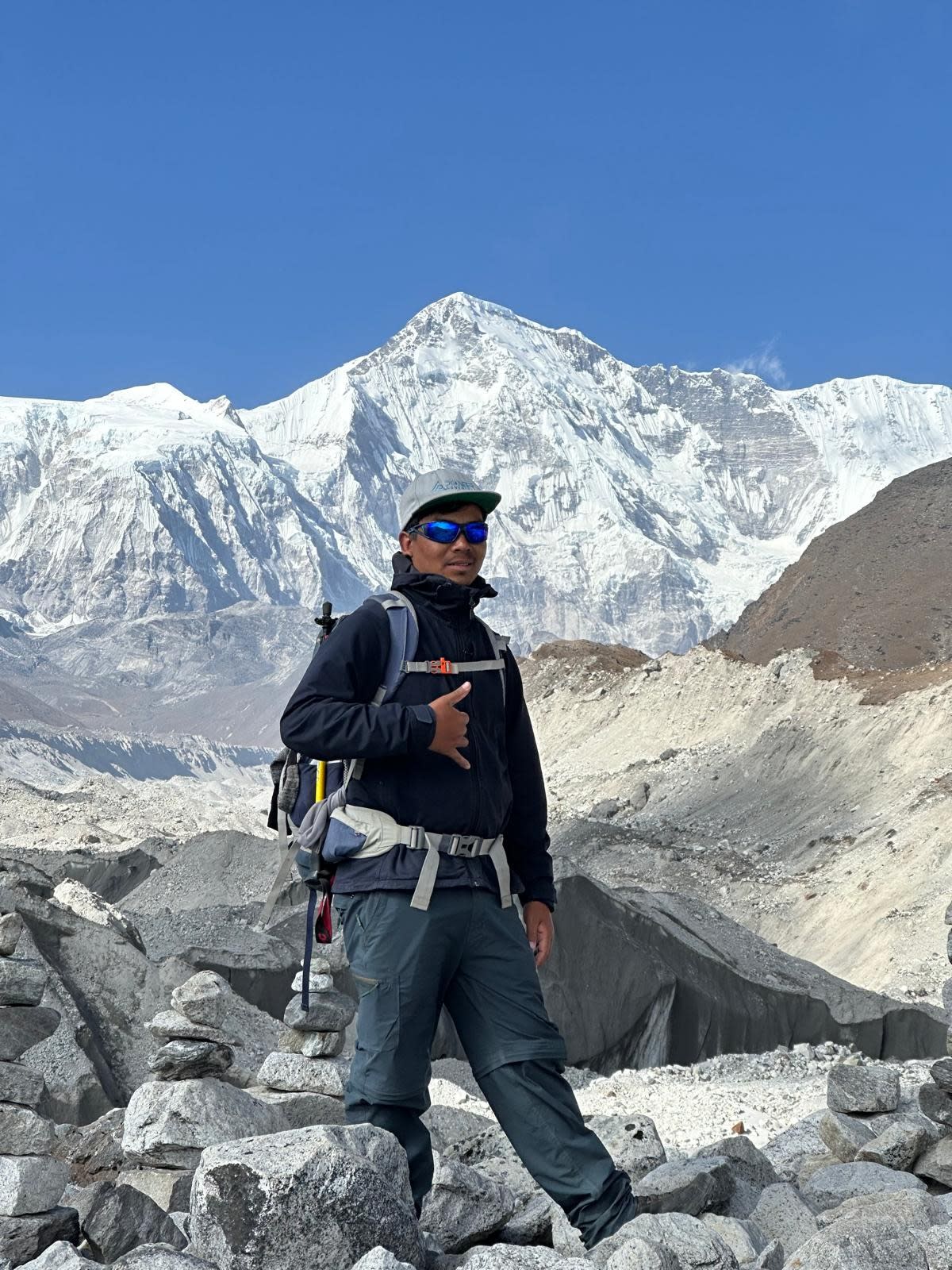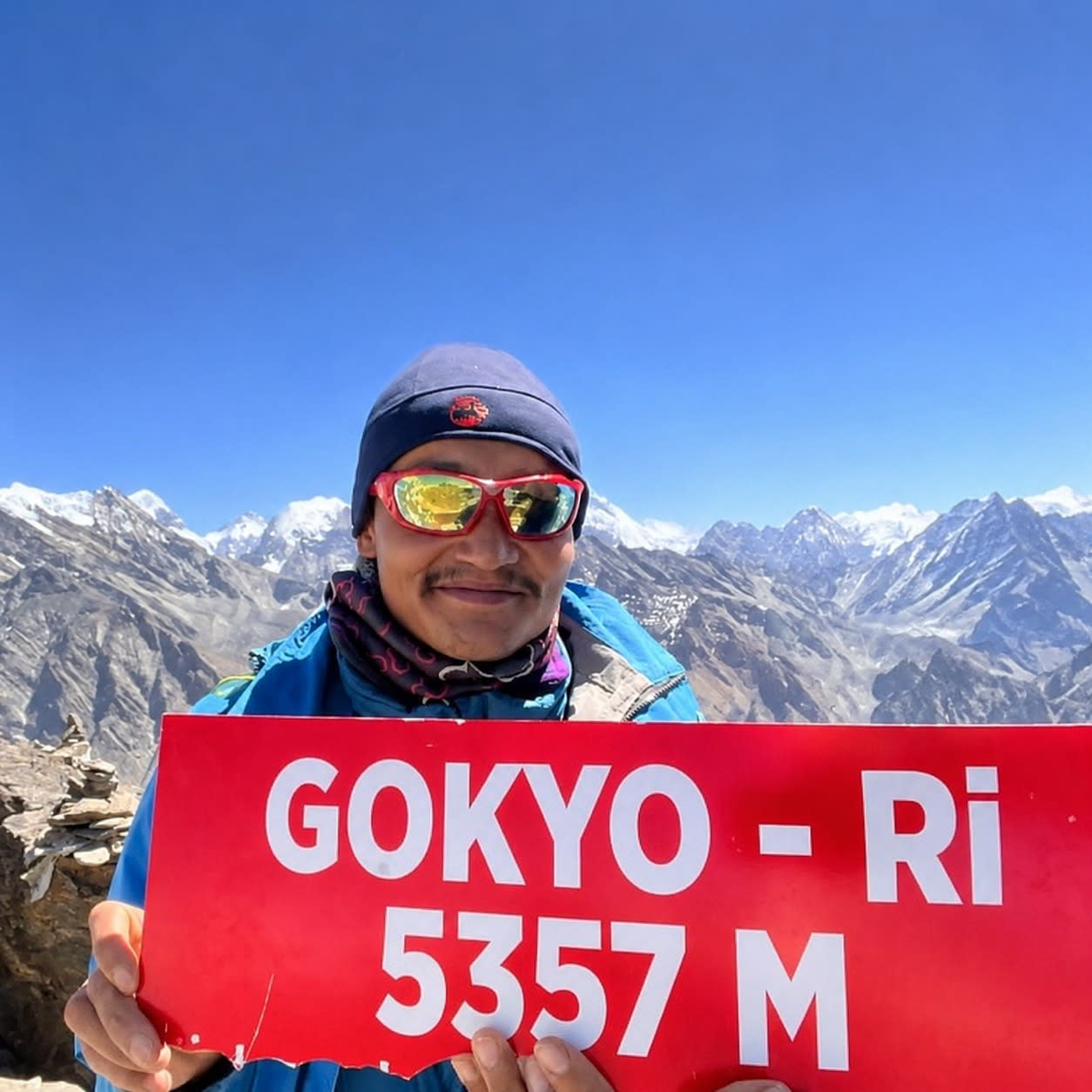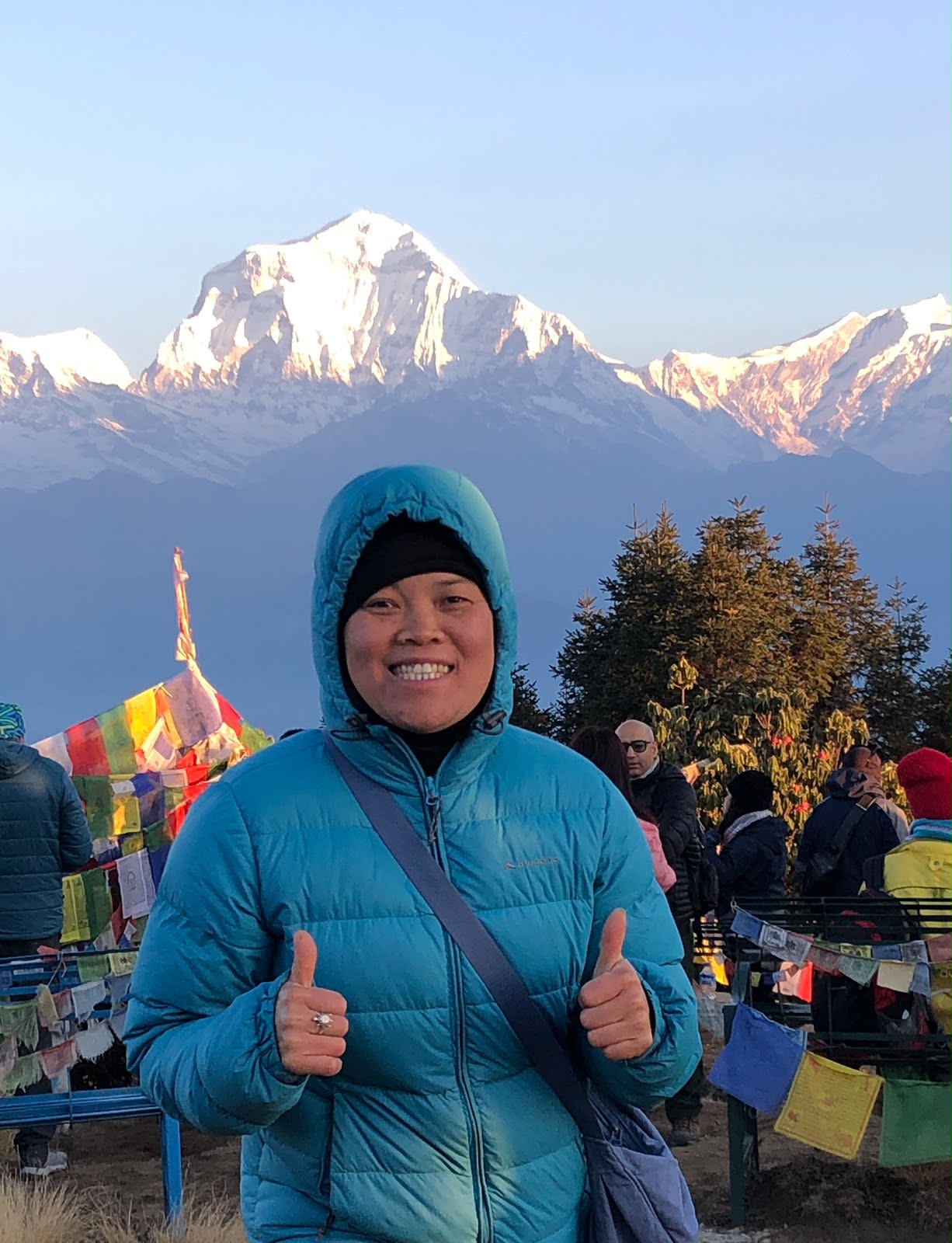

Annapurna Base Camp (ABC) sits at 4,130 metres in a glacier bowl ringed by peaks above 6,000 metres. Getting there and back takes 7 to 12 days, depending on your pace and whether you start with the Poon Hill sunrise. Every version follows the same spine. You walk up the Modi Khola valley from the Pokhara side, through Ghorepani or Ghandruk to Chhomrong, into the Annapurna Sanctuary, then back down the same gorge.
ABC has no high pass and needs no restricted-area permit, which is why so many people make it their first Himalayan trek. Choosing 7 days or 12 mostly changes how fast you approach the Sanctuary. The difficulty stays much the same.
What does the standard 11-day itinerary look like?
Our standard trip runs 11 days from arrival in Pokhara to the flight or drive back to Kathmandu. It includes Poon Hill, because for a first trek that extra sunrise is worth the day.
| Day | Route | Altitude |
|---|---|---|
| 1 | Arrive Pokhara | 820m |
| 2 | Drive to Nayapul, trek to Tikhedhunga | 1,540m |
| 3 | Tikhedhunga to Ghorepani (3,200-step climb) | 2,874m |
| 4 | Poon Hill sunrise, trek to Tadapani | 3,210m to 2,630m |
| 5 | Tadapani to Chhomrong | 2,170m |
| 6 | Chhomrong to Dovan | 2,600m |
| 7 | Dovan to Deurali | 3,230m |
| 8 | Deurali to Annapurna Base Camp | 4,130m |
| 9 | ABC to Bamboo (long descent day) | 2,310m |
| 10 | Bamboo to Jhinu hot springs, drive to Pokhara | 820m |
| 11 | Pokhara to Kathmandu, departure | 1,400m |
What does each stage of the route demand physically?
Day 3 hurts. From Tikhedhunga to Ghorepani you climb about 3,200 stone steps through rhododendron forest, gaining roughly 1,300 metres, and many people rate it harder than the final approach to base camp because it never lets up. Day 8 gains about 900 metres from Deurali to ABC on a gentler gradient, passing Machhapuchhre Base Camp at 3,700 metres. That's more height than the usual guideline for a single night above 3,000 metres. Anyone feeling it can stop at MBC for the night and walk the last 430 metres up for sunrise.
On days 6 and 7, through Bamboo and Dovan to Deurali, the gorge narrows and the forest thins from oak and rhododendron into bamboo and then alpine scrub. Pace carefully here. Most days run four to six hours of walking, with six to seven on the push into the Sanctuary. You'll know you've arrived when Annapurna I (8,091 metres) and the fishtail of Machhapuchhre fill the whole view.

What does a 7-day itinerary cut?
Fit, experienced trekkers can do it in seven. You skip Poon Hill, enter through Ghandruk instead of Ghorepani, and fold the shorter Sanctuary days together. It's faster and more direct, and you lose the sunrise and the long rhododendron walk. It suits people who've seen Poon Hill before or who care most about the Sanctuary itself.
When does a 12-day version make sense?
Twelve days adds a spare night or two, at Chhomrong or Deurali, for slower acclimatisation or as a weather buffer. Most healthy trekkers don't need it, since only the last day into ABC climbs steeply at altitude. Pick it if you don't want to rush, if the forecast looks unsettled, or if your group mixes fast and slow walkers.
How does the season you choose affect the itinerary?
October and November bring the steadiest weather. Even then, the Sanctuary tends to cloud over by early afternoon, so the plan has you on the high ground in the morning. March and April put the rhododendrons in flower along the hardest day, Tikhedhunga to Ghorepani, which helps a little. June to August is muddy, leechy below Chhomrong and cloudy at base camp by mid-morning. December to February is cold but usually clear, and at 4,130 metres ABC rarely shuts the way Thorong La does on the Circuit. Avalanche risk on the trail between Deurali and MBC rises after heavy snow, and guides sometimes hold groups at Deurali until it settles.

Which itinerary should you pick?
For a first trek with the whole Sanctuary experience, take our 11-day route with Poon Hill. If you've seen Poon Hill already and you're short on time but fit, the 7-day route through Ghandruk does the job. Mixed-fitness group, or a dislike of rushing? Go for 12. The Annapurna Base Camp cost guide prices each length, and dates are on the Annapurna Base Camp Trek page.
What's a typical day like on this itinerary?
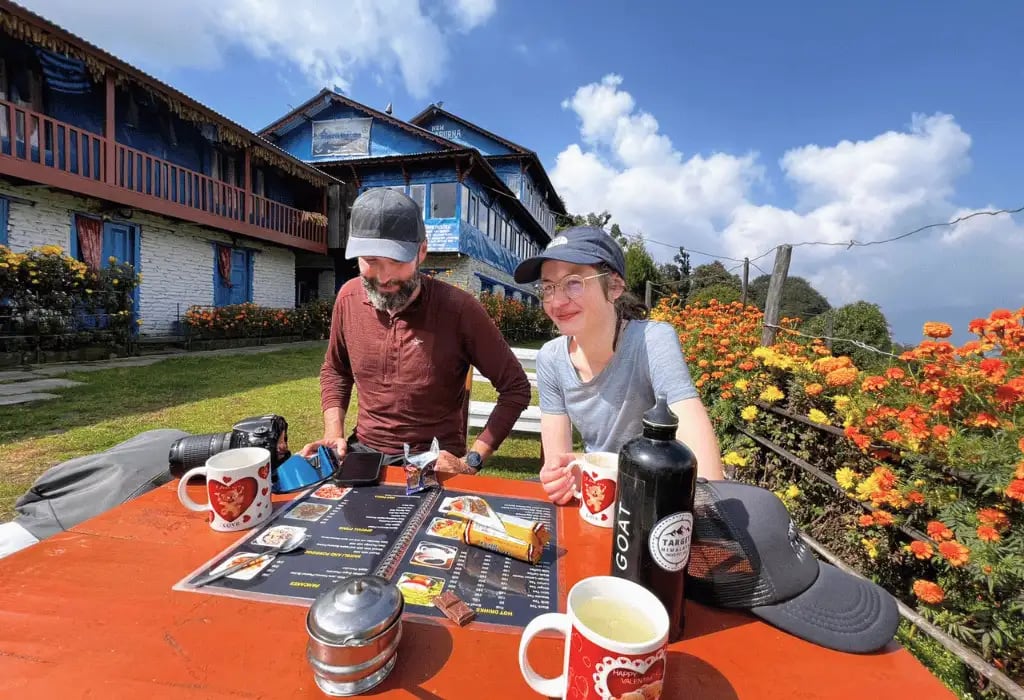
Breakfast at 6:30 or 7, walking by 7:30 or 8. That gets most of the work done before the afternoon cloud rolls into the Sanctuary. You walk three or four hours, stop for lunch at a teahouse, then do a shorter two- or three-hour stretch to the night's lodge. Evenings are simple. Dal bhat, tea, cards, and most people are asleep by 8 p.m., even on the easy days.
Common questions about this itinerary
Which day is the coldest?
The night at ABC. At 4,130 metres, with glacier wind blowing through the bowl, it drops below freezing even in October and November. Bring a sleeping bag rated to at least minus 10°C, though the rest of the trek is far milder.
Is the itinerary the same in every season?
The route doesn't change. In winter, snow can slow the final approach enough to need a spare day, and in the monsoon the trail around Bamboo and Deurali turns to mud and adds short delays.
Can porters carry your full luggage on every version of this itinerary?
Yes. We assign one porter to every two trekkers, carrying about 10 to 12 kilograms for each of you. You carry a daypack with water, a camera and a warm layer.
How does this itinerary compare to the Annapurna Circuit's?
ABC is shorter and gentler. No high pass, and a top altitude of 4,130 metres against 5,416 metres on Thorong La. What you don't get is the Circuit's change of country, from subtropical rice terraces over the pass into the dry, Tibetan-looking Kali Gandaki. ABC gives you the Sanctuary in under two weeks. The Circuit takes 12 to 16 days and repays them with far more variety. Our full Circuit vs Base Camp comparison goes deeper on difficulty and scenery.
The two routes overlap at one point. The Ghorepani, Tadapani and Chhomrong section you walk on days 3 to 5 here is also the final stretch of our 14-day Circuit, so if you come back for the Circuit, the last days will feel familiar.
Related guides

Founder & Lead Guide, Annapurna Trekking
AJ founded Annapurna Trekking in 2016 and has personally guided treks across Nepal ever since. More about our team →