An easy trek in Nepal is a short, lower-altitude route on a teahouse trail with no technical ground, and the clearest example is the 5-day Poon Hill trek at 3,210 metres from USD 390. Beginner-friendly does not mean effortless: you still walk 4 to 6 hours a day and climb real hills. It means the route stays low enough to keep altitude risk small, short enough to fit a spare week, and comfortable enough to sleep in a lodge each night. These are the best starter treks by length and effort.
What makes a Nepal trek beginner-friendly?
Four features separate an easy trek from a hard one: a maximum altitude under roughly 4,000 to 4,500 metres, walking days of 4 to 6 hours, a teahouse route with beds and hot meals, and a gradual profile with no passes or scrambling. Altitude is the one that decides most of it, because staying lower keeps acute mountain sickness unlikely. Everything below meets those tests, ordered from the gentlest first.
Poon Hill: the classic first trek
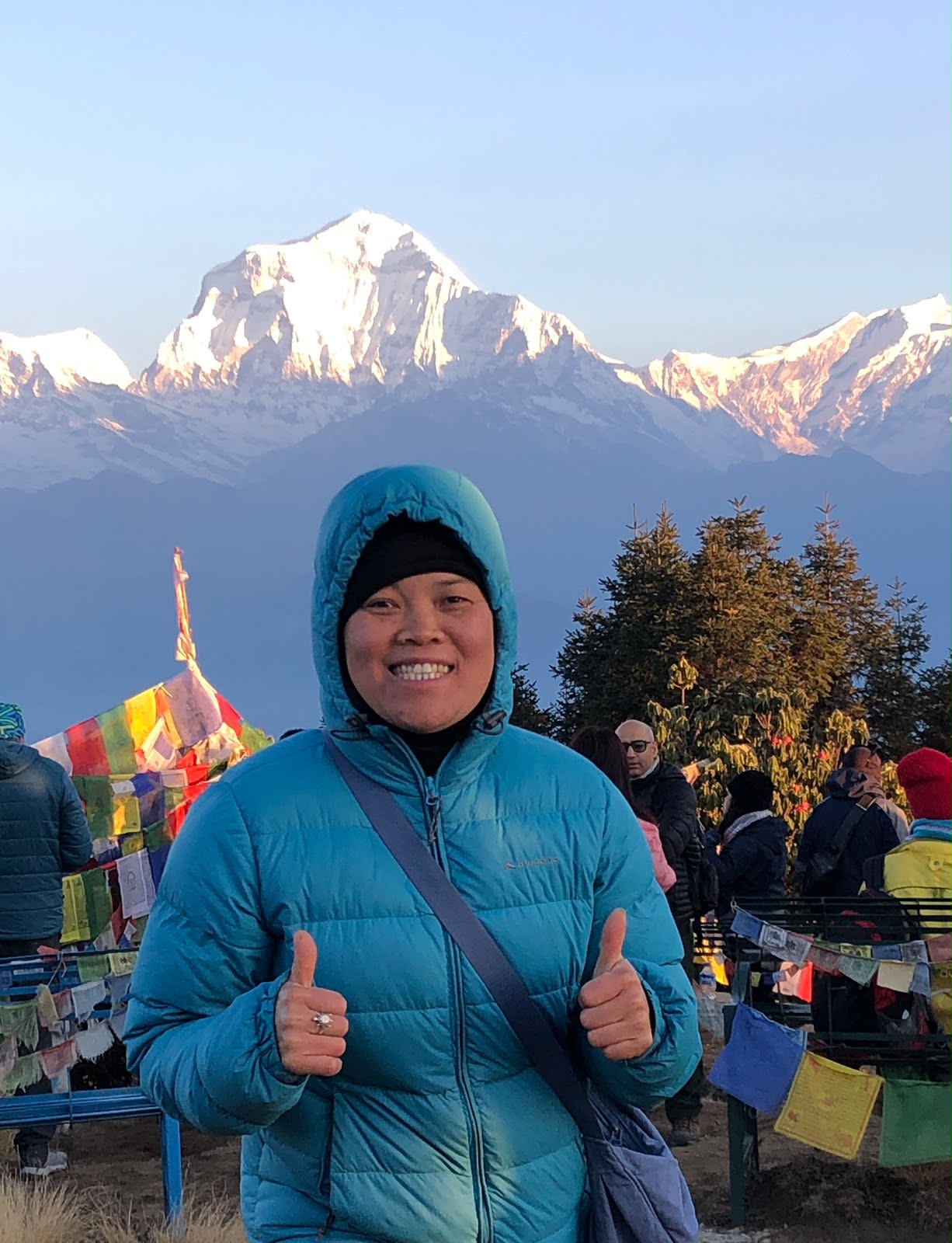
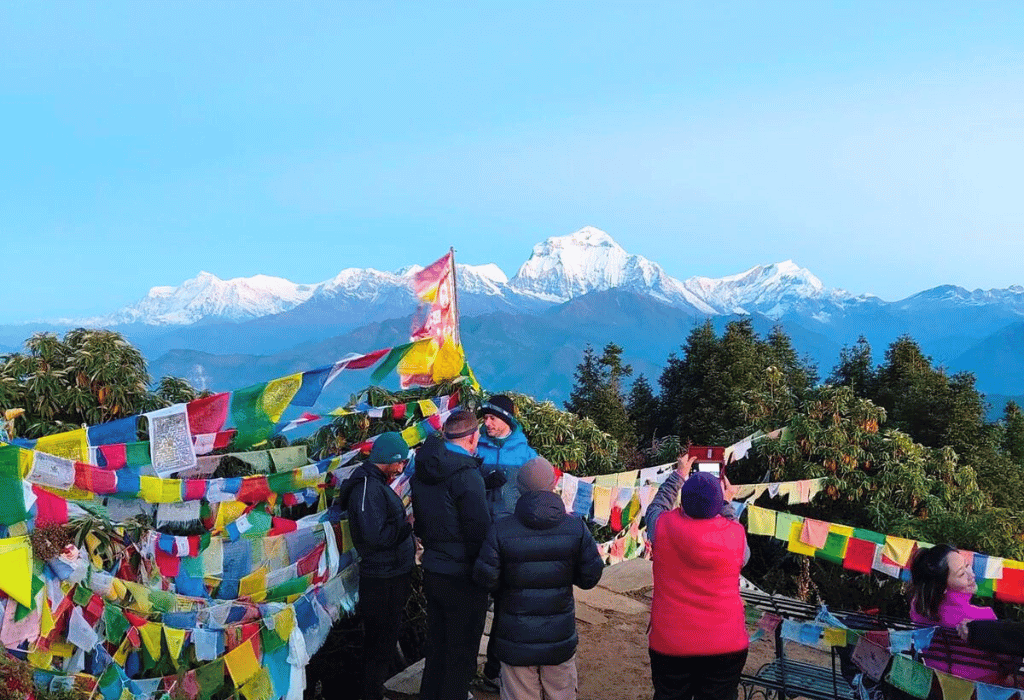
The Poon Hill trek is the standard introduction to Himalayan trekking: 5 days, rated easy, topping out at the 3,210-metre viewpoint for a sunrise panorama across Annapurna and Dhaulagiri, from USD 390. It starts from Pokhara, follows a well-built stone trail through Gurung villages and rhododendron forest, and never climbs high enough for altitude to be a serious concern. The famous section is the 3,200-step climb to Ghorepani, which is the hardest hour of an otherwise gentle route. Our full Poon Hill trek guide covers the day-by-day plan.
A step up: Mardi Himal, Khopra Ridge, and Langtang
Three moderate routes suit walkers ready for a little more altitude and a couple of extra days. The Mardi Himal trek runs 7 days to a 4,500-metre ridge below Machhapuchhre, from USD 690, quieter than Poon Hill and with more dramatic close-up mountain views. Khopra Ridge (8 days, 4,660 metres, from USD 790) is a calm alternative on the same Annapurna foothills. The Langtang Valley trek (9 days, 4,773 metres, from USD 750) is the closest full trek to Kathmandu and needs no domestic flight, which makes it a strong first choice for travellers short on time.
Ready for more: Annapurna Base Camp
The Annapurna Base Camp trek is the natural first big trek once the shorter routes feel comfortable: 11 to 13 days to the 4,130-metre Sanctuary, rated moderate, from USD 890. It walks the same lower trails as Poon Hill before climbing into a glacial amphitheatre ringed by Annapurna South, Machhapuchhre, and Hiunchuli. The altitude is higher than a true beginner trek, so it rewards a few days of walking behind you, but it needs no technical skill and follows teahouses the whole way.
What even easy treks demand
Every route here still involves real walking and some altitude, so a little preparation pays off. The higher options cross 3,500 metres, where mild altitude symptoms are possible, which is why the same slow-ascent habits from our guide to preventing altitude sickness on a Nepal trek apply even on a "beginner" route. A few weeks of regular walking with a daypack, broken-in boots, and the layers listed in our Nepal trekking packing list will make the difference between enjoying the trail and enduring it.
Even shorter: Ghandruk and Australian Camp
Two very short walks suit travellers with only two or three spare days near Pokhara. The Ghandruk village trek is a gentle one or two-night loop into a large Gurung village at about 2,000 metres, with Annapurna South and Machhapuchhre filling the skyline and a museum of Gurung culture in the village itself. Australian Camp is even shorter, a half-day climb to a ridge at around 2,060 metres that can be done as an overnight from Pokhara. Neither reaches altitude that matters, and both give a genuine taste of teahouse trekking for anyone unsure whether a longer route is for them.
What your first trek actually feels like
A first teahouse trek is more comfortable than most people expect and more physical than the photos suggest. You walk 4 to 6 hours a day on stone and dirt paths, stop for lunch at a trailside lodge, and sleep in a simple room with a shared dining hall warmed by a stove. Meals are large and carbohydrate-heavy, built around dal bhat, the lentils-and-rice plate that comes with free refills. The walking is steady rather than steep for most of the day, with the occasional long staircase, and a porter carries the heavy bag so you carry only a daypack. The reward for the effort is waking up inside the mountains, which no viewpoint reached by road can match.
The best season for a first trek
October and November give the clearest skies for a first trek, and March to April bring spring warmth and rhododendron bloom on the lower Annapurna trails. Beginners feel the difference more than veterans, since a dry, stable trail makes the walking easier and the mountain views, the whole reason to come, actually show up. Avoid the June to August monsoon on these low routes, when leeches, mud, and afternoon cloud take the shine off an otherwise gentle walk, and stick to the two main seasons for your first time on a Nepal trail.
What is the easiest trek in Nepal?
The Poon Hill trek. At 5 days, rated easy, and reaching only 3,210 metres, it has the lowest altitude and the shortest schedule of the classic routes, with a well-built trail and comfortable lodges throughout.
Can beginners trek in Nepal?
Yes. Several teahouse routes are designed for first-time trekkers, staying under 4,000 to 4,500 metres with short days and lodge accommodation. You need everyday fitness and a willingness to walk 4 to 6 hours a day, not prior experience.
Do you need training for the Poon Hill trek?
No formal training, but a few weeks of regular walking makes the climb to Ghorepani far more comfortable. The route's one demanding section is the 3,200-step ascent, which is easier on legs that have done some hill walking beforehand.
What is the best short trek in Nepal?
Poon Hill for a 5-day trip, and the Langtang Valley for a week when you want more distance without a domestic flight. Both stay on teahouse trails and keep altitude within a comfortable range for newer trekkers.
Dawa Tshering
Trekking Guide, Annapurna Trekking
Dawa Tshering guides treks across Nepal for Annapurna Trekking. More about our team →