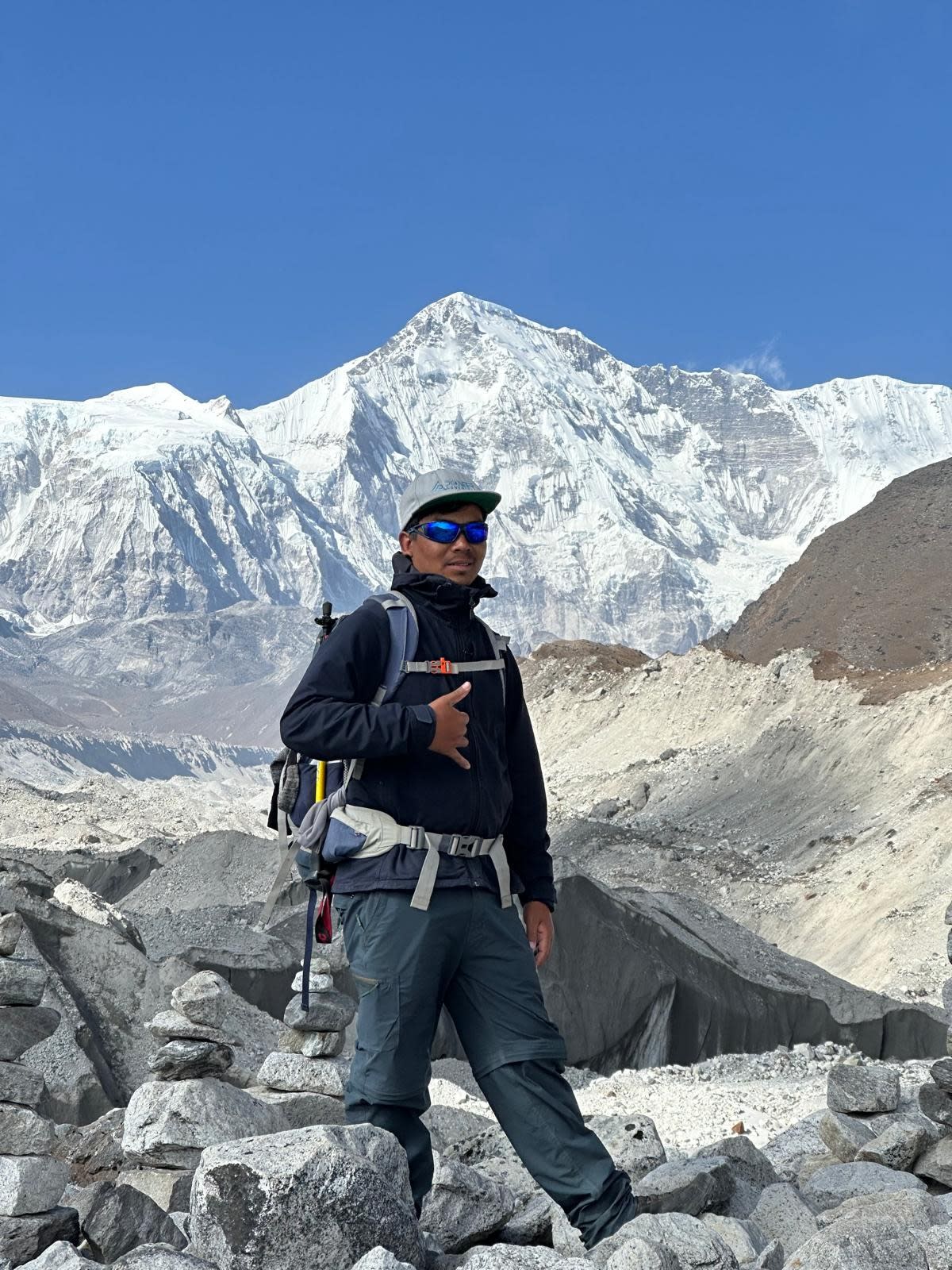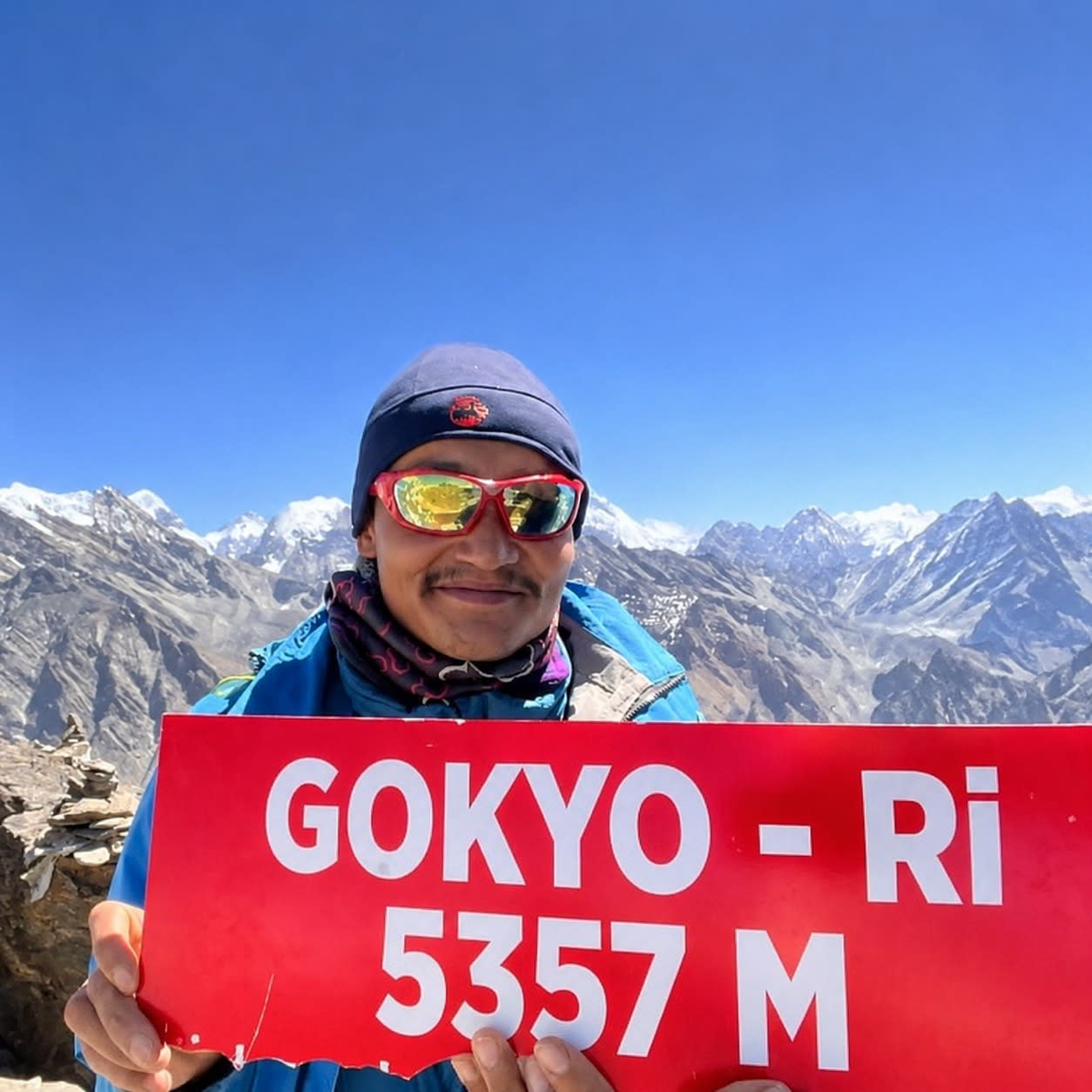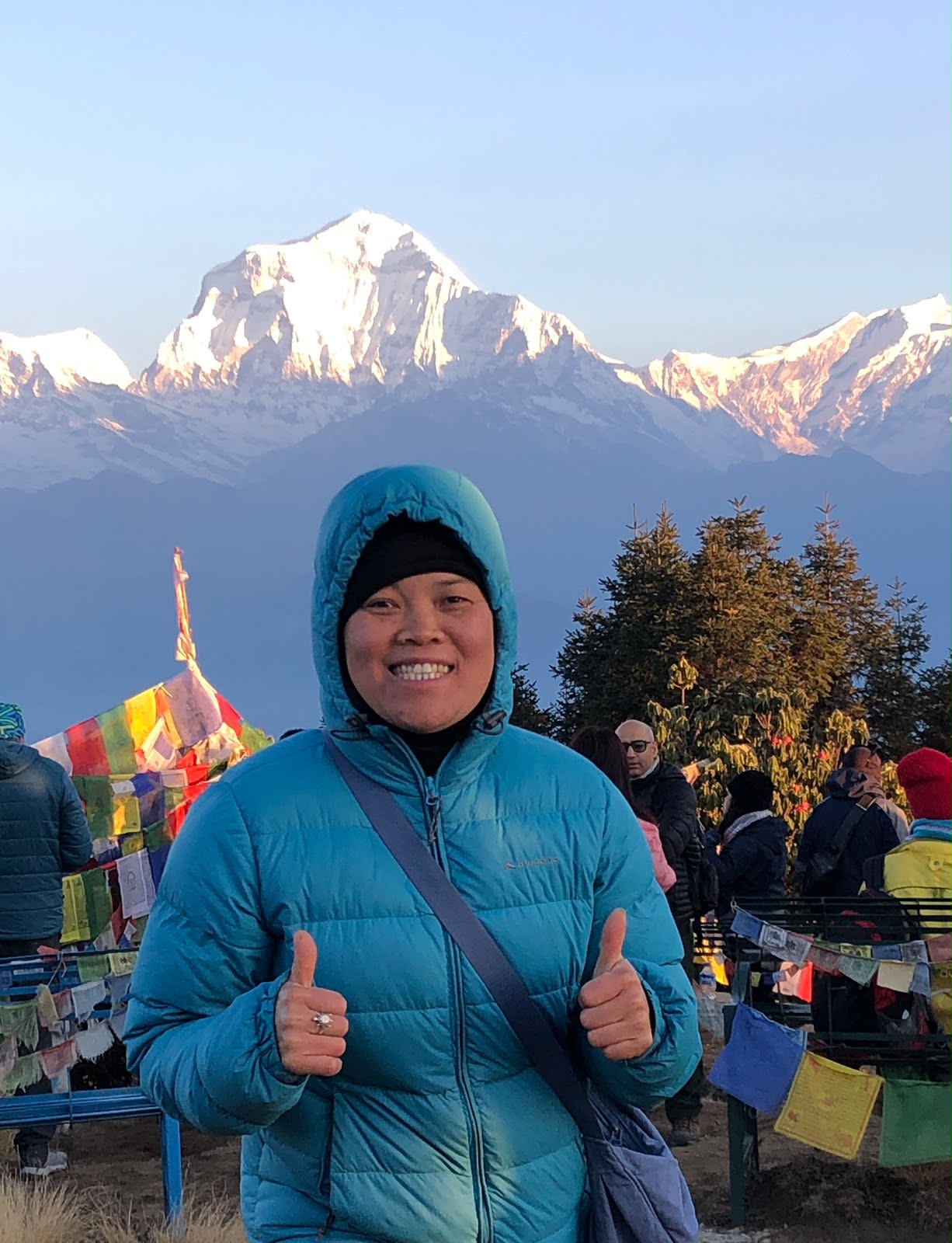

Everest Base Camp and the Everest Three Passes are the two big treks of the Khumbu, and choosing between them comes down to how much altitude, difficulty and time you want. The classic Everest Base Camp Trek reaches 5,364 metres, plus Kala Patthar at 5,545, in 14 days and is the easier of the two. The Three Passes adds Kongma La, Cho La and Renjo La to make an 18-day loop that's harder, longer and more varied. If it's your first Himalayan trek, take EBC. If you already have a high trek behind you and want the whole Khumbu, take the Three Passes.
The Three Passes loop links the Gokyo, Everest Base Camp and Chhukung valleys over three passes above 5,300 metres. The standard Base Camp trek goes up the main Khumbu valley to Base Camp and Kala Patthar and back, with no side passes.
Everest Base Camp: the classic route
The Base Camp trek is about 130 kilometres there and back from Lukla, and its high point is Kala Patthar, the 5,545-metre viewpoint above Gorak Shep, not Base Camp itself. You go up the main Khumbu valley through Namche Bazaar (3,440 metres), Tengboche monastery (3,867 metres) and Dingboche (4,410 metres), with acclimatisation days built in. Base Camp is at 5,364 metres. Most groups touch it in the afternoon, then climb Kala Patthar at dawn for the classic view of Everest.
Khumbu permits differ from Annapurna ones. You need the Sagarmatha National Park permit (NPR 3,000 plus 13 percent VAT, so NPR 3,390) and the Khumbu Pasang Lhamu Rural Municipality fee, now NPR 3,000 for foreigners, though some operators still quote the older NPR 2,000. No TIMS card here. Since April 2023 a licensed guide is required, and our Nepal trekking permits guide lists every fee. We run the standard EBC trek from USD 1,350 per person.
Namche Bazaar is the first big acclimatisation stop on both routes. It's the Khumbu's main town, with a Saturday market, bakeries and gear shops. The EBC plan includes a rest day there and another at Dingboche, with a hike up Nangkartshang or a nearby ridge. Those rest days are what make a 5,364-metre goal manageable for a first-timer.
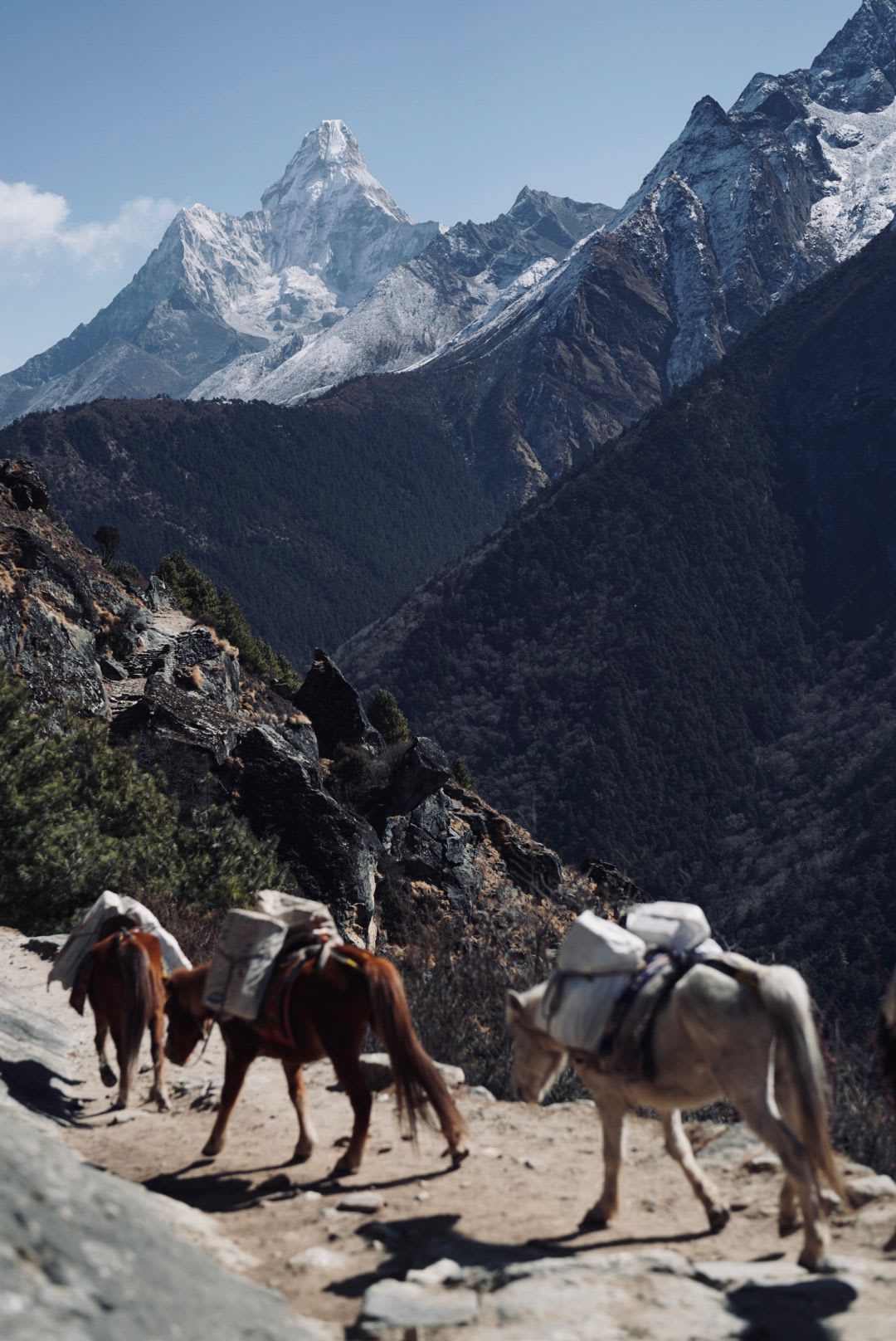
Most people reach the Khumbu by flying from Kathmandu to Lukla (2,860 metres), one of the world's most dramatic airstrips. In spring and autumn that flight often leaves from Manthali in Ramechhap instead, a few hours' drive east. From Lukla the walk passes Sherpa villages, Tengboche monastery and the memorial chortens at Thukla for climbers lost on Everest. There are teahouses the whole way, so EBC is more comfortable than the remote stretches of the passes.
Everest Three Passes: the high loop
The Three Passes Trek links Kongma La (5,535 metres), Cho La (5,420 metres) and Renjo La (5,360 metres) into one 18-day loop. Kongma La, between Lobuche and Chhukung, is the highest, a long day over boulder fields with some exposure near the top. Cho La crosses a short glacier between the Gokyo valley and the main Khumbu, and crampons or microspikes sometimes help. Renjo La gives what plenty of trekkers call the best single view of the trip, back across the Gokyo lakes to Everest.
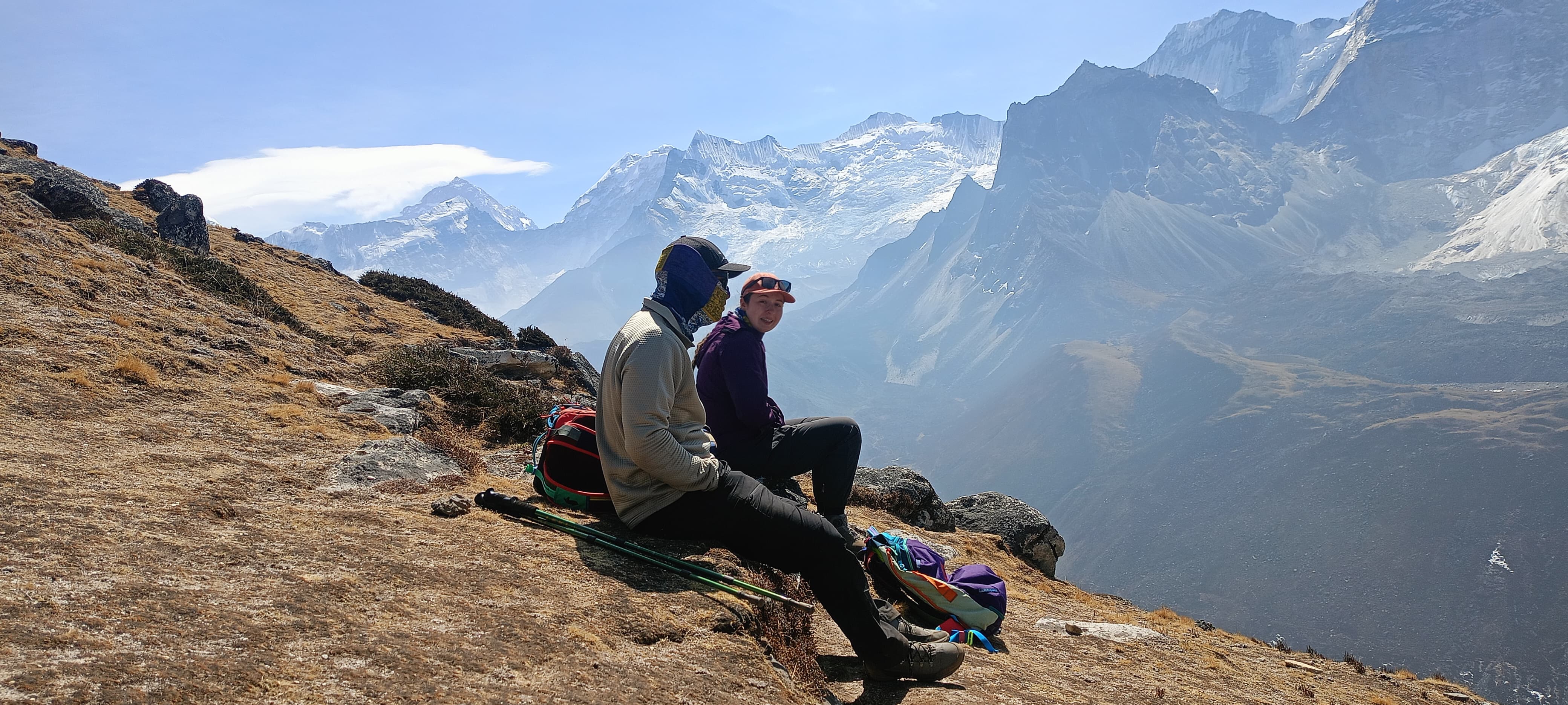
With three passes above 5,300 metres, the Gokyo lakes, Gokyo Ri (5,357 metres) and the Base Camp section all in one trip, the loop packs in far more high country than the classic route. We run it from USD 1,890 per person. The full Everest Three Passes Trek itinerary is on its own page.
The order of the passes matters. Our itinerary heads west from Namche toward Thame first, crosses Renjo La into Gokyo on day 7, Cho La into the main Khumbu on day 10, takes in Base Camp and Kala Patthar, and finishes with Kongma La, the highest, on day 14. That spreads the climbing out and leaves the hardest pass until your body has had the longest to adapt. Now and then a group goes the other way round because of snow or lodge space. The guide decides from that week's forecast.
Snow can shut any of the passes at short notice, Cho La most of all because of its glacier. A good Three Passes plan keeps a spare day or two, so one closed pass doesn't end the trip, and a guide who knows the current conditions can reroute through the main valley if needed. That's one reason to do the loop as an organised trek.
EBC vs Three Passes: the comparison table
| Factor | Everest Base Camp | Three Passes |
|---|---|---|
| Duration | 12–14 days | 18 days |
| Highest point | Kala Patthar 5,545m | Kongma La 5,535m (+ Kala Patthar 5,545m) |
| Number of 5,300m+ passes | 0 | 3 (Kongma La, Cho La, Renjo La) |
| Difficulty | Strenuous | Very strenuous |
| Scenery | Khumbu valley, Everest, Kala Patthar | Khumbu + Gokyo lakes + 3 pass panoramas |
| Technical sections | None | Glacier crossing at Cho La |
| Cost from (per person) | USD 1,350 | USD 1,890 |
| Best for | First Himalayan high trek | Experienced, acclimatised trekkers |
Difficulty and altitude compared
Both go above 5,300 metres. The Three Passes spends far longer up there and adds exposure EBC never has. EBC is strenuous because of altitude and long consecutive days, but it follows good trails with no glacier and well-spaced rest stops. The Three Passes is very strenuous. Each pass is a day above 5,300 metres, Cho La crosses a small glacier, and once you're committed to the loop there are fewer easy ways out.
Altitude sickness is the main risk on both, and the higher, longer loop needs a stronger base before you start. Whichever you pick, keep the rest days, climb high and sleep low, and read our altitude sickness prevention guide first. People who've already done EBC or a similar trek are much better placed to take on the passes.

Scenery: what each route gives you
EBC gives you the famous sequence. Namche, Tengboche monastery, the Khumbu Icefall, Base Camp, and dawn on Kala Patthar. The Three Passes keeps all of it and adds the turquoise Gokyo lakes, the view from Gokyo Ri, and three pass-top views that line up Everest, Lhotse, Makalu and Cho Oyu in different combinations. If you have the days and the legs, nothing in the Khumbu beats it for variety.
Gokyo Ri, at 5,357 metres, is the high point of the loop for scenery, and arguably a better Everest viewpoint than Kala Patthar. It looks across the Ngozumpa glacier, Nepal's longest at about 36 kilometres, to four 8,000-metre peaks at once. Below it lie the six Gokyo lakes, among the highest freshwater lakes in the world, deep turquoise on a clear autumn day. EBC trekkers never see this side of the Khumbu.
Renjo La at 5,360 metres frames Everest above the Gokyo lakes. The way down toward Thame follows an old Tibetan trading trail through villages far quieter than the main EBC valley. Top-class views on trails with few other people. That's the Three Passes in a sentence.
Who should choose which
Choose Everest Base Camp if it's your first high Himalayan trek, you have two weeks, and you want the famous goal without glacier travel or back-to-back passes. Choose the Three Passes if you're experienced, well acclimatised, can give it 18 days and want the hardest and most scenic Khumbu loop. Deciding between the Everest and Annapurna regions altogether? Our Annapurna vs Everest Base Camp comparison weighs the two.
The Three Passes costs about USD 540 more than EBC and takes four more days. For most people that settles it. The loop only makes sense with the full 18 days and a solid high-altitude base. Short on either? Do EBC now and come back for the passes, since EBC is the natural training ground for the loop.
The best seasons are the same for both. Spring (March to May) and autumn (September to November) bring the clearest, steadiest weather, while the monsoon hides the views and winter brings deep snow and closed passes. Autumn is busiest on both routes, so book early for lodge space in the main valley. In any season the passes demand more tolerance for snow than the classic valley, which stays open more reliably.
Plan your Everest trek
We run both routes for small groups with TAAN-certified local guides, a proper acclimatisation plan and all-inclusive prices from USD 1,350 for EBC and USD 1,890 for the Three Passes. As the trekking brand of Swotah Travel and Adventure, founded in 2016 in Budhanilkantha, Kathmandu, we match the route to your experience and dates. Compare the Everest Base Camp Trek and Everest Three Passes Trek pages, then contact our team to plan a 2026 or 2027 departure.
Frequently asked questions
Which is harder, EBC or the Three Passes?
The Three Passes, by a long way. It crosses Kongma La, Cho La and Renjo La over 18 days. The standard Everest Base Camp trek takes 14 days with one high point, Kala Patthar.
How many days is each trek?
Our Everest Base Camp trek is 14 days and the Three Passes loop 18. The extra four days cover three high passes, the Gokyo valley and quieter side valleys.
Which is better for first-timers?
Everest Base Camp. The Three Passes is for experienced, fit trekkers comfortable with long days and repeated crossings above 5,300 metres.
Related guides
More on the mountains

Founder & Lead Guide, Annapurna Trekking
AJ founded Annapurna Trekking in 2016 and has personally guided treks across Nepal ever since. More about our team →