Annapurna Base Camp is an out-and-back trek of 11 to 13 days that climbs to 4,130 metres inside a glacier bowl north of Pokhara. Everest Base Camp takes 12 to 14 days and climbs to 5,364 metres in the Khumbu below Everest, starting with a mountain flight to Lukla. Both are teahouse treks that need a licensed guide and a park or conservation permit, and both are often someone's first serious Himalayan trek. This guide compares altitude, access, cost, length and crowds with 2026 figures so you can decide which suits your time and fitness.
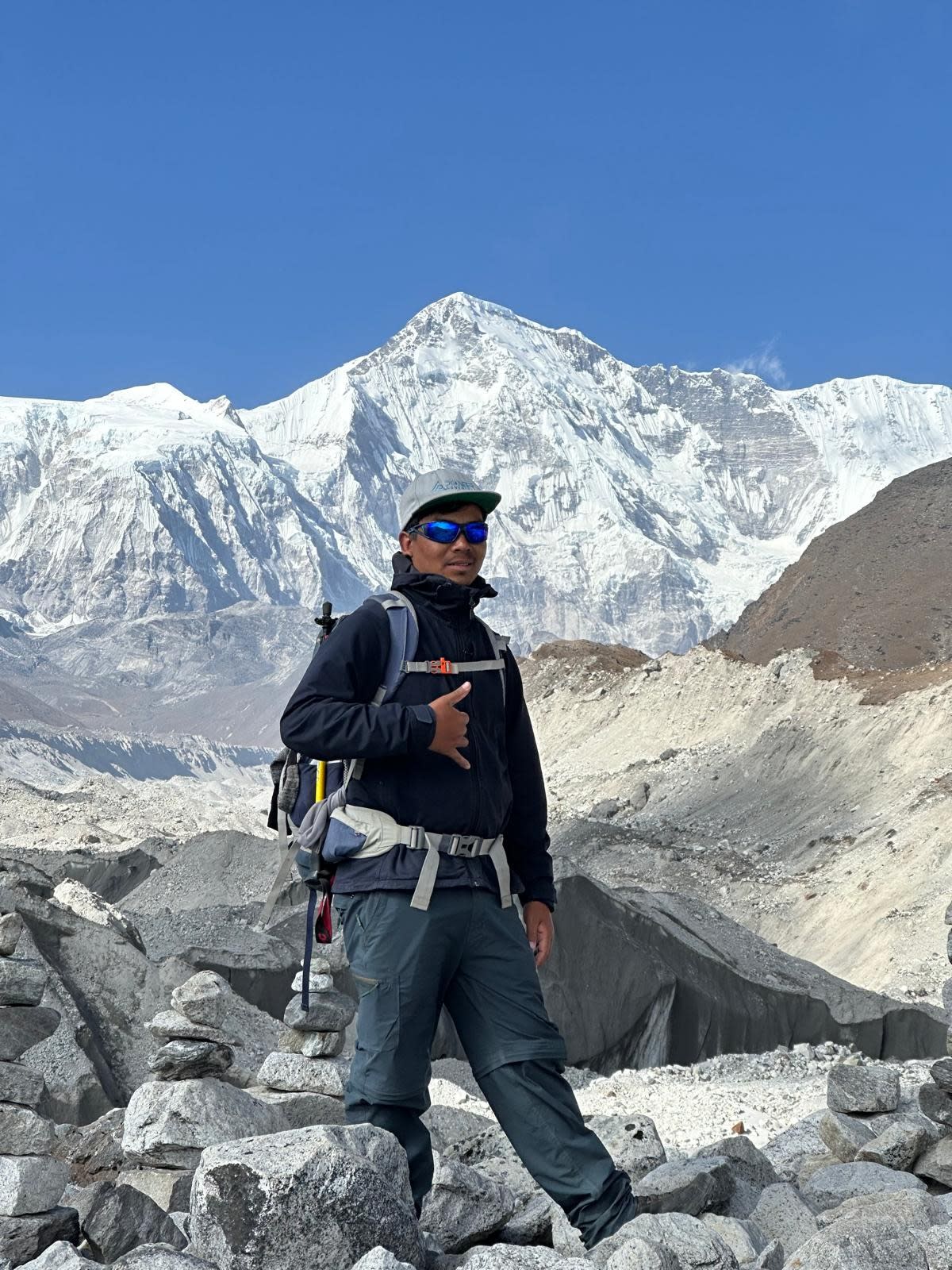
Annapurna I (8,091 metres) rises straight above the floor of the Annapurna Sanctuary, with a ring of six and seven-thousand-metre peaks around it. Everest Base Camp sits at the foot of the Khumbu Icefall, the route nearly every Nepal-side Everest expedition has used since 1953. Both trails share the same teahouse system. Private or twin rooms lower down, simple lodges near the top, and dal bhat for dinner. The real difference is scale. It runs through every choice below, from flight risk to the final bill.
Quick comparison table
| Factor | Annapurna Base Camp | Everest Base Camp |
|---|---|---|
| Highest point | 4,130m (Base Camp) | 5,364m (Base Camp), 5,545m (Kala Patthar) |
| Typical duration | 11 to 13 days | 12 to 14 days |
| Route shape | Out and back, Modi Khola valley | Out and back, Khumbu valley |
| Access | Road from Pokhara to Nayapul | Mountain flight to Lukla |
| Total distance | About 110km round trip | About 130km round trip |
| Difficulty | Moderate | Strenuous |
| Package price (from) | USD 890 | USD 1,350 |
| Permits | ACAP + TIMS | Sagarmatha NP + Khumbu Pasang Lhamu (no TIMS) |
| Best months | Mar–May, Oct–Nov | Mar–May, Sep–Nov |
How high do you go, and how do you acclimatise?
Everest Base Camp keeps you above 3,400 metres for about a week, and that long spell up high is the trek's main challenge. The standard plan has two full rest days, at Namche Bazaar (3,440 metres) on day 3 and Dingboche (4,410 metres) on day 6. After that the route continues through Lobuche (4,940 metres) to Gorak Shep (5,164 metres), Base Camp (5,364 metres) and Kala Patthar (5,545 metres) at dawn. Altitude is the whole game. Our guides check each trekker's blood oxygen twice a day with a pulse oximeter from Namche onward.
ABC is lower. Its top, 4,130 metres, sits about 1,400 metres below Kala Patthar, and the climb is gentler. You start at Nayapul (1,070 metres), pass Ghorepani and Poon Hill (3,210 metres), drop into the Modi Khola gorge and reach the Sanctuary with just one night above 3,700 metres. Mild altitude sickness is still possible above 3,500 metres, so guides carry an oximeter and emergency oxygen here too. The shorter time up high simply makes it less of a defining risk than in the Khumbu. Insurance for ABC should cover trekking to at least 4,200 metres. For EBC, make it 5,600 metres to include Kala Patthar, and for both, check the policy covers helicopter evacuation.
Same rules on both. Go up slowly, take the rest days, and head down at the first symptom that rest doesn't fix. Our altitude sickness prevention guide sets out the warning signs of AMS, HACE and HAPE we use to make that call.
Getting to the trailhead: road or mountain flight
Everest first. You fly about 35 minutes from Kathmandu to Lukla (2,860 metres). In the March to May and September to November seasons, most of those flights leave from Manthali airport in Ramechhap instead, four to five hours from Kathmandu by road, which means a middle-of-the-night start on day one. Weather delays at Lukla are the biggest planning risk on any Everest trip, and our Everest Base Camp trek guide covers how we build in a spare day.
Annapurna is simpler. You get to Pokhara by a 25-minute flight or a six to seven-hour tourist bus, then a jeep takes about 90 minutes to the trailhead at Nayapul. Flights are rarely the problem on this side, and the return leg runs to a predictable timetable, although monsoon landslides can still block mountain roads for a day. If your international flights are fixed, that reliability is the strongest practical argument for ABC.
Duration and how the trail is shaped
Eleven days, door to door. You reach the Sanctuary on day 8 and are back in Pokhara by day 10. The route climbs the Modi Khola and comes back down mostly the same way. Even a tight two-week window leaves room to spare, and the day-by-day plan, with 7 and 12-day versions, is in our Annapurna Base Camp itinerary.
Everest Base Camp takes 12 walking days from Lukla and back, with rest days at Namche and Dingboche in the middle. The package is 14 days once you add arrival and departure in Kathmandu. It's also out and back, up the Dudh Koshi and the Khumbu valley and down the same trail. At 130 kilometres it's only about 20 kilometres longer than ABC's 110. The extra days are for acclimatisation.
The scenery and the culture
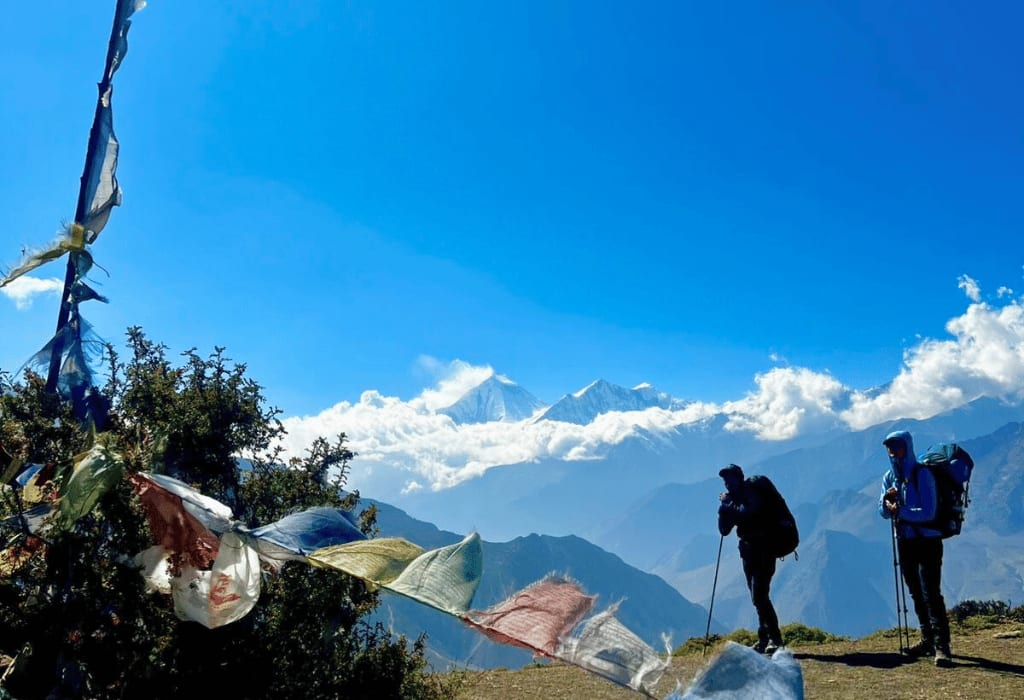
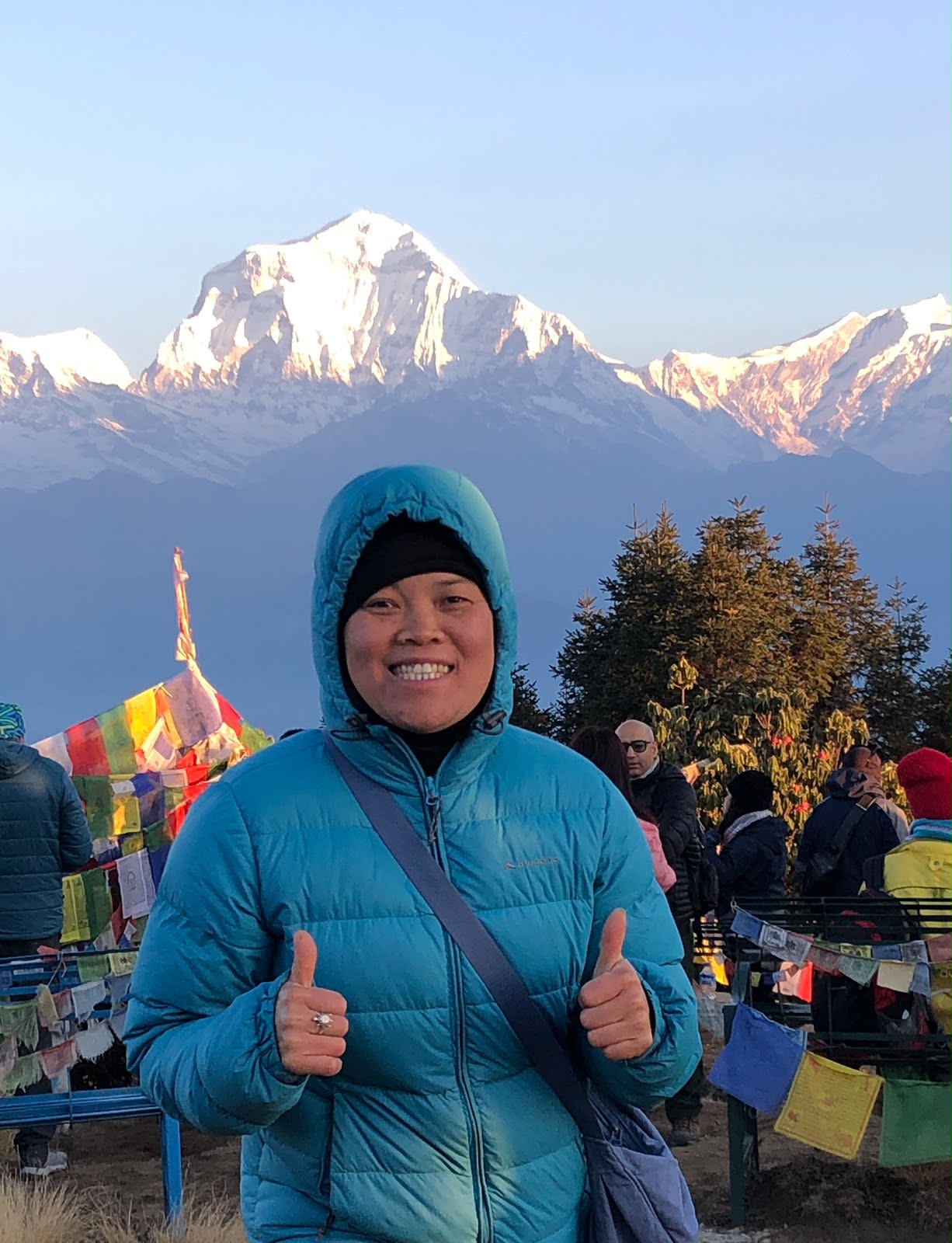
Annapurna I (8,091 metres), Annapurna South (7,219 metres), Gangapurna (7,455 metres) and Machhapuchhre (6,993 metres) close in around the Sanctuary, with Machhapuchhre's fishtail standing guard at the entrance. The way in passes through big rhododendron forests, red and pink in March and April, and Gurung villages like Chhomrong and Ghandruk, where the family that owns the lodge cooks your dinner. Poon Hill, a pre-dawn climb from Ghorepani, adds a second sunrise over Dhaulagiri and the Annapurnas.

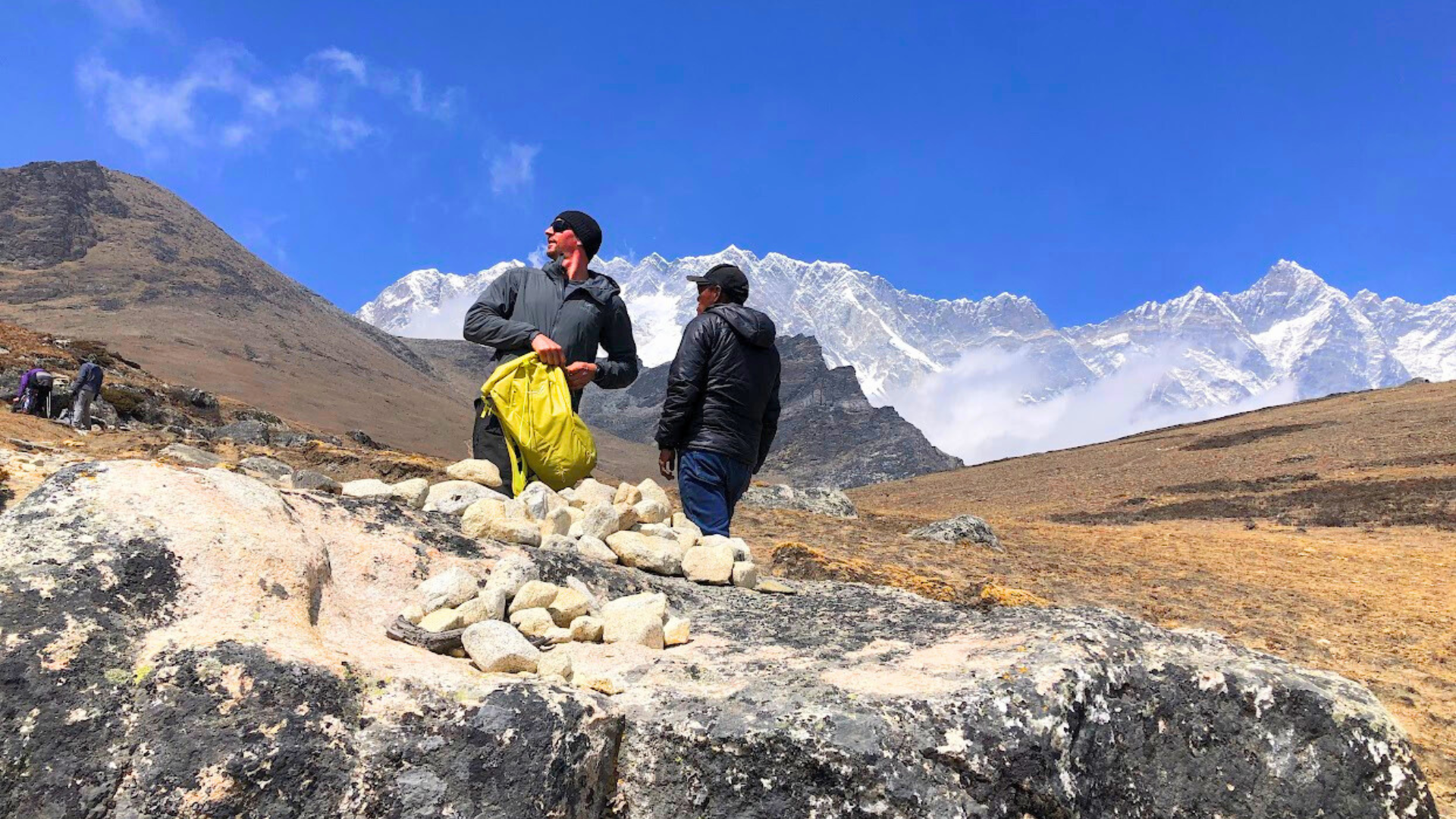
On the Everest side, Ama Dablam (6,812 metres) and Nuptse frame the trail, and the villages belong to one people, the Sherpa, where the Annapurna side mixes several ethnic groups. Namche Bazaar is the region's trading town. Tengboche Monastery, founded in 1916, holds an evening puja that trekkers can sit in on. Sagarmatha National Park has protected the valley since 1976 and became a UNESCO World Heritage Site in 1979, and the Sherpa people trace their arrival from eastern Tibet back about 500 years.
Want more variety? Look at the full Annapurna Circuit, a longer loop through very different climates that we compare with ABC in our Annapurna Circuit vs Base Camp guide.
Cost comparison for 2026
Our Annapurna Base Camp trek starts at USD 890 per person in 2026. That covers teahouse and Pokhara hotel nights, all trek meals, a TAAN-certified guide and one porter for every two trekkers. Permits add about USD 38, with ACAP at NPR 3,000 (about USD 23, VAT included) and TIMS at NPR 2,000 (about USD 15), though checkpoints increasingly look at the ACAP stamp and the guide's licence. Day-to-day extras on top run USD 10 to 22 for showers, wifi, snacks and water. Our Annapurna Base Camp cost breakdown lists every item.
EBC costs more, from USD 1,350 per person. The difference comes from the extra days, the Lukla flights (about USD 430 to 510 return on their own), and the cost of supplying lodges by plane, porter and yak instead of by road. Permits are the Sagarmatha National Park fee, NPR 3,390 with VAT, and the Khumbu Pasang Lhamu Rural Municipality permit, now NPR 3,000 for foreigners, issued at Lukla or Monjo. TIMS hasn't applied in the Khumbu since the municipality permit replaced it in 2018. Since April 2023 both treks require a licensed guide, so the guide is built into both prices.
Crowds and trail feel
Everest is busier. Almost every EBC trekker walks the same corridor, because there's only one way to Base Camp. In October and April everyone funnels through the same villages, lunch stops and photo spots at Tengboche and Kala Patthar. We rate it 9 out of 10 for crowds in peak season, when lodges from Namche up can book out days ahead. In return you get company and dependable lodges at every stop.
Annapurna Base Camp spreads its trekkers along a longer chain of villages, Ghorepani, Tadapani, Chhomrong and Bamboo among them. We rate it 7 out of 10 for crowds at the same time of year, and it rarely feels single-file the way the Khumbu does. Because you walk in and out through some of the same villages, you pass familiar faces twice, and plenty of people enjoy getting to know the lodge families that way.
Who each trek suits
Go to Everest Base Camp if standing under the world's highest mountain is the point, and you can live with the Lukla flight risk and a week above 3,400 metres. Kala Patthar gives the closest trekking view there is of Everest (8,849 metres), Lhotse and Ama Dablam. Go to Annapurna Base Camp if you have 11 to 13 days, want to stay below 4,200 metres and prefer a road to a weather-dependent flight. It's a shorter, moderate first trek that still ends inside a real high-mountain amphitheatre. Want more than standard EBC? Our EBC vs Three Passes trek guide compares it with the 18-day loop through Gokyo and three high passes.
Our recommendation
If Everest itself is the goal, and you're fine with the Lukla flight risk and several nights above 4,000 metres, the Everest Base Camp trek gets you to the world's best-known trekking destination in 14 days. If you want a shorter, moderate introduction to the Himalaya with road access and a lower ceiling, the Annapurna Base Camp trek is the more forgiving classic. Both are best from March to May and September to November. Send us your dates and fitness level and we'll recommend one. WhatsApp us on +977 984 159 5962 or use our contact page.
Frequently asked questions
Which is harder, Annapurna or Everest Base Camp?
Everest Base Camp. It reaches 5,545 metres at Kala Patthar and keeps you high for more days. Annapurna Base Camp tops out at 4,130 metres and is rated moderate.
Which is cheaper?
Annapurna Base Camp, from USD 890, partly because it needs no flights. Everest Base Camp starts at USD 1,350, which includes the two Lukla flights.
Which should a first-timer choose?
Annapurna Base Camp is the gentler first big trek, lower and shorter. Choose Everest Base Camp if the name and the Khumbu draw you and you have two weeks.
Related guides

Founder & Lead Guide, Annapurna Trekking
AJ founded Annapurna Trekking in 2016 and has personally guided treks across Nepal ever since. More about our team →
Ready to walk it?