Kathmandu sits at roughly 1,400 metres (4,600 feet), high enough to notice on a map but far too low to make you ill. The city is the arrival point for almost every Himalayan trek in Nepal, so its elevation is the baseline your body starts from before you climb toward Namche, Manang, or base camp. You will not get altitude sickness in Kathmandu itself. What the city's height does shape is quieter: your first night's sleep, your hydration, and how well you use the day or two here before the real climbing starts.
Where Kathmandu's elevation sits on a Himalayan trek
1,400 metres is a modest altitude by Nepali standards. Lukla, the gateway airstrip for the Everest region, sits at 2,860 metres. Namche Bazaar is 3,440 metres, Manang on the Annapurna Circuit is around 3,540 metres, and Everest Base Camp reaches 5,364 metres. Altitude sickness generally begins somewhere above 2,500 metres, which puts Kathmandu a full kilometre below the zone where acclimatisation becomes a real concern. In practical terms, the city is where your trek is organised, not where your body has to adapt.
How high is Kathmandu, exactly?
Kathmandu's valley floor sits between about 1,300 and 1,400 metres above sea level, with 1,400 metres (4,600 feet) the figure most sources round to for the city centre. That makes it higher than most world capitals but lower than the high-altitude cities people worry about: Denver stands at roughly 1,600 metres and Mexico City at 2,240 metres, both above Kathmandu. The valley rim climbs higher than the city itself. Nagarkot, a popular sunrise viewpoint, sits near 2,100 metres, and Chandragiri Hill reaches about 2,550 metres, which is why a cable-car ride there can feel noticeably cooler and thinner than the streets below.
Will you feel the altitude in Kathmandu?
At 1,400 metres the air holds roughly 85 percent of the oxygen available at sea level, a gap most people never register. Some travellers arriving straight from sea level notice a very mild version of thin-air effects on the first day: slightly lighter sleep, a little more breathlessness on stairs, a faster resting pulse. These settle within a day and are nothing like the headache and nausea of true acute mountain sickness, which does not occur at this height. If you feel genuinely unwell after landing, the long-haul flight, dehydration, a change of food, or the valley's winter air quality are all far more likely causes than the altitude.
Using your Kathmandu days well
Most of our itineraries include a day or two in Kathmandu before the trek for permits, a gear check, and a briefing. We use that time to start habits that matter higher up rather than to acclimatise, because 1,400 metres is too low to trigger any real physiological adaptation. Drink more water than you would at home, sleep off the jet lag, keep alcohol light, and take a gentle valley walk to Swayambhunath or the Boudhanath stupa instead of a hard first-day hike. When you do reach altitude that counts, the discipline is the same one we describe in our guide to preventing altitude sickness on a Nepal trek, and it is built around the acclimatisation day at Manang and its equivalents on other routes.
From Kathmandu to where altitude actually begins
The jump from Kathmandu to real altitude happens fast. A 35-minute mountain flight lands you at Lukla, 2,860 metres, and from there the Everest Base Camp trek climbs steadily over the following days. The Annapurna treks start lower and gentler: a drive to Besisahar at 760 metres or a flight to Pokhara at around 820 metres sets you up to gain height slowly on the Annapurna Circuit. That gradual profile is the whole point, and it is where the 500-metre-a-day guideline and scheduled rest days start to matter. If you are planning the Pokhara leg yourself, our notes on getting from Kathmandu to Pokhara cover the flight, tourist bus, and jeep options.
Day trips that help you shake off the flight
Three hill viewpoints on the valley rim let you stretch your legs and gain a little height without any altitude risk. Nagarkot, at about 2,100 metres, is a 90-minute drive northeast and gives a long Himalayan skyline on a clear morning. Shivapuri, inside Shivapuri Nagarjun National Park north of the city, tops out near 2,730 metres on a half-day hike through forest. Chandragiri Hill, reached by cable car southwest of Kathmandu, sits around 2,550 metres with views of the Annapurna and Everest ranges on the horizon. A gentle uphill walk the day before you fly out is a better use of a spare day than sitting in a cafe.
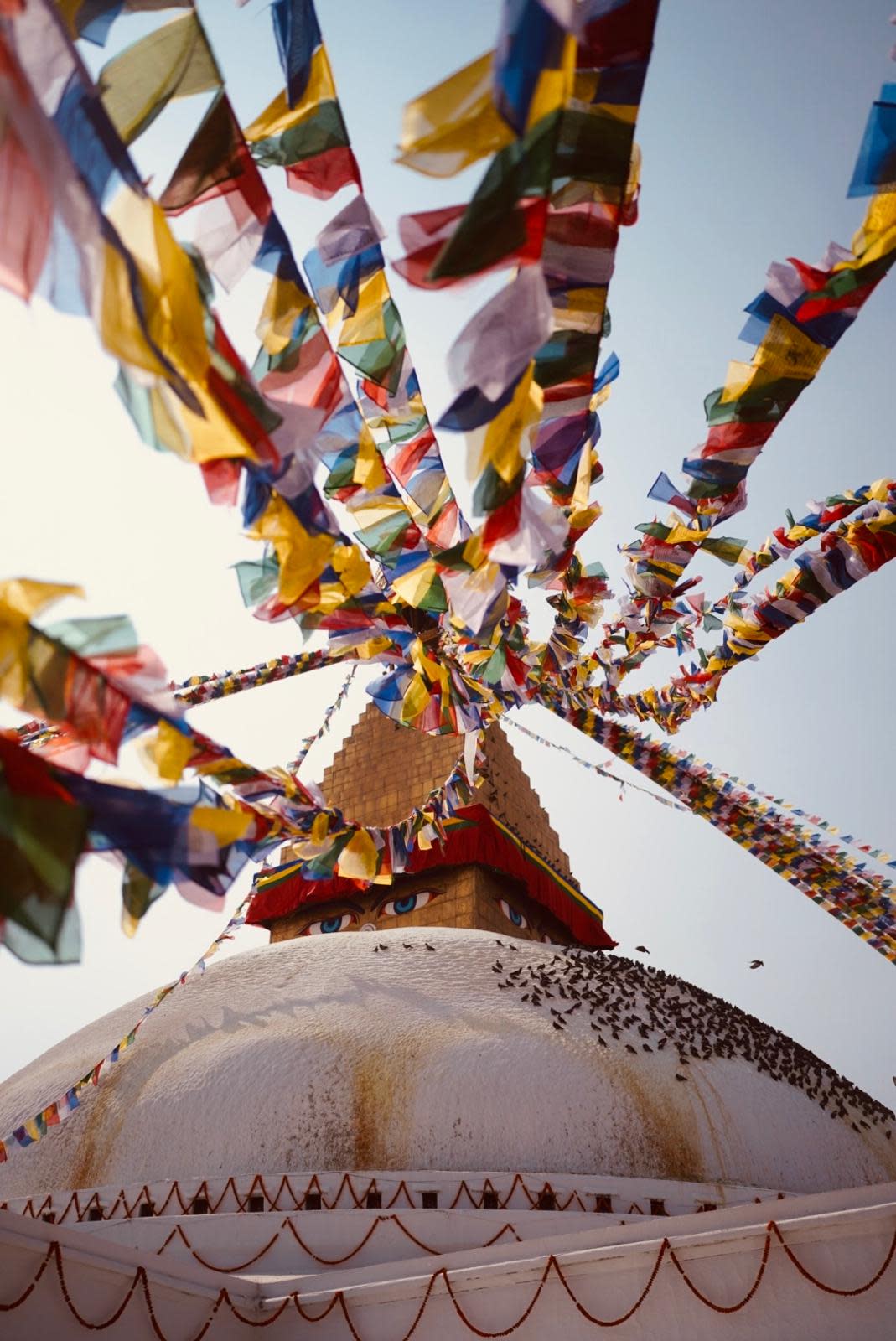
Inside the city, the two great stupas double as easy acclimatisation walks. A slow circuit of Boudhanath, one of the largest stupas in the world, or the climb up the steps to Swayambhunath, the hilltop temple locals call the monkey temple, keeps you moving without straining anything. Both are cultural highlights in their own right, which is why we build a Kathmandu sightseeing day into most itineraries rather than treating the city as dead time before the trek.
Do you get altitude sickness in Kathmandu?
No. Kathmandu sits at about 1,400 metres, roughly a kilometre below the 2,500-metre mark where acute mountain sickness usually begins. Feeling off after arrival is almost always jet lag, dehydration, or the change in food and air, not the altitude.
How high is Kathmandu in feet?
Kathmandu sits at roughly 4,600 feet (1,400 metres) above sea level at the valley floor, with the surrounding hills rising to around 7,000 to 8,400 feet.
Do you need to acclimatise in Kathmandu before a trek?
Not in any physiological sense, because the elevation is too low to prompt your body to adapt. A day or two here is still useful for resting off jet lag, sorting permits and gear, and starting good hydration before you reach altitude that does require acclimatisation.
Is Kathmandu higher than Everest Base Camp?
No, and the gap is large. Everest Base Camp sits at 5,364 metres, almost 4,000 metres above Kathmandu's 1,400 metres. Kathmandu is the low starting point; base camp is near the top of what a trekker without mountaineering gear will reach.
More on the mountains
Pemba Sherpa
Trekking Guide, Annapurna Trekking
Pemba Sherpa guides treks across Nepal for Annapurna Trekking. More about our team →