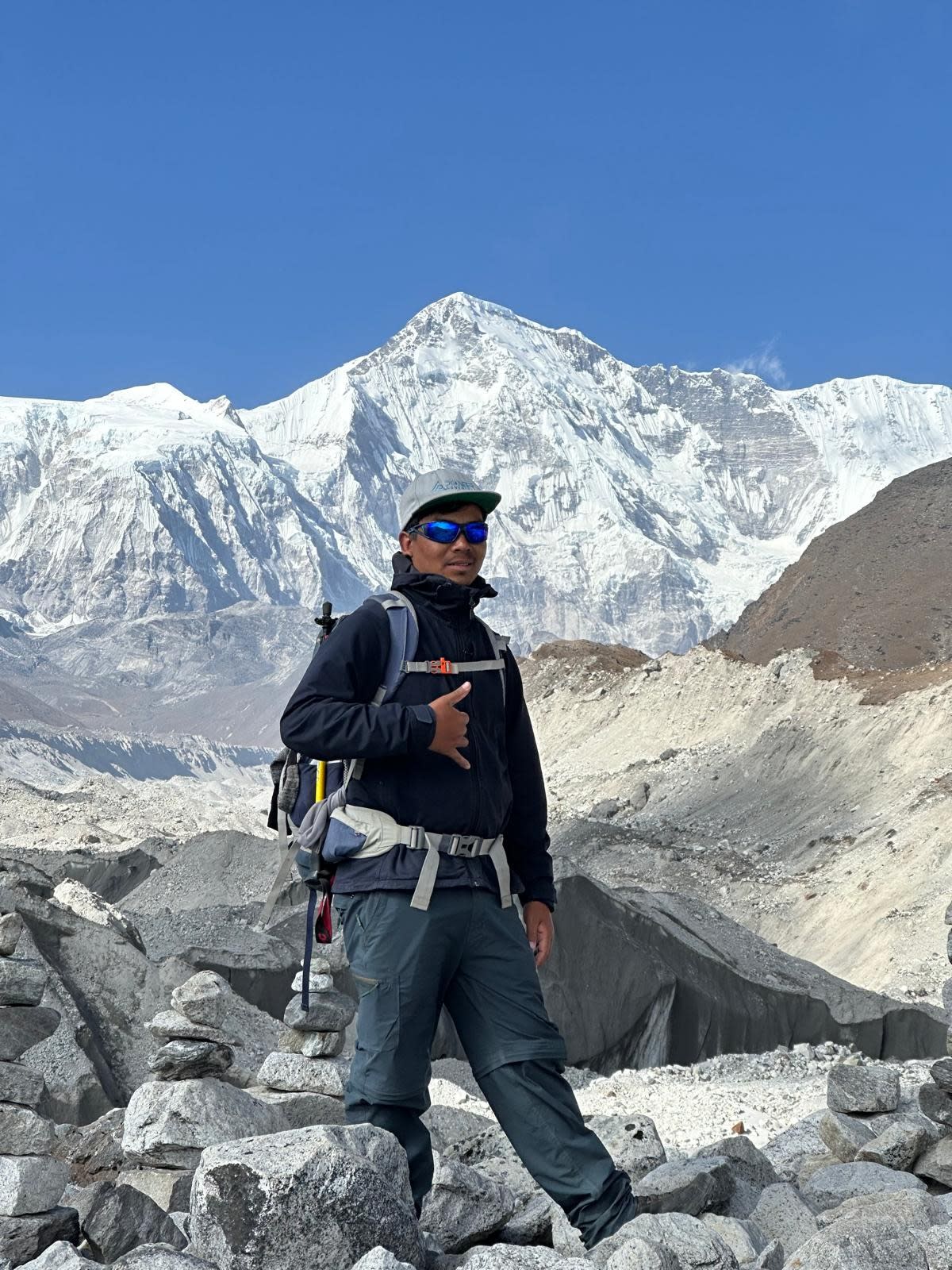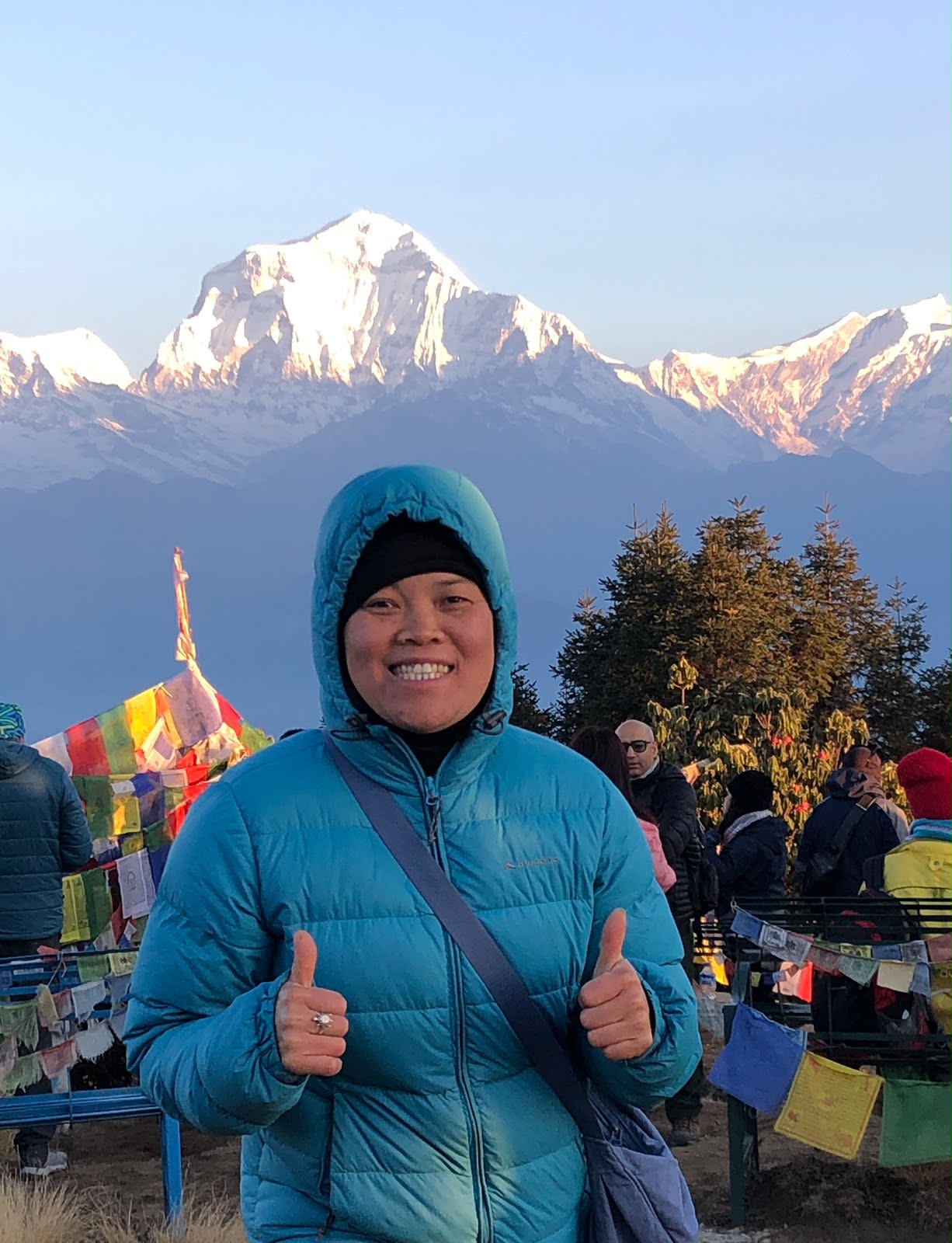
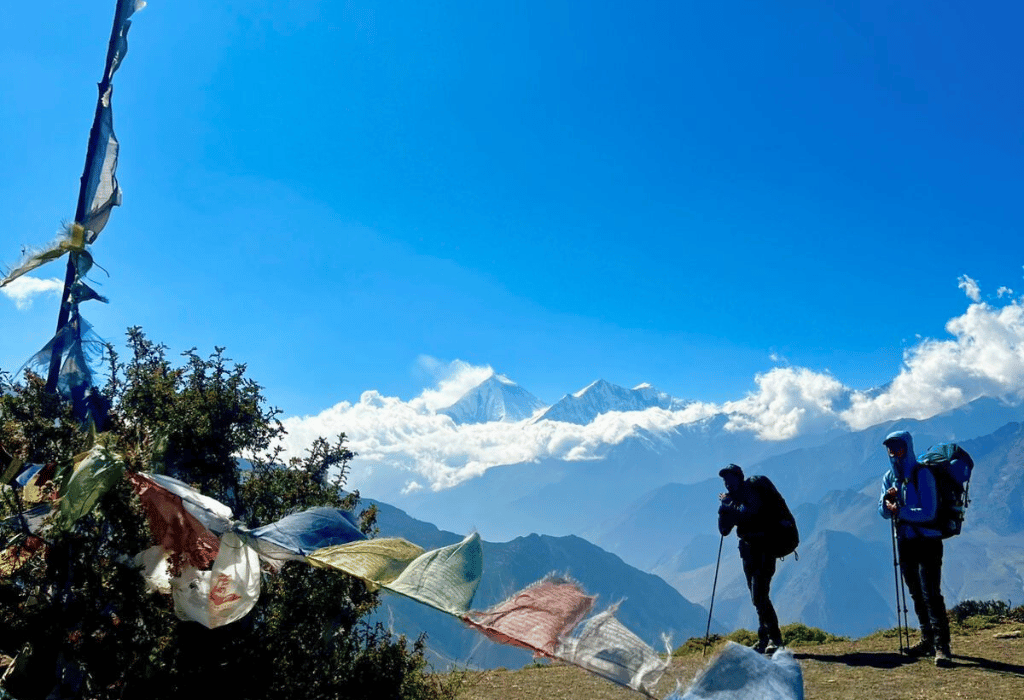
The Mardi Himal Trek is a moderate ridge walk in Nepal's Annapurna region that sleeps at High Camp (3,580 metres) and climbs on a day hike to Mardi Himal Base Camp at about 4,500 metres, right under the south face of Machhapuchhre. Our guided package runs seven days from Pokhara and starts at USD 690 per person. Permits come to about USD 38, and the trail sees a fraction of the people on the Annapurna Base Camp or Poon Hill routes.
Mardi Himal follows a single forested spur north from the hills above Pokhara toward the 5,587-metre Mardi Himal peak. The spur is narrow, so once you clear the trees the trail stays on the crest and the views barely stop. The Annapurna Conservation Area Project opened the route to teahouse trekking only in 2012, which is part of why it still feels wilder than trails that have carried trekkers for forty years.
What makes Mardi Himal different from Poon Hill or Annapurna Base Camp?
All three start from roughly the same hills above Pokhara, and the choice usually comes down to crowds against comfort. Poon Hill is a four or five-day walk to a 3,210-metre viewpoint, busy all year because the walking is gentle and the sunrise over Dhaulagiri comes quickly. Annapurna Base Camp takes 7 to 13 days into the Sanctuary at 4,130 metres, with a lodge every hour or two. Mardi Himal sits between them in effort. Its real draw is Machhapuchhre. From Mardi Himal Base Camp you look straight up the mountain's south face from closer than either of the other routes gets.
The price is comfort. Lodges above Forest Camp are small, menus shrink as you climb, and after fresh snow the ridge path can be hard to find because so few boots have packed it. People on a first Himalayan trek who want the most comfort usually pick ABC. People who've done a teahouse trek before and want more mountain in less time pick Mardi Himal.
The route and Machhapuchhre
Machhapuchhre, 6,993 metres, is the double-pointed "Fishtail" you see from Pokhara's lakeside, and nobody is known to have stood on its summit. In 1957 Wilfrid Noyce and David Cox, on an expedition led by Jimmy Roberts, got within about 50 metres of the top and turned back as promised. Nepal has not allowed climbing on it since, and it's held sacred to Shiva. The base camp viewpoint at the end of the Mardi ridge is as close as any trekking route comes to it.

Between Pothana and Forest Camp the trail climbs through moss-hung rhododendron and oak for most of a day, and it's the part people forget to mention. Shame. In March and April the rhododendrons bloom red, pink and white along the whole climb. Above Forest Camp the trees thin fast. By Low Camp, around 3,050 metres, you're on open ridge with Annapurna South (7,219 metres) and Hiunchuli in view.
Itinerary: 7 days, with room for an extra night
Our standard package is seven days from arrival in Pokhara to departure, with five days on the trail. Slower walkers, or anyone who wants a gentler climb, can add a night at Low Camp. That stretches the trip to eight days.
| Day | Route | Hours | Sleep altitude |
|---|---|---|---|
| 1 | Arrive Pokhara, trip briefing | - | 820m |
| 2 | Drive to Kande, trek to Pothana | 3-4 | 1,890m |
| 3 | Pothana to Forest Camp | 5-6 | 2,590m |
| 4 | Forest Camp to High Camp via Low Camp | 6 | 3,580m |
| 5 | Hike to Mardi Himal Base Camp (4,500m), return to High Camp | 7-8 | 3,580m |
| 6 | High Camp to Siding, drive to Pokhara | 6-7 | 820m |
Days 4 and 5 matter most. Day 4 gains nearly 1,000 metres from Forest Camp to High Camp, more than the usual 500-metre guideline above 3,000 metres. That's the reason for the optional Low Camp night. Day 5 starts around 5 a.m. so you reach the base camp viewpoint before cloud comes up the valley, then returns you to sleep at 3,580 metres, a classic climb-high, sleep-low day. Our guides check oxygen saturation from Forest Camp onward and will hold someone at Low Camp or High Camp before sending them higher with symptoms.
The descent goes down a different spur to Siding instead of back to Kande, so the trek is a loop. Siding is a Gurung village with a jeep road to Pokhara. It's about 1,800 metres down in a day, steep in places and harder on the knees than people expect. Poles help.

Permits for Mardi Himal
Mardi Himal is inside the Annapurna Conservation Area, so you need the same two permits as the rest of the region and no restricted-area permit. ACAP costs NPR 3,000 (about USD 23) when bought in advance in Kathmandu or Pokhara. Buy it at a trail checkpoint and it costs double.
| Permit | Cost | Notes |
|---|---|---|
| ACAP (Annapurna Conservation Area) | NPR 3,000 (~USD 23) | Double if bought at a trail checkpoint instead of in advance |
| TIMS card | NPR 2,000 (~USD 15) via agency | Issued through your trekking agency; checkpoints mainly check ACAP and the guide's licence |
| Restricted-area permit | Not required | Unlike Upper Mustang or Manaslu |
Since April 2023 foreigners have needed a licensed guide on almost every trekking route, so your agency arranges TIMS along with everything else. A guide also earns their keep on the upper ridge, where fresh snow can hide the path. Our ACAP and TIMS permit guide shows where each permit gets checked.
What Mardi Himal costs
It's all-inclusive. Our guided package covers the guide, a porter, permits, transport, lodges and meals for the full seven days. Smaller groups pay more each, because the fixed costs are split fewer ways.
| Group size | Price per person |
|---|---|
| Solo, private | USD 990 |
| 2-3 people | USD 790 |
| 4-12 people | From USD 690 |
Four to seven people pay USD 720 each, and eight to twelve pay USD 690. Arranging it yourself, permits, food and beds for five trail days come to roughly USD 200 to 280, plus USD 25 to 35 a day for the guide. Beds below High Camp cost NPR 400 to 800 (USD 3 to 6). Above Low Camp everything arrives on a porter's back and prices rise accordingly. Dal bhat at NPR 600 to 900 with free refills is still the best deal, and USD 12 to 18 a day covers food. Tips are extra, usually around USD 15 to 20 a day for the guide and USD 8 to 12 for each porter, pooled by the group at the end.
Difficulty and who this trek suits
We grade it moderate. Harder than the short village walk to Poon Hill, shorter and less committing than Annapurna Base Camp. Two days do most of the damage. The long climb to High Camp on day 4, and the pre-dawn round trip to base camp on day 5, where you gain and lose about 900 metres on an exposed ridge. You need to be comfortable walking five to eight hours on consecutive days. Previous altitude experience helps, though you can do without it.
People coming from lower, gentler treks sometimes underestimate the nights at High Camp, which drop to minus 10°C in November and December. Twenty minutes with our altitude sickness prevention guide is time well spent, even for a trek this short.
Lodges and food on the ridge
Above Forest Camp, lodges thin out fast. Forest Camp, Low Camp, Badal Danda and High Camp each have a small cluster of teahouses, and High Camp is basic, with thin walls, shared toilets and whatever a porter can carry up. Expect dal bhat, noodle soup and eggs. Not much else. Prices rise at each stop.
High Camp has few beds and fills on clear autumn weekends, so booking ahead matters more here than on busier routes. Bring a refillable bottle with purification tablets or a filter. It saves money, and there's no rubbish collection above Forest Camp.
Best time to trek Mardi Himal
Late September to November and March to May are the reliable windows, as across the Annapurna region.
| Season | Months | Conditions on the ridge |
|---|---|---|
| Autumn | Late Sep-Nov | Clearest views of the season; cold nights at High Camp, down to -10°C by November |
| Spring | Mar-May | Rhododendron bloom in the forest; possible fresh snow on the upper ridge in March |
| Winter | Dec-Feb | Snow likely above Low Camp; High Camp push sometimes turned back |
| Monsoon | Jun-Aug | Muddy forest section, leeches, clouds hiding the peaks most days |
Our pick? April, the best single month for most people, with steady weather up high and rhododendrons lower down. Late October has the sharpest air of the year and the coldest High Camp nights. Above 3,000 metres, pack for well below freezing whatever the month.
Plan your Mardi Himal trek
Mardi Himal puts you under Machhapuchhre's south face in a week, from USD 690, with far fewer people than the classic Annapurna routes. Annapurna Trekking, the trekking brand of Swotah Travel and Adventure (founded 2016, member of TAAN, NMA and NTB), runs it in groups of up to 12 with TAAN-certified guides. See the Mardi Himal trek page for 2026 and 2027 dates, or contact our team on +977 984 159 5962.
Frequently asked questions
How many days is the Mardi Himal trek?
Our package is seven days from Pokhara, with five on the trail. You sleep at High Camp (3,580 metres) and hike up to Mardi Himal Base Camp at about 4,500 metres. An extra night at Low Camp makes it eight.
How hard is the Mardi Himal trek?
Moderate. It's shorter and quieter than the main Annapurna routes, with two long days on the upper ridge. It suits reasonably fit walkers who want close-up mountain views without a two-week commitment.
What permits do you need for Mardi Himal?
The ACAP permit (NPR 3,000) and a TIMS card (NPR 2,000), both arranged before you start. A licensed guide has been required since the April 2023 rule.
Related guides

Founder & Lead Guide, Annapurna Trekking
AJ founded Annapurna Trekking in 2016 and has personally guided treks across Nepal ever since. More about our team →