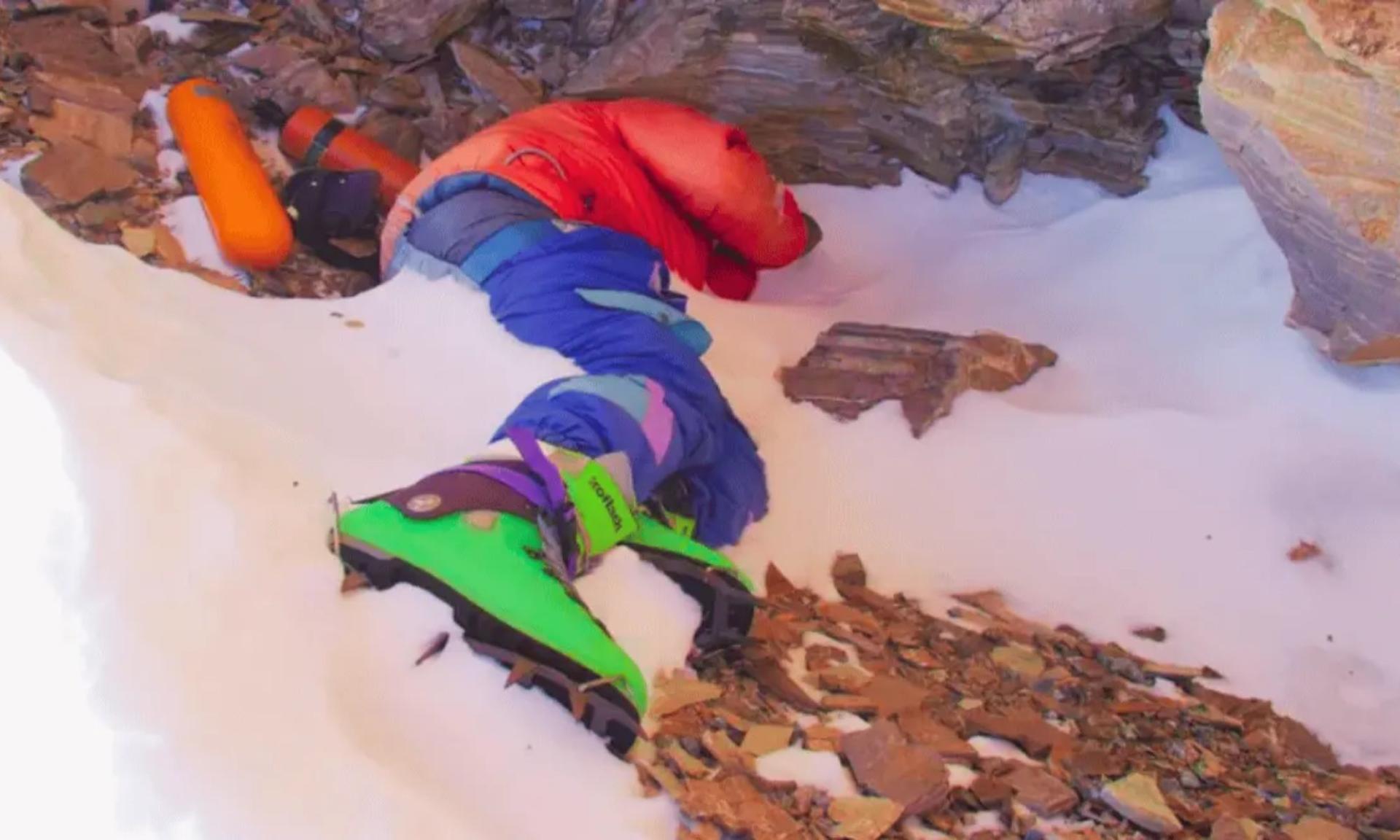
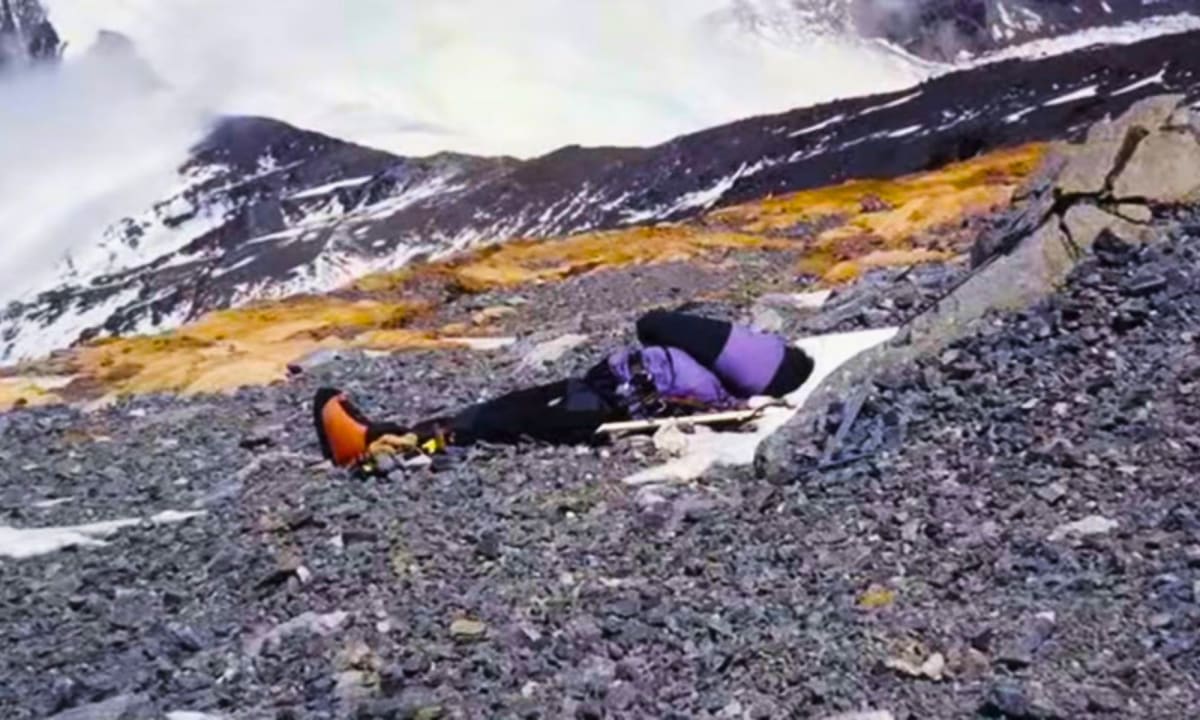
Green Boots is the nickname for the frozen body of a climber that has rested for decades in a small limestone alcove at about 8,500 metres (27,900 feet) on the north, or Tibet, side of Mount Everest, just below the ridge feature known as the First Step. The name comes from the bright green Koflach mountaineering boots the climber was wearing when he died. In 2026 the Indo-Tibetan Border Police reported a DNA match identifying the body as Lance Naik Dorje Morup, one of its servicemen who died in the 1996 Everest disaster, which is now the best available identification after nearly thirty years of doubt.

Where Green Boots lies, and why trekkers never go near it
Green Boots rests on the Northeast Ridge, high on the Tibet side of Everest, which is a climbing route, not a walking one. Reaching that alcove at 8,500 metres takes a full expedition with bottled oxygen, fixed ropes, and weeks of effort above the last village. Trekkers never go there. The Everest Base Camp trek guide route runs up the Nepal side of the mountain, and the Everest Base Camp trek ends at base camp at 5,364 metres, more than 3,000 metres lower than where Green Boots lies. You reach a viewpoint and a base camp and turn around. You do not cross the climbing route, and you pass no bodies on the trail.
Green Boots at a glance
Location: the Northeast Ridge, north (Tibet) side of Everest, just below the First Step
Altitude: about 8,500 metres (27,900 feet), inside the death zone
Name origin: the bright green Koflach mountaineering boots the climber wore
Current best identification: Lance Naik Dorje Morup, by 2026 DNA testing reported by the ITBP
Distance from trekkers: the Nepal-side base camp trek ends at 5,364 metres, far below and on the opposite side of the peak
What is the Green Boots story?
Green Boots became one of the most talked-about landmarks on Everest because of where the body lies. For years, climbers heading for the summit on the north side passed the alcove at 8,500 metres and used it as a marker of how far they had left to go, below the First Step. The bright green boots made the spot easy to recognise even in poor light. Over time the nickname stuck, and the small limestone cave came to be called Green Boots' Cave. None of this was ever chosen; it is simply the result of a death high on a mountain where nobody could bring the climber down.
The First Step is a rock feature on Everest's Northeast Ridge that climbers must pass on the way to the summit from Tibet. Green Boots lies just below it, in the death zone, the stretch above 8,000 metres where the air holds so little oxygen that the human body slowly starts to fail. At that height a climber cannot linger. That is part of why the body stayed where it was for so long, and why it turned into a waypoint rather than being recovered.
Who is Green Boots? A name debated for thirty years
Green Boots was believed for about thirty years to be Tsewang Paljor, a young constable in the Indo-Tibetan Border Police who died during the 1996 Everest disaster. That identification was popular, repeated in books and articles, but it was never confirmed. As early as 1997, P.M. Das, a member of the 1996 ITBP expedition, argued that the body was not Paljor at all but another of his teammates, Lance Naik Dorje Morup. So the doubt is not new. It has followed the Green Boots story almost from the start.
In 2026 the ITBP reported that DNA testing had identified the body as Lance Naik Dorje Morup, and announced a plan to retrieve it by October 2026. This is the current best identification, and it matches what P.M. Das argued back in 1997. Two things are worth stating plainly. The 2026 DNA news comes from recent, news-tier reports rather than a long-settled record, and the recovery is still planned, not finished. So the honest summary is this: the 2026 DNA identification points to Dorje Morup, while Tsewang Paljor was the long-standing popular attribution that was never confirmed.
The two names attached to Green Boots
Identity | Status | Basis |
|---|---|---|
Lance Naik Dorje Morup | Current best identification | 2026 DNA testing reported by the ITBP; matches P.M. Das's 1997 argument |
Tsewang Paljor | Long-standing popular attribution, never confirmed | Widely repeated for about 30 years; contested from 1997 onward |
The 1996 disaster and the three ITBP climbers
The 1996 Everest disaster is the season made famous by the deaths of several climbers in a storm, and it hit the north side as hard as the south. Three climbers from the Indo-Tibetan Border Police died on the Tibet side during the same summit push that year: Tsewang Samanla, Dorje Morup, and Tsewang Paljor. Because Morup and Paljor were teammates who died close together, on the same route, in the same days, it is easy to see how their names became mixed up. The confusion over Green Boots is really the confusion between two men who died within hours of each other.
Both Dorje Morup and Tsewang Paljor were servicemen, not tourists, and both died doing hard, high work on the mountain. That shared fact is the respectful way to hold the story while the identification settles. Whichever name is finally recorded, Green Boots was a person with a family, a rank, and a reason to be there.
Why do bodies stay on Everest?
The death zone above 8,000 metres is the reason most bodies on Everest are never brought down. At that altitude the air holds so little oxygen that the body slowly fails, and every task takes many times the normal effort. Recovering a frozen body on steep ground, in that thin air, is one of the most dangerous and expensive jobs in mountaineering. It has cost rescuers their own lives. That is why climbers who die high on the mountain often stay where they are for years.
What happened to the Green Boots body?
Around 2014 a Chinese expedition reportedly moved or covered the body, and after that it was harder to see from the route. Accounts differ on exactly what happened. Some say the body was relocated, some say it was partly buried, and some say it was simply obscured from view. Then in 2017, some reports said Green Boots was visible again. So the exact fate is uncertain, and it is fair to say only that the body was disturbed or hidden at some point and that reports since have not fully agreed.
The ITBP's 2026 plan to retrieve the body, if it goes ahead by October 2026, would close a story that began in 1996. Until that recovery actually happens, the honest position is that it is planned rather than done.
The Nepal side, where trekkers actually go
The Everest Base Camp trek runs entirely on the Nepal side of the mountain, which is a different world from the Tibet climbing route. Trekkers walk up through Sherpa villages to Everest Base Camp at 5,364 metres, a spread of expedition tents on the Khumbu Glacier. The walk to it is a teahouse trek, not a climb. From base camp the summit, the death zone, and the First Step are all far above and out of reach. Nobody on the trek crosses the ground where Green Boots lies, which sits more than 3,000 metres higher and on the opposite side of the peak.
Is Green Boots still on Everest in 2026?
As of 2026, the body is still on Everest, though the Indo-Tibetan Border Police has announced a plan to retrieve it by October 2026. That recovery is planned, not yet completed. The body's visibility has also changed over the years, since a Chinese expedition reportedly moved or covered it around 2014.
Who was Green Boots really?
The 2026 DNA identification reported by the ITBP points to Lance Naik Dorje Morup, an ITBP serviceman who died in the 1996 Everest disaster. For about thirty years the body was popularly believed to be his teammate Tsewang Paljor, but that was never confirmed, and it was contested as early as 1997 by P.M. Das.
Will trekkers on the Everest Base Camp trek see Green Boots?
No, trekkers do not see Green Boots: the body lies at about 8,500 metres on the Tibet side of Everest, on a climbing route. The Nepal-side Everest Base Camp trek reaches base camp at 5,364 metres and never goes near the summit route, so you do not pass it.
Why has Green Boots never been brought down?
The body sits in the death zone above 8,000 metres, where recovering a frozen climber is extremely dangerous and expensive. Rescues at that altitude have cost other people their lives, which is why many bodies on Everest stay where they are for years.
Why were there two names for Green Boots?
Two ITBP servicemen, Dorje Morup and Tsewang Paljor, died on the same north-side summit push in 1996, within hours of each other. That is why their identities were confused for decades, until the 2026 DNA testing pointed to Morup.
Related reading
Pemba Sherpa
Trekking Guide, Annapurna Trekking
Pemba Sherpa guides treks across Nepal for Annapurna Trekking. More about our team →
Ready to walk it?