Annapurna Circuit Trek for Seniors
The Annapurna Circuit Trek for Seniors is the classic route re-timed for comfort and safety, so fit walkers in their 60s and 70s can cross Thorong La Pass (5,416m) with confidence rather than a rush.
The Annapurna Circuit is a walk, not a climb. There is no technical ground anywhere on the route. What makes it demanding is the length and the altitude, and both respond well to a gentler schedule. We spread the trip over 17 days instead of the usual 14, keep daily walking to 4–5 hours, add an extra acclimatisation day, and stay overnight at Thorong Phedi so the pass is climbed after a proper rest rather than a brutal pre-dawn push from higher up.
Safety is built in, not bolted on. Your guide checks blood-oxygen saturation twice a day from Manang onward, carries emergency oxygen and a pulse oximeter, and keeps every day's ascent within safe limits. The group is private and small, capped at eight, so the pace is truly yours, and jeep support on the least interesting road sections spares your knees for the parts worth walking.
For those who would rather not cross the high pass at all, there is a softer option: trek the beautiful Manang valley, visit Muktinath, and fly out from Jomsom, topping out around 3,800m. Either way, this is a big Himalayan journey made properly achievable, at the right speed, with the right support.
5 ways to walk this route.
Same legendary trail, different pace and comfort. Pick the version that suits your time, budget and travel style — every one is fully guided and permit-inclusive.
Upcoming departures.
| Start Date | End Date | Price / Person | Availability | |
|---|---|---|---|---|
| Nov 3, 2026 | Nov 19, 2026 | USD 1,790 | 6 spots left | |
| Apr 8, 2027 | Apr 24, 2027 | USD 1,890 | 8 spots left |
6 moments you won't forget.
Thorong La at your own pace
The 5,416 m pass, climbed slowly and steadily after a night at Thorong Phedi rather than a brutal pre-dawn push from higher up.
Short 4–5 hour days
A gentle daily rhythm with time to rest, hydrate and enjoy the villages rather than race through them.
Extra acclimatisation
Two full rest days at Manang instead of one, the single best thing you can do for a safe crossing in your 60s or 70s.
Twice-daily health checks
Blood-oxygen monitored morning and evening from Manang onward, with emergency oxygen carried throughout.
Optional no-pass route
Prefer not to cross the high pass? Explore Manang, visit Muktinath and fly out from Jomsom, topping out near 3,800 m.
A built-in buffer day
A spare day in Kathmandu absorbs mountain-flight delays, so a weather hold never costs you your international flight home.
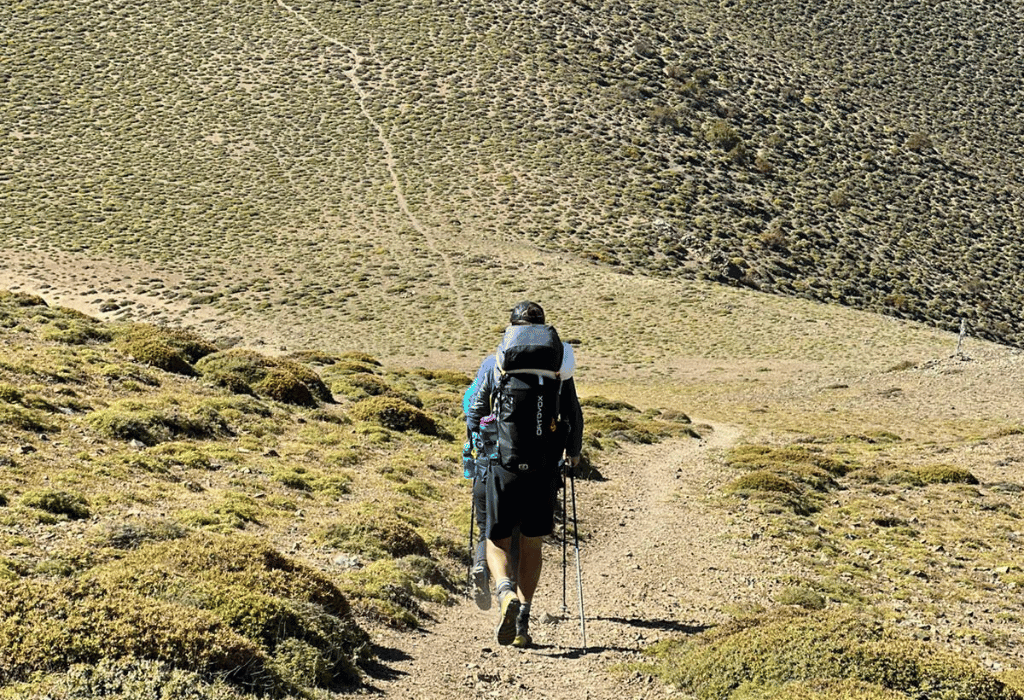
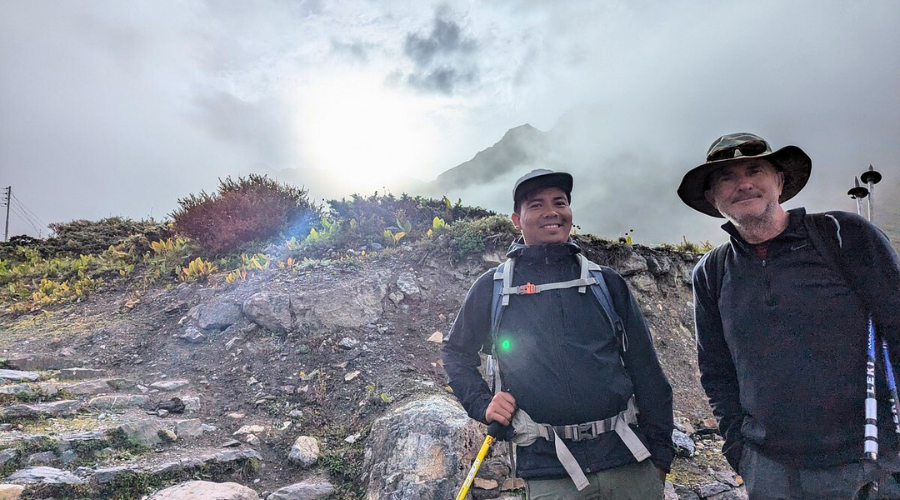
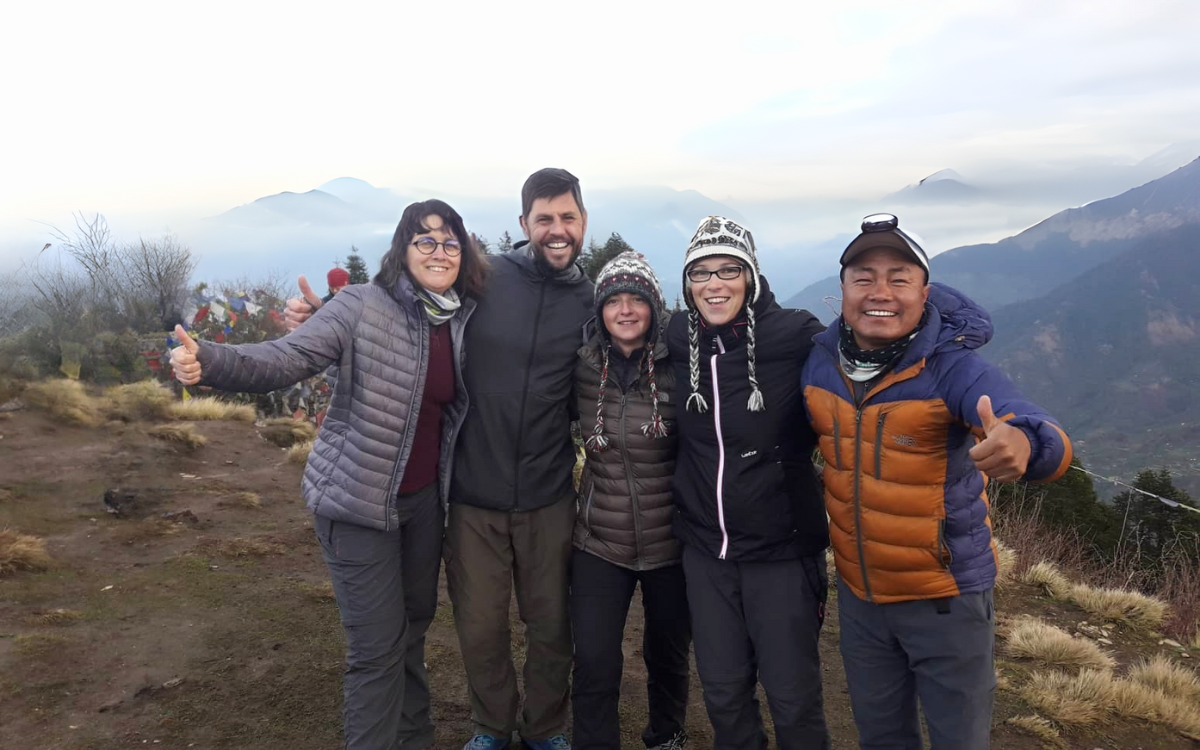
Trek in pictures.
Interactive circuit map.
The full 17-day circuit on a topographic map. Click any marker for details. Switch between Topo, Satellite, and Standard views using the layer control.
17 Days. Every detail planned.
Transparent, all-in pricing.
Included in your price
Not included
Trek altitude at a glance.
How hard is this trek?
Best time for the Annapurna Circuit Trek for Seniors.
Weather on the Annapurna Circuit Trek for Seniors.
Everything you need to know.
Open any card for in-depth notes on accommodation, food, altitude, permits, money and the small print that matters on the trail.
Your safety, planned in detail.
Altitude is the main risk on this trek. Here is exactly what we carry, who we call, and where the nearest help is at every stage of the route.
Common health risks
- •Acute Mountain Sickness (AMS): most likely above 3,500m
- •Dehydration: accelerated by altitude and dry air
- •Sunburn and snow blindness: UV is 2× stronger at 5,000m
- •Twisted ankle on uneven trail: descent days especially
- •Frostbite on Thorong La in cold conditions. Keep fingers/toes warm.
- •Stomach upset from unfamiliar food/water, purify everything
- •Cold injury (hypothermia) at high camp if wet + windy
Our medical kit
- •Pulse oximeter (carried by guide, checks oxygen saturation)
- •Emergency oxygen cylinder (lead guide carries one)
- •Diamox (acetazolamide) for acute mountain sickness
- •Dexamethasone (HACE emergency use)
- •Nifedipine (HAPE emergency use)
- •Broad-spectrum antibiotics
- •Anti-diarrhoeal medication
- •Antihistamines
- •Strong painkillers (ibuprofen + paracetamol)
- •Wound dressings, blister kit, bandages
- + 3 more items carried by the lead guide
Travel insurance — required
- ✓Must cover trekking to at least 5,500m (Thorong La is 5,416m)
- ✓Must include helicopter evacuation (USD 5,000+ cover minimum)
- ✓Must include emergency medical treatment and repatriation
- ✓We recommend World Nomads, True Traveller (UK), or SafetyWing, all cover Nepal trekking at altitude
- ✓Bring a printed policy and 24/7 assistance number to the pre-trek briefing
Nearest medical facilities
- •Manang: Himalayan Rescue Association (HRA) clinic, Western volunteer doctors in spring and autumn
- •Jomsom: district hospital with X-ray and basic surgery
- •Pokhara: Manipal Teaching Hospital, best regional emergency care
- •Kathmandu: CIWEC Travel Medicine Centre, specialist altitude and expedition medicine
Emergency protocols
Every guide carries a pulse oximeter and we check oxygen saturation twice daily from Manang onward. If saturation drops dangerously or symptoms of HACE/HAPE appear, descent is immediate. Helicopter evacuation is available along the whole route through our Kathmandu coordination centre (typical response 60–90 minutes, weather permitting). We pre-flag your insurance details at the briefing so there is zero delay in a real emergency.
Helicopter evacuation
Helicopter evacuation from anywhere on the Circuit is operationally feasible. Cost is roughly USD 3,500–6,000 to Pokhara or Kathmandu, fully reimbursable by qualifying travel insurance. We coordinate with Simrik Air, Manang Air and Heli Everest through a 24/7 line at our Kathmandu office.
Nepal visa on arrival
Tourist visa-on-arrival at Kathmandu airport: USD 30 for 15 days, USD 50 for 30 days, USD 125 for 90 days. Bring 2 passport photos and USD cash. The process takes 15–30 minutes on arrival.
What to pack.
Plan Your Trek
Planning guides for the Annapurna Circuit Trek for Seniors
Written by our guides, these cover the permits, altitude, timing, and kit you need before you go.
Common questions.
GeneralIs the Annapurna Circuit suitable for seniors and trekkers over 60?+
Yes. The Annapurna Circuit has no technical climbing — it is long, high-altitude walking on good trails. Our seniors' itinerary spreads the route over 17 days with shorter walking days (4–5 hours), two extra acclimatisation days, and jeep support on the least scenic sections, which makes Thorong La (5,416m) achievable for fit walkers in their 60s and 70s. We have guided guests well into their 70s across the pass.
GeneralHow is the seniors' itinerary different from the standard one?+
It is gentler and slower: 17 days instead of 14, a lower daily distance, an extra rest day at Manang, an overnight at Thorong Phedi rather than a pre-dawn push from High Camp, and twice-daily oxygen monitoring throughout. There is also an optional flight exit from Jomsom so you avoid the long descent.
GeneralWhat if I don't want to cross the high pass?+
You do not have to. We offer a soft option that trekks the beautiful Manang valley to acclimatise, visits Muktinath, and flies out from Jomsom without crossing Thorong La — a spectacular trip that tops out around 3,800m instead of 5,416m. Tell us at booking and we adjust the plan.
GeneralWhat health precautions do you take for older trekkers?+
We ask for a doctor's clearance for altitude before departure, monitor blood-oxygen saturation twice daily from Manang, keep daily ascent within safe limits, carry emergency oxygen and a pulse oximeter, and require insurance with helicopter-evacuation cover. Our guides are trained in altitude-illness recognition and first aid.
GeneralDo I need to be very fit to join the seniors' trek?+
You need to be a comfortable regular walker able to manage 4–5 hours of hill walking on consecutive days. You do not need to be an athlete. We send a 12-week preparation plan of walking and simple strength work, and the gentle pacing does the rest.
Built different. On purpose.
Safety-first pacing
Extra rest days, short stages, an overnight at Thorong Phedi and twice-daily oxygen checks. We plan for margin, not heroics.
A private, unhurried group
Capped at eight and private by default, so the pace is genuinely yours and no one pushes you.
Guides who know older trekkers
Experienced leaders who set a steady rhythm, watch everyone closely, and know when to rest and when to turn back.
Flexible and all-in
Permits, guide, porter, lodging, meals and internal flights included, with a no-pass option and private rooms available.