LGBTQ+ Friendly Annapurna Circuit Trek
The LGBTQ+ Friendly Annapurna Circuit Trek is the full classic route, Thorong La Pass (5,416m), Muktinath, five climate zones, run as a private, welcoming, judgment-free trip where you can simply be yourself.
Nepal is the most LGBTQ-progressive country in South Asia, and that is not marketing. It is law. Same-sex sexual activity has been legal since a landmark 2007 Supreme Court ruling. The 2015 constitution explicitly protects sexual and gender minorities. Nepal recognises a third gender on official documents and passports, and in November 2023 it registered its first same-sex marriage. Kathmandu and Pokhara have open, friendly scenes, and trekking here as an LGBTQ+ visitor or couple is genuinely comfortable.
On the trail, we make that comfort real. Your trip is private by default, so you are never placed with a group where you would feel out of place. Sharing a room as a couple is completely normal and never questioned. Every guide and porter on this trip is briefed for respectful, inclusive service, and we choose team members who are warm and at ease, your identity is simply never an issue unless you want it to be.
We are honest, too: Kathmandu and Pokhara are open and easy, and the trail is welcoming, but remote high-mountain villages are traditional, much like rural areas anywhere. A little natural discretion in a tiny tea house is courtesy, not a requirement, and your guide quietly helps you feel at ease at every stop. This is a spectacular Himalayan crossing, and a trip where you are a guest, first and always.
5 ways to walk this route.
Same legendary trail, different pace and comfort. Pick the version that suits your time, budget and travel style — every one is fully guided and permit-inclusive.
Upcoming departures.
| Start Date | End Date | Price / Person | Availability | |
|---|---|---|---|---|
| Nov 7, 2026 | Nov 20, 2026 | USD 1,290 | 10 spots left | |
| Apr 11, 2027 | Apr 24, 2027 | USD 1,390 | 12 spots left |
6 moments you won't forget.
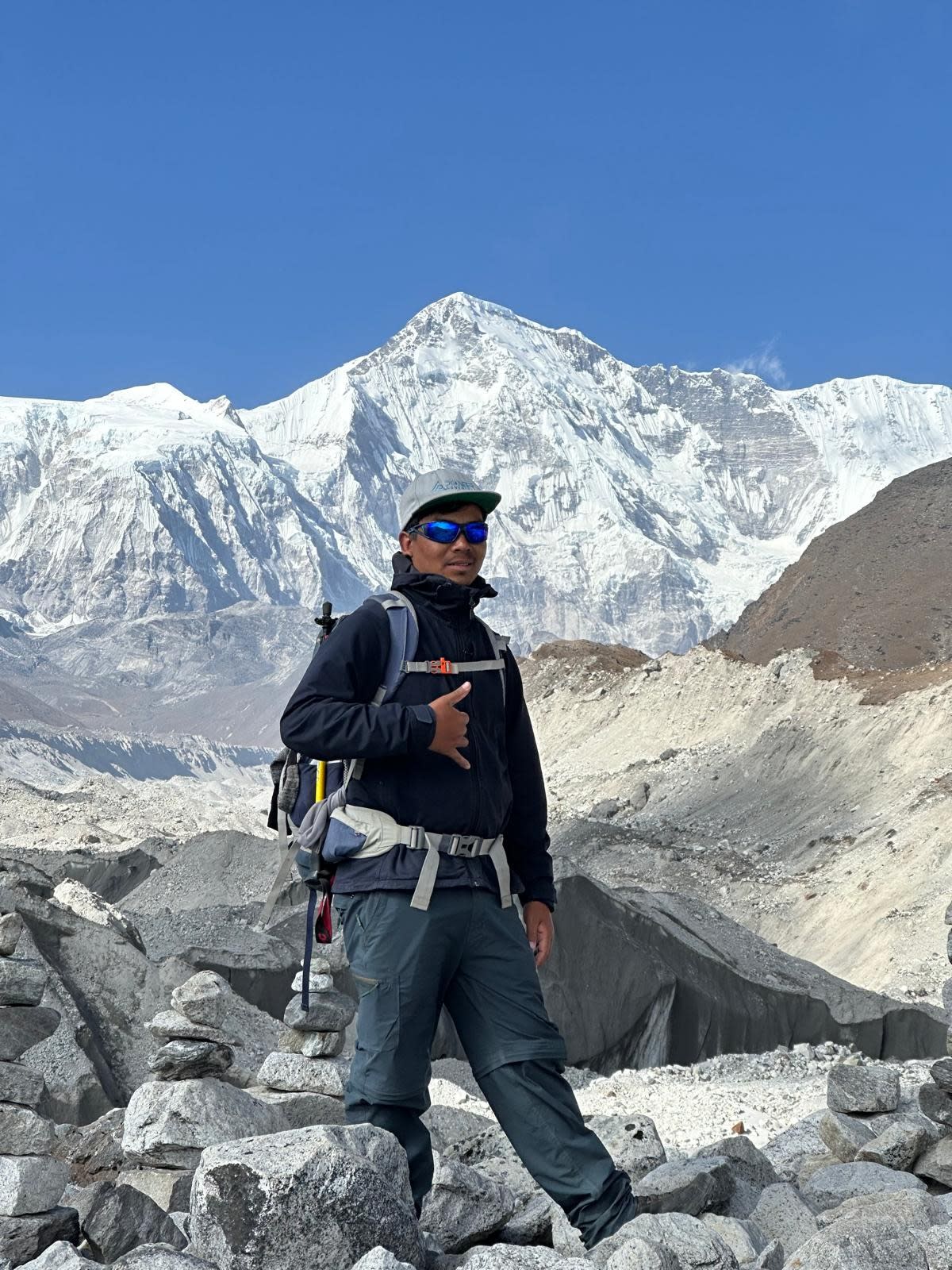
Thorong La at 5,416 m
The legendary high crossing, a shared achievement to celebrate together at the prayer flags on the pass.
Nepal's genuine welcome
The most LGBTQ-progressive country in South Asia: same-sex activity legal since 2007, constitutional protection since 2015, and the first same-sex marriage registered in 2023.
Room together, no questions
Sharing a room as a couple is completely normal on any trek here, and our guides treat every couple identically.
A private, judgment-free trip
Private by default, so you are never placed in a group where you'd feel out of place, with optional LGBTQ+ group departures.
The full western descent
After the pass, walk down through Marpha, the Tatopani hot springs and rhododendron forest to a Poon Hill sunrise.
Perfect for milestones
Honeymoons, anniversaries and big-birthday trips, with private rooms and a lakeside celebration option.
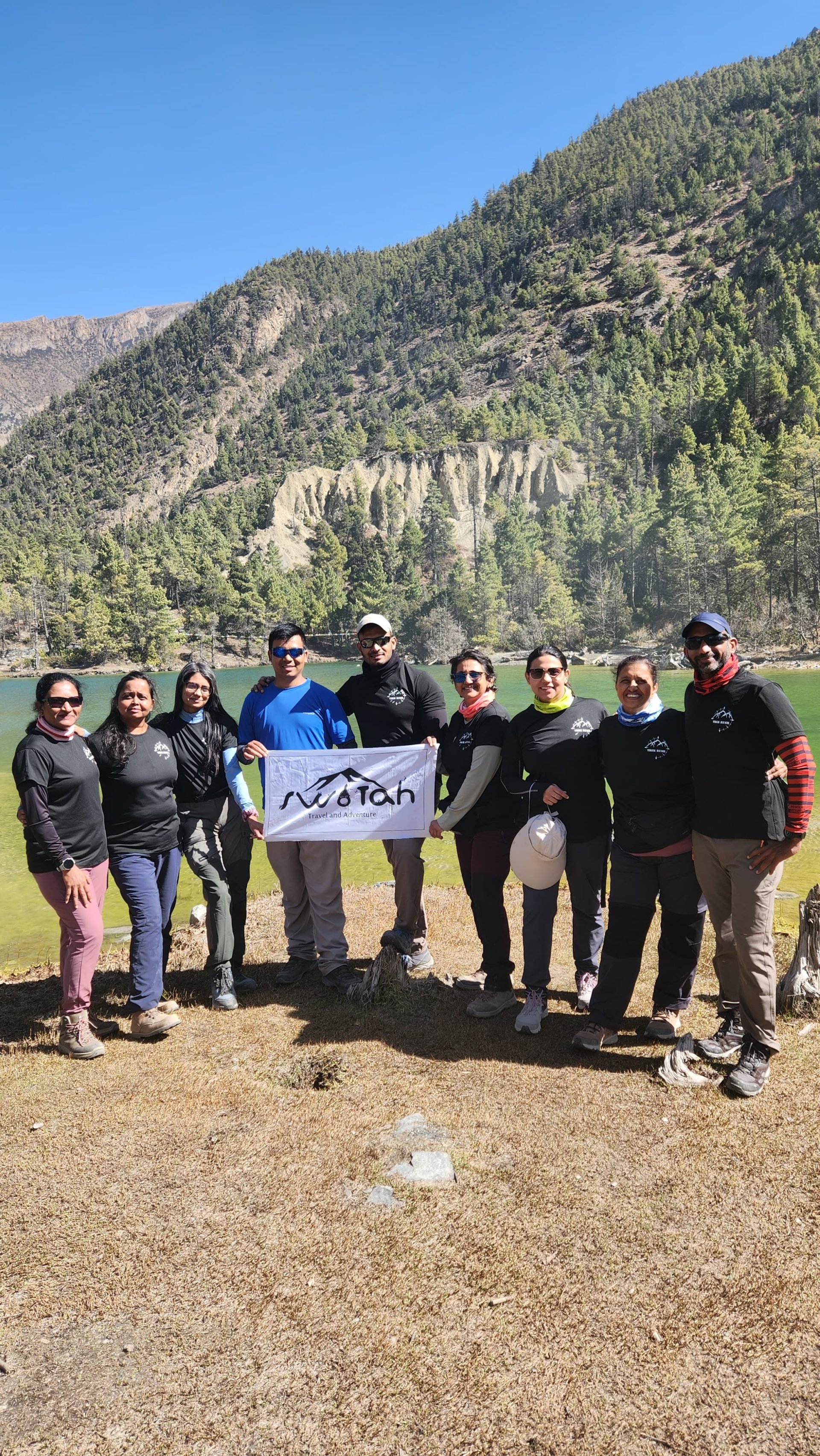
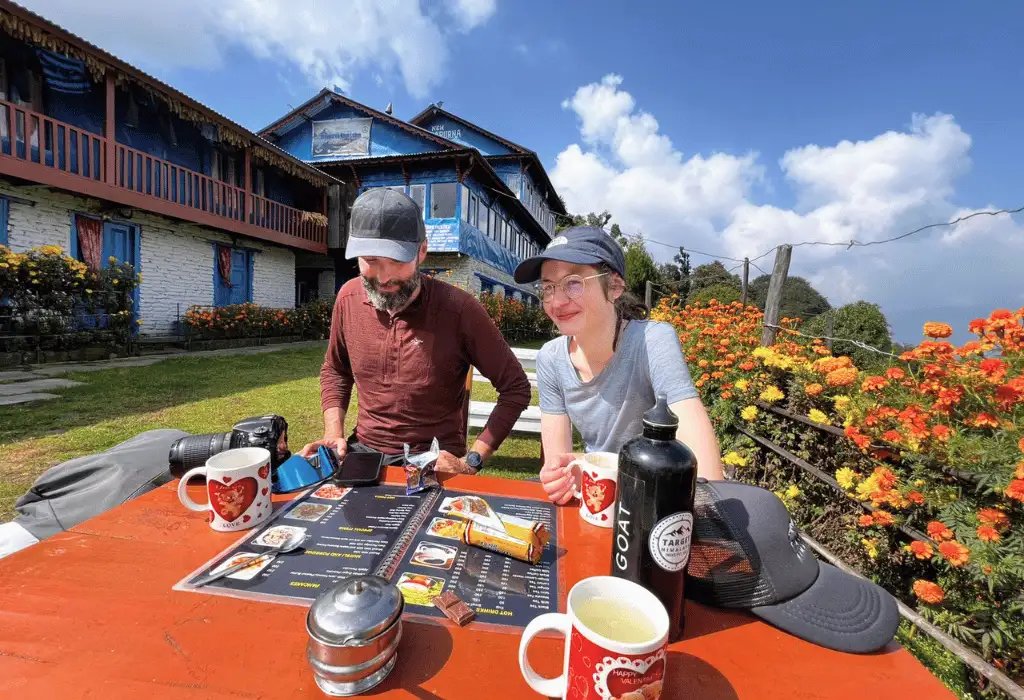
Trek in pictures.

Interactive circuit map.
The full 14-day circuit on a topographic map. Click any marker for details. Switch between Topo, Satellite, and Standard views using the layer control.
14 Days. Every detail planned.
Transparent, all-in pricing.
Included in your price
Not included
Trek altitude at a glance.
How hard is this trek?
Best time for the LGBTQ+ Friendly Annapurna Circuit Trek.
Weather on the LGBTQ+ Friendly Annapurna Circuit Trek.
Everything you need to know.
Open any card for in-depth notes on accommodation, food, altitude, permits, money and the small print that matters on the trail.
Your safety, planned in detail.
Altitude is the main risk on this trek. Here is exactly what we carry, who we call, and where the nearest help is at every stage of the route.
Common health risks
- •Acute Mountain Sickness (AMS): most likely above 3,500m
- •Dehydration: accelerated by altitude and dry air
- •Sunburn and snow blindness: UV is 2× stronger at 5,000m
- •Twisted ankle on uneven trail: descent days especially
- •Frostbite on Thorong La in cold conditions. Keep fingers/toes warm.
- •Stomach upset from unfamiliar food/water, purify everything
- •Cold injury (hypothermia) at high camp if wet + windy
Our medical kit
- •Pulse oximeter (carried by guide, checks oxygen saturation)
- •Emergency oxygen cylinder (lead guide carries one)
- •Diamox (acetazolamide) for acute mountain sickness
- •Dexamethasone (HACE emergency use)
- •Nifedipine (HAPE emergency use)
- •Broad-spectrum antibiotics
- •Anti-diarrhoeal medication
- •Antihistamines
- •Strong painkillers (ibuprofen + paracetamol)
- •Wound dressings, blister kit, bandages
- + 3 more items carried by the lead guide
Travel insurance — required
- ✓Must cover trekking to at least 5,500m (Thorong La is 5,416m)
- ✓Must include helicopter evacuation (USD 5,000+ cover minimum)
- ✓Must include emergency medical treatment and repatriation
- ✓We recommend World Nomads, True Traveller (UK), or SafetyWing, all cover Nepal trekking at altitude
- ✓Bring a printed policy and 24/7 assistance number to the pre-trek briefing
Nearest medical facilities
- •Manang: Himalayan Rescue Association (HRA) clinic, Western volunteer doctors in spring and autumn
- •Jomsom: district hospital with X-ray and basic surgery
- •Pokhara: Manipal Teaching Hospital, best regional emergency care
- •Kathmandu: CIWEC Travel Medicine Centre, specialist altitude and expedition medicine
Emergency protocols
Every guide carries a pulse oximeter and we check oxygen saturation twice daily from Manang onward. If saturation drops dangerously or symptoms of HACE/HAPE appear, descent is immediate. Helicopter evacuation is available along the whole route through our Kathmandu coordination centre (typical response 60–90 minutes, weather permitting). We pre-flag your insurance details at the briefing so there is zero delay in a real emergency.
Helicopter evacuation
Helicopter evacuation from anywhere on the Circuit is operationally feasible. Cost is roughly USD 3,500–6,000 to Pokhara or Kathmandu, fully reimbursable by qualifying travel insurance. We coordinate with Simrik Air, Manang Air and Heli Everest through a 24/7 line at our Kathmandu office.
Nepal visa on arrival
Tourist visa-on-arrival at Kathmandu airport: USD 30 for 15 days, USD 50 for 30 days, USD 125 for 90 days. Bring 2 passport photos and USD cash. The process takes 15–30 minutes on arrival.
What to pack.
Plan Your Trek
Planning guides for the LGBTQ+ Friendly Annapurna Circuit Trek
Written by our guides, these cover the permits, altitude, timing, and kit you need before you go.
Common questions.
GeneralIs Nepal safe for LGBTQ+ travellers?+
Nepal is the most LGBTQ-progressive country in South Asia. Same-sex sexual activity has been legal since a 2007 Supreme Court ruling, the 2015 constitution explicitly protects sexual and gender minorities, Nepal recognises a third gender on passports, and in November 2023 it registered its first same-sex marriage. Kathmandu and Pokhara have open, welcoming scenes, and violence against tourists is very rare. Trekking here as an LGBTQ+ visitor or couple is genuinely comfortable.
GeneralCan a same-sex couple share a room on the trek?+
Absolutely, and without a second glance from us. Tea-house rooms are usually twin-bedded, and sharing a room is completely normal on any trek. Our guides are briefed to treat every couple identically, and we are happy to arrange private rooms where they are available.
GeneralAre your guides LGBTQ+ friendly?+
Yes. Every guide on this trip is briefed for respectful, inclusive service, and we choose team members who are comfortable and welcoming. Your identity is never a topic unless you want it to be — you are simply our guests.
GeneralIs this a gay-only group trek?+
It runs as a private trip by default, so it can be exactly what you want: a private trip for you and your partner or friends, or a small welcoming group. We can also arrange dedicated LGBTQ+ group departures on request. You will never be placed with a group where you would feel uncomfortable.
GeneralShould we be discreet in remote mountain villages?+
Nepal is welcoming, but high mountain villages are traditional and conservative, much like rural areas anywhere. Holding hands and being yourself in Kathmandu, Pokhara and on the trail is fine; in a small remote tea house a little discretion is simply courteous, not a requirement. Your guide knows every stop and will quietly help you feel at ease — never judged.
Built different. On purpose.
Genuinely inclusive
Guides and porters briefed for respectful service and chosen for warmth. Your identity is simply never an issue unless you want it to be.
Private and safe
A private trip with honest, practical advice about open cities and traditional villages, so there are no surprises on the trail.
Nepal's real welcome
This isn't a marketing angle. It's law. Nepal leads South Asia on LGBTQ rights, and it shows in how travellers are treated.
All-in and flexible
Permits, guide, porter, lodging and meals included, with private rooms, honeymoon extras and LGBTQ+ group departures available.