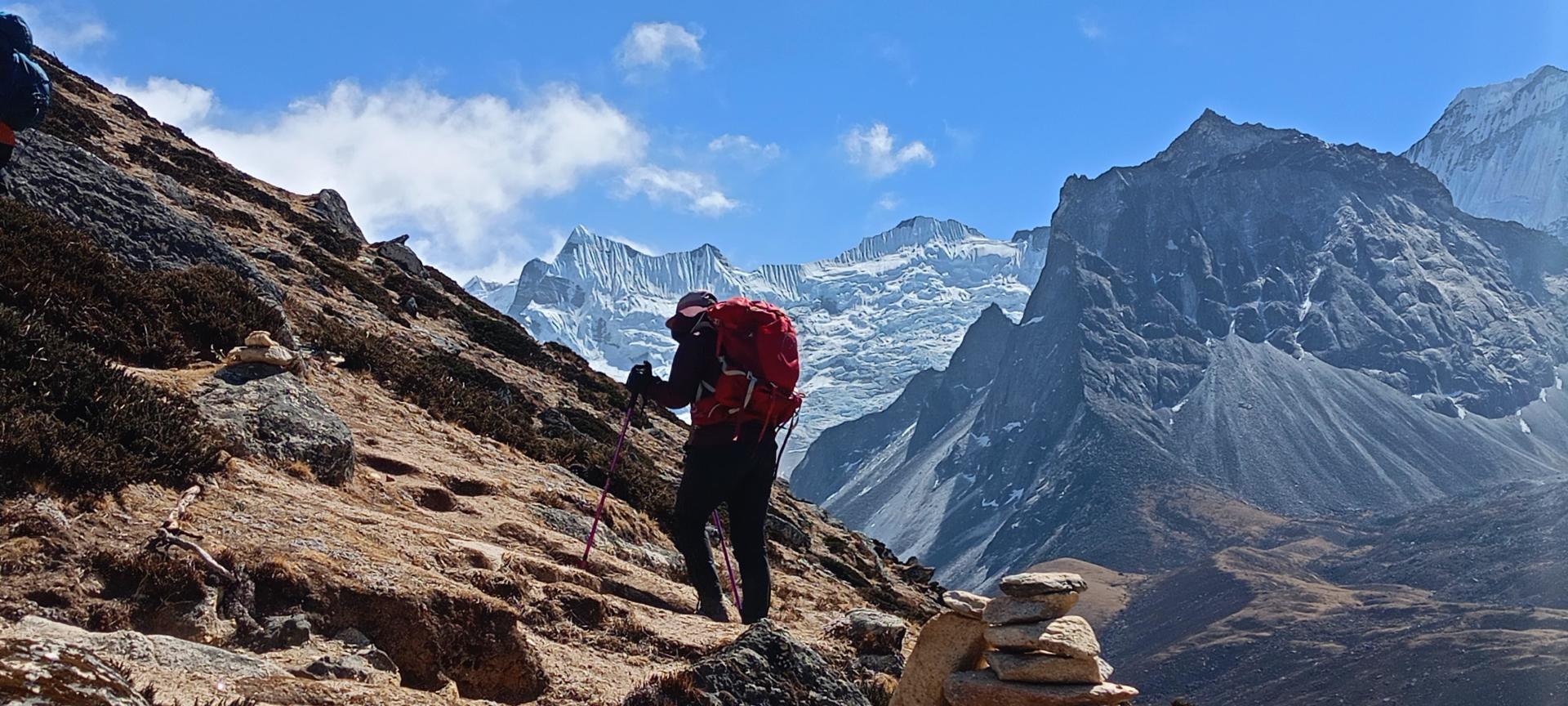
Trekking insurance for Nepal is travel insurance that covers walking at your highest planned altitude, plus emergency helicopter evacuation and medical care. Everest Base Camp treks reach 5,545 metres at Kala Patthar, while many normal policies stop at 2,000 to 4,000 metres. So check the altitude limit first. A helicopter from the high trails commonly costs USD 3,000 to 8,000, and hospital bills come on top.
Do you legally need insurance to trek in Nepal?
We could not find an official Nepal rule that requires insurance for every trekker, and online sources disagree. In practice, you will probably need it anyway. Agencies commonly ask for proof, permit paperwork often asks for a policy number, and every Annapurna Trekking departure requires cover that includes helicopter evacuation. Without it, you pay any rescue bill yourself.
What altitude should your policy cover?
Your policy must cover the highest point you plan to reach, including side trips. Many trekking companies suggest a limit about 1,000 metres higher than that, or at least 6,000 metres for high treks. These are common recommendations, not legal rules. A 6,000-metre limit covers every trek below except Island Peak.
| Trek | Highest point | Sensible minimum policy limit |
|---|---|---|
| Poon Hill | 3,210 m | 4,000 m |
| Annapurna Base Camp | 4,130 m | 5,000 m |
| Mardi Himal | 4,500 m | 5,500 m |
| Langtang Valley | 4,773 m (5,033 m with Tserko Ri) | 6,000 m |
| Manaslu Circuit | 5,106 m | 6,000 m |
| Annapurna Circuit | 5,416 m | 6,000 m |
| Everest Base Camp | 5,545 m | 6,000 m |
| Island Peak | 6,189 m | 7,000 m, with climbing cover |
Island Peak needs special attention because it is a climb. Ask whether the policy covers ropes, crampons and ice axes, not only the altitude.

What should you check before you buy?
Do not rely on the sales page. Read the policy wording, or ask the insurer to confirm these points by email.
| Check | What to ask |
|---|---|
| Altitude | What is the maximum altitude in writing, and does it apply to trekking on my plan? |
| Helicopter | Is helicopter evacuation included, and in which situations? |
| Limits | What are the limits for evacuation and medical costs? Many guides suggest at least USD 100,000 for each. |
| Approval | Must your emergency team approve a flight first? What if I cannot reach you? |
| Payment | Do you pay the rescue company directly, or must I pay and claim later? |
| Guide rule | Do I need a licensed guide or a registered agency for cover to apply? |
| Health | Have I declared every condition? Are there age limits or extra costs? |
| Disruption | What about flood, landslide, cancelled flights, and events already known when I bought the policy? |
Rules differ by insurer and home country, so check the wording for your own plan. As one example, World Nomads' help page (last updated June 2024) sets a 6,000-metre limit. It says trekking must be added when you buy, and that you cannot move up to a higher activity level halfway through the policy. It also says helicopter evacuation applies when urgent and medically necessary. It does not cover search and rescue for lost trekkers.
Will credit card insurance cover a Nepal trek?
Usually not at high altitude. Card and bank policies often have low altitude limits or exclude trekking, so ask before you rely on one. An evacuation membership can help with the flight, but it may not cover hospital bills or cancellation, so read what it includes.
How much does it cost?
Expect roughly USD 80 to 250 for a two-week trek to 6,000 metres, according to published estimates. Age, home country and extras such as cancellation cover can raise the price. Compared with a rescue, that is modest.
| Possible cost | Rough range |
|---|---|
| Helicopter from the Namche area to Kathmandu | USD 3,000 to 5,000 |
| Helicopter from above 5,000 metres | USD 6,000 to 10,000 or more |
| Hospital care and repatriation | Varies widely, and can be far higher |
These figures come from trekking company estimates, not an official price list, and our own route guides give similar ranges. Treat them as a planning guide.

How do you protect your claim?
Good records matter even more since the helicopter rescue fraud case. Follow this order.
Before the trek
- Save the emergency number on your phone and on paper. Give a copy to your guide and a contact at home.
- Carry your policy number, and keep the full policy document saved on your phone.
- Tell your agency the name of your insurer.
During an emergency
- If the case is urgent, get help first and call as soon as you can.
- Otherwise, call your insurer before you fly and follow its instructions.
- Note the time, symptoms, oxygen readings and names of the people involved.
After the rescue
- Ask for a written diagnosis, a discharge summary and itemised bills.
- Keep flight details, and photograph the helicopter and other passengers if you can.
- Check every date and charge before you sign. Report anything wrong to your insurer.
Frequently asked questions
What is the best travel insurance for trekking in Nepal?
The best policy is the one whose written terms cover your highest altitude, helicopter evacuation and your home country. No single insurer suits everyone, so compare the wording rather than the name.
Does insurance cover helicopter rescue for altitude sickness?
Usually yes, when your plan covers that altitude and the flight is medically necessary. Many insurers want to approve the flight first, so call them when you safely can.
Can I buy insurance after I arrive in Nepal?
Some insurers allow it, but others do not, and existing illness will not be covered. Buy before you leave home so that cancellation cover and pre-trip problems can be included.
Do I need insurance for a short trek like Poon Hill?
Yes. Poon Hill reaches 3,210 metres, above the limit on many normal policies, and injuries can happen at any height. Your policy still needs to include trekking at that altitude.
Is my trip covered if a flood closes the trail?
That depends on the wording. Cover can be limited for events already known when you bought the policy. Check the current trek conditions, then ask your insurer before buying.
Related guides
Pemba Sherpa
Trekking Guide, Annapurna Trekking
Pemba Sherpa guides treks across Nepal for Annapurna Trekking. More about our team →